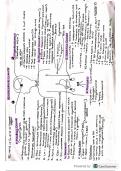
Comparison of approaches
Overlap and agreement between approaches:
- SLT has been described as a ‘bridge’ between behaviourist and cognitive
approaches, due to emphasising the importance of learning from the
environment as well as the role of mediating factors.
- Fusion of cognitive and biological has led to cognitive neuroscience that
links mental states to biological structures.
- Psychodynamic shares much in common with the biological as both see
biological drives and instincts as crucial for human development
- Humanistic and psychodynamic can both be described as person centred
as they both place subjective experience at the centre of their research.
Views on development
- Behaviourist and SLT don’t offer coherent stage theories of development
but instead see the processes that underpin learning as continuous, occurring
at any stage.
- Cognitive understanding of child development e.g., children develop
schemas as they get older
- Biological genetically determine changes in a child’s physiological status
influence psychological and behavioural characteristics
- Psychodynamic psychosexual stages that are determined by age
- Humanistic development of the self as ongoing throughout life. But
childhood is a particularly important period and a child relationship with their
parents is important in terms of unconditional positive regard.
Nature versus nurture (behaviour influenced by inherited biological factors – nature.
Or by the environment and experiences – nurture)
- Behaviourist nurture characterises babies as ‘blank slates’ at birth and
suggests all behaviour comes about through learning associations or
reinforcement.
- SLT explain behaviours through nurture e.g., direct stimulus response
mechanisms of behaviourists and social experiences. Children’s behaviour
comes about through observation and imitation of models and vicarious
reinforcement
- Cognitive argue nature as internal mental processes run on the physical
biological hardware of the brain. Nurture as mental processes e.g., schemas
are formed through experiences
- Biological nature behaviour is the result of a genetic blueprint that we
inherit from our parents (genotype), though the way it’s expressed is
influenced by the environment (phenotype). Behaviour is also due to
neurotransmitters
, - Psychodynamic nature – psychosexual stages are a biological process
children will experience and much of behaviour is driven by biological drives
and instincts, but nurture as relationships with parents play a vital role in
future development and impact of stages on personality as adults
- Humanistic holistic, including nature impact of genes but nurture
including environmental influences from direct experiences to wider culture,
and conditional love from parents leads to conditions of worth in adulthood
Reductionism vs holism (human behaviour can be most effectively explained by
breaking it down into parts vs behaviour being best understood by looking at the
interplay and interaction of many different factors)
- Behaviourist environmental reductionism, breaks up complex
behaviour into stimulus response units for ease of testing in the lab
- SLT less reductionist than behaviourists as they include role of internal
mental processes (meditational processes) but reduce complex learning to
key processes, modelling, imitation
- Cognitive accused of machine reductionism presenting people as
information processing systems and ignoring the influence of emotion on
behaviour. Oversimplification that ignores influence of anxiety on memory
and emotional processes in humans compared to computers
- Biological biological reductionism, explains human behaviour and
psychological states at the level of gene or neuron and chemical processes
within the brain. Oversimplifies the complex and personal experience of
emotion and ignores role of cognitive and cultural forces
- Psychodynamic holistic not reductionist, behaviour is due to a range of
factors e.g., the influence of sexual drives and biological changes that
happen in childhood due to psychosexual stages that shape the unconscious
find, although personality is a dynamic interaction between 3 parts of the
personality
- Humanistic holistic, investigates all aspects of the individual, including
the effect of interaction with others and wider society and biological factors
Determinism (proposes all behaviour has an internal or external cause and is thus
predictable)
- Behaviourist hard environmental determinism all behaviour as
environmentally determined by external influences that we can't control and
past conditioning experiences (operant and classical conditioning)
- SLT reciprocal determinism and environmental determinism, as well
as being influenced by our own environment we also exert some influence
upon it through behaviours we choose to perform.
- Cognitive soft determinism, we are choosers of our own thoughts and
behaviours, yet these choices can only operate within the limits of what we
know and experience (schemas)
-
Overlap and agreement between approaches:
- SLT has been described as a ‘bridge’ between behaviourist and cognitive
approaches, due to emphasising the importance of learning from the
environment as well as the role of mediating factors.
- Fusion of cognitive and biological has led to cognitive neuroscience that
links mental states to biological structures.
- Psychodynamic shares much in common with the biological as both see
biological drives and instincts as crucial for human development
- Humanistic and psychodynamic can both be described as person centred
as they both place subjective experience at the centre of their research.
Views on development
- Behaviourist and SLT don’t offer coherent stage theories of development
but instead see the processes that underpin learning as continuous, occurring
at any stage.
- Cognitive understanding of child development e.g., children develop
schemas as they get older
- Biological genetically determine changes in a child’s physiological status
influence psychological and behavioural characteristics
- Psychodynamic psychosexual stages that are determined by age
- Humanistic development of the self as ongoing throughout life. But
childhood is a particularly important period and a child relationship with their
parents is important in terms of unconditional positive regard.
Nature versus nurture (behaviour influenced by inherited biological factors – nature.
Or by the environment and experiences – nurture)
- Behaviourist nurture characterises babies as ‘blank slates’ at birth and
suggests all behaviour comes about through learning associations or
reinforcement.
- SLT explain behaviours through nurture e.g., direct stimulus response
mechanisms of behaviourists and social experiences. Children’s behaviour
comes about through observation and imitation of models and vicarious
reinforcement
- Cognitive argue nature as internal mental processes run on the physical
biological hardware of the brain. Nurture as mental processes e.g., schemas
are formed through experiences
- Biological nature behaviour is the result of a genetic blueprint that we
inherit from our parents (genotype), though the way it’s expressed is
influenced by the environment (phenotype). Behaviour is also due to
neurotransmitters
, - Psychodynamic nature – psychosexual stages are a biological process
children will experience and much of behaviour is driven by biological drives
and instincts, but nurture as relationships with parents play a vital role in
future development and impact of stages on personality as adults
- Humanistic holistic, including nature impact of genes but nurture
including environmental influences from direct experiences to wider culture,
and conditional love from parents leads to conditions of worth in adulthood
Reductionism vs holism (human behaviour can be most effectively explained by
breaking it down into parts vs behaviour being best understood by looking at the
interplay and interaction of many different factors)
- Behaviourist environmental reductionism, breaks up complex
behaviour into stimulus response units for ease of testing in the lab
- SLT less reductionist than behaviourists as they include role of internal
mental processes (meditational processes) but reduce complex learning to
key processes, modelling, imitation
- Cognitive accused of machine reductionism presenting people as
information processing systems and ignoring the influence of emotion on
behaviour. Oversimplification that ignores influence of anxiety on memory
and emotional processes in humans compared to computers
- Biological biological reductionism, explains human behaviour and
psychological states at the level of gene or neuron and chemical processes
within the brain. Oversimplifies the complex and personal experience of
emotion and ignores role of cognitive and cultural forces
- Psychodynamic holistic not reductionist, behaviour is due to a range of
factors e.g., the influence of sexual drives and biological changes that
happen in childhood due to psychosexual stages that shape the unconscious
find, although personality is a dynamic interaction between 3 parts of the
personality
- Humanistic holistic, investigates all aspects of the individual, including
the effect of interaction with others and wider society and biological factors
Determinism (proposes all behaviour has an internal or external cause and is thus
predictable)
- Behaviourist hard environmental determinism all behaviour as
environmentally determined by external influences that we can't control and
past conditioning experiences (operant and classical conditioning)
- SLT reciprocal determinism and environmental determinism, as well
as being influenced by our own environment we also exert some influence
upon it through behaviours we choose to perform.
- Cognitive soft determinism, we are choosers of our own thoughts and
behaviours, yet these choices can only operate within the limits of what we
know and experience (schemas)
-