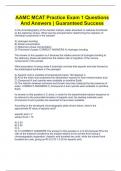
APEA PHARM Respiratory,eyes,throat & ear questions with well explained answers.
APEA PHARM RESPIRATORY 1. When used in the treatment of chronic obstructive pulmonary disease (COPD), macrolides: inhibit bacterial protein synthesis. Macrolides such as erythromycin (Erytab) and azithromycin (Zithromax) inhibit bacterial protein synthesis and growth by blocking dissociation of peptidyl tRNA from ribosomes, causing RNA-dependent protein synthesis to arrest. Macrolides exert several immune-modulatory and anti-inflammatory effects. Penicillins inhibit bacterial cell wall synthesis while fluoroquinolones prevent bacterial DNA from replicating. 2. Theophylline (Theo-24) may have an effect on the serum total cholesterol and uric acid concentrations of: levels. As a result of its pharmacological effects, theophylline at serum concentrations within the 10 to 20 mcg/mL range modestly increases plasma glucose, uric acid, free fatty acids, total cholesterol, HDL, HDL/LDL ratio, and urinary free cortisol excretion. 3. Doxycycline (Doryx), for the treatment of pneumonia,: may cause esophageal irritation and ulceration. Doxycycline (Doryx) may cause esophageal irritation and ulceration. The patient should be instructed to drink fluids liberally. The patient should avoid excessive sunlight or artificial ultraviolet light while receiving doxycycline and to discontinue therapy if phototoxicity occurs. The use of doxycycline might increase the incidence of vaginal candidiasis. 4. Which of the following medications, when combined with pulmonary rehabilitation, enhances exercise performance? Tiotropium (Spiriva HandiHaler). Tiotropium (Spiriva HandiHaler), a long-acting antimuscarinic antagonist, enhances the effectiveness of pulmonary rehabilitation in increasing exercise performance. 5. The initial recommended treatment for uncomplicated acute bronchitis in adults is: antitussives. Most cases of acute bronchitis are viral and resolve without treatment within a couple of weeks. Management of cough is recommended with antitussives. Because of the risk of antibiotic resistance and Clostridium difficile infection, antibiotics should not be routinely used in the treatment of acute bronchitis. Decongestants and antihistamines are ineffective unless there is confirmed sinusitis or underlying allergy. The FDA has recommended that cough and cold preparations not be used in children younger than 6 years. 6. Robitussin DM is a combination of dextromethorphan and: guaifenesin. Robitussin DM is a combination of dextromethorphan and guaifenesin for the treatment of cough. It can be purchased over the counter. It is not recommended for children younger than 6 years. 7. Dextromethorphan, a cough suppressant, is safe to administer to patients who have: hypertension. The use of dextromethorphan, a cough suppressant, is contraindicated in patients with difficulty clearing secretions or with Parkinson's disease. Dextromethorphan decreases the sensitivity of cough receptors and interrupts cough impulse transmission by depressing the medullary cough center through sigma receptor stimulation. Also, due to serotonergic effects, caution should be used when administering to patients who are taking certain selective serotonin reuptake inhibitors (SSRIs) or serotonin norepinephrine reuptake inhibitors (SNRIs) (i.e. venlafaxine [Effexor]). 8. The main side effect related to the use of long-acting antimuscarinic antagonists is: dry mouth. The main side effect is dryness of mouth. Inhaled anticholinergic drugs are poorly absorbed, which limits the troublesome systemic effects observed with atropine. Extensive use of this class of agents in a wide range of doses and clinical settings has shown them to be very safe. 9. Treatment of Bordetella pertussis in a patient with a hypersensitivity to macrolides is: sulfamethoxazole/trimethoprim (Bactrim). Sulfamethoxazole/trimethoprim (Bactrim) is an alternative choice for patients in whom a macrolide is contraindicated. 10. A patient who is receiving warfarin (Coumadin) requires the initiation of doxycycline (Doryx) for the treatment of pneumonia. The nurse practitioner knows that: the warfarin (Coumadin) dose may need to be decreased. Because tetracyclines depress plasma prothrombin activity, patients who are on anticoagulant therapy may require downward adjustment of their anticoagulant dosage. The combination of warfarin (Coumadin) and doxycycline (Doryx) may cause an increase in the INR and subsequent risk of bleeding. Hepatic metabolism is inhibited and alteration of vitamin K-producing gut flora may occur. 11. Amoxicillin/clavulanate (Augmentin), a beta-lactam antibiotic,: is primarily excreted unchanged in the urine. Approximately 50% to 70% of the amoxicillin and approximately 25% to 40% of the clavulanic acid are excreted unchanged in urine. Neither component in amoxicillin/clavulanate (Augmentin) is highly protein- bound. Amoxicillin diffuses readily into most body tissues and fluids, with the exception of the brain and spinal fluid. The half-life of amoxicillin after the oral administration of Augmentin is 1.3 hours and that of clavulanic acid is 1 hour. 12. An example of an inhaled glucocorticoid used in the treatment of asthma is: budesonide (Pulmicort) Budesonide (Pulmicort) is an inhaled corticosteroid used in the treatment of asthma. The mechanism of action of inhaled glucocorticoids is to decrease the activity of inflammatory cells and mediators. For complaints of dysphonia related to the use of mometasone (Asmanex Twisthaler), the patient should be advised to: utilize a spacer for administration. 13. For complaints of dysphonia related to the use of mometasone (Asmanex Twisthaler), the nurse practitioner should advise the patient to use a spacer when taking the medication. Using a spacer causes less deposition of the droplets in the mouth, which can cause dysphonia. If the asthma is well controlled, stopping the medication is not appropriate. The use of an oropharyngeal analgesic (i.e., Chloraseptic spray) would not help with inhibit dysphonia. 14. Montelukast (Singulair) blocks or inhibits the action of: leukotrienes. Montelukast (Singulair) blocks or inhibits the action of leukotrienes. In asthma, leukotriene-mediated effects include airway edema, smooth muscle contraction, and altered cellular activity associated with the inflammatory process. In allergic rhinitis, cysteinyl leukotriene receptors are released from the nasal mucosa after allergen exposure during both early- and late-phase reactions and are associated with symptoms of allergic rhinitis. 15. Which statement is NOT true about beta2-agonists? Long-acting beta2-agonists have no effect on reduction of exacerbations. The principal action of beta2-agonists is to relax airway smooth muscle by stimulating beta2-adrenergic receptors, which increase cyclic AMP and produce functional antagonism to bronchoconstriction. There are short-acting (SABA) and long-acting (LABA) beta2-agonists. Twice-daily LABAs significantly improve FEV1 and lung volumes, dyspnea, health status, exacerbation rate and number of hospitalizations, but they have no effect on mortality or rate of decline of lung function. Stimulation of beta2-adrenergic receptors can produce resting sinus tachycardia, cardiac rhythm disturbances, and exaggerate somatic tremor, regardless of route of administration. 16. Caution is advised when theophylline (Theo-24) is prescribed for patients with a atrial history of: fibrillation. Theophylline should be used with extreme caution in patients with active peptic ulcer disease, seizure disorder or cardiac arrhythmias (not including bradyarrhythmias) due to the increased risk of exacerbation of these conditions. 17. Inhaled antimuscarinic agents, such as ipratropium bromide (Atrovent HFA),: reduce exacerbation rates better than beta2-agonists. Inhaled antimuscarinic agents block the bronchoconstrictor effects of acetylcholine on M3 muscarinic receptors expressed in airway smooth muscle. There are short-acting antimuscarinics (SAMAs) and long- acting antimuscarinic antagonists (LAMAs). A greater effect on exacerbation rates for LAMA treatment (tiotropium) versus LABA treatment has been shown. Inhaled anticholinergic drugs are poorly absorbed, which limits the troublesome systemic effects observed with atropine. LABAs have proven to be very safe. 18. The beta2 adrenergic receptor agonist most commonly used to prevent bronchospasm albuterol. associated with exercise-induced asthma is: Short-acting beta-2 agonists (SABAs) are the most commonly used preexercise medications for exercise- induced asthma. SABAs include albuterol, levalbuterol (Xopenex FHA) and pirbuterol (Maxair). Fluticasone (Flovent) is an inhaled steroid. Salmeterol (Serevent) is a long-acting beta-2 agonist (LABA). Budesonide (Pulmicort) is an inhaled steroid. 19. The most common symptom of theophylline toxicity is: vomiting. The most common symptom of theophylline toxicity (acute or chronic) is severe and protracted vomiting. Seizures, hypotension, and significant dysrhythmias usually are observed when serum levels approach 80 mcg/mL. Seizures are more common with acute overdose than with chronic overdose. In chronic exposures, seizures may develop at lower serum concentrations. Cardiac dysrhythmias are more common following a chronic overdose rather than acute overdose and with lower serum concentrations. 20. The brand name for albuterol (inhaled) is: Ventolin. The brand name for albuterol (inhaled) is Ventolin and ProAir Ventolin HFA. The generic name of Advair is fluticasone propionate/salmeterol; Flovent is fluticasone propionate; and Serevent is salmeterol. 21. With the use of tiotropium (Spiriva HandiHaler), the patient should be instructed that: a capsule that contains a dry powder is activated inside the inhaler. Tiotropium (Spiriva HandiHaler) comes in a dry powder contained in a capsule that is put into a special inhaler. Spiriva capsules should only be administered via the HandiHaler device and should not be used for administering other medications. Remind patients that the contents of Spiriva capsules are for oral inhalation only and must not be swallowed. Spiriva Respimat delivers a slow moving mist that makes it easier for the patient to inhale the medication, compared to the Spiriva HandiHaler. 22. A patient with pertussis is allergic to macrolide antibiotics and is being treated with elevated liver trimethoprim sulfamethoxazole. She does NOT need to be monitored for: enzymes. Additional monitoring of blood glucose may be warranted for diabetic patients receiving sulfamethoxazole and trimethoprim (Bactrim), especially if they are on oral hypoglycemics including glipizide and glyburide. CBC should be considered due to potential for aplastic anemia, thrombocytopenia, leukopenia, neutropenia, hemolytic anemia, and megaloblastic anemia. Urinalysis with microscopic examination and renal function tests should be performed during therapy in patients with impaired renal function. 23. Patients who are already on tiotropium (Spiriva) for chronic obstructive pulmonary disease should not take a(n): short-acting anticholinergic agent. Patients should not take short-acting anticholinergic agents if the chronic obstructive pulmonary disease is already being treated with tiotropium (Spiriva), which is a long-acting anticholinergic. 24. Doxycycline (Vibramycin), for the treatment of pneumonia, is classified as a: tetracycline. Doxycycline (Vibramycin), demeclocycline (Declomycin) and minocycline (Minocin) are tetracycline derivatives. Doxycycline (Vibramycin) is the preferred treatment of pneumonia caused by Mycoplasma pneumoniae. 25. With acute exacerbation of bronchitis, inhaled steroid use should be: transitioned to a higher dose. With acute exacerbation of bronchitis, inhaled steroid use should be transitioned to a higher dose. Higher doses of inhaled corticosteroids are used during transition from systemic to inhaled corticosteroid therapy or in mild exacerbation. With mild exacerbation the maintenance dose should be increased. 26. For previously healthy children with mild to moderate symptoms of suspected amoxicillin bacterial community-acquired pneumonia secondary to Streptococcus pneumoniae, (Amoxil). the first-line therapy is: Amoxicillin (Amoxil) should be the first-line choice in previously healthy children with suspected bacterial community-acquired pneumonia (CAP) secondary to Streptococcus pneumoniae. Amoxicillin provides appropriate coverage for Streptococcus pneumoniae, the most prominent invasive pathogen. Alternatives, in the case of non-IgE penicillin allergy, are second- and third-generation cephalosporins. Macrolide antibiotics should be considered when an atypical pathogen is suspected. 27. Which medication has the greatest effect on the reduction of emphysema exacerbations? A long-acting muscarinic antagonist. Long-acting muscarinic antagonists (LAMAs) are more effective in reducing exacerbations and hospitalizations compared to long-acting bronchodilators. Inhaled corticosteroids, when combined with long- acting beta agonists, are beneficial for reduction of exacerbations. A short-acting bronchodilator is indicated in symptom management of an exacerbation. 28. A patient with bacterial sinusitis taking an that additional protection against pregnancy is oral penicillin should be instructed: necessary if they are taking an oral contraceptive. Penicillin is a beta-lactam antibiotic. The drug interactions of most concern with the beta-lactam antibiotics are those with oral contraceptive products, methotrexate and valproic acid. In the case oral contraceptives, even though a small percentage of women may potentially experience decreased effectiveness of these birth control products while taking beta-lactam antibiotic, alternative birth control methods should be considered while taking these antibiotics. Anti-diarrheal medicine should not be taken because it may worsen or prolong diarrhea. Most penicillins are safe to use during pregnancy. Penicillins may cause false readings with some urine glucose tests. 29. The initial bronchodilator in the treatment of chronic bronchitis is: albuterol (ProAir HFA). The principal initial bronchodilator in the treatment of chronic bronchitis is a short-acting bronchodilator or short-acting antimuscarinic antagonist. Short-acting beta agonists such as albuterol (ProAir HFA) are the initial choices for as needed use. Short-acting antimuscarinic antagonist agents (i.e. ipratropium bromide [Atrovent]) may also be utilized on an as needed basis. 30. In children between the ages of 5-11, the long-term use of which asthma Budesonide (Pulmicort medication may cause a transient slowing of growth? Flexhaler) inhaled The use of inhaled corticosteroids in the management of persistent asthma in children between the ages of 5-11 is beneficial and recommended. However, medium doses of inhaled corticosteroids may cause local adverse effects (i.e. candidiasis) or a transient slowing of growth. Monitoring of growth should be performed in all children. 31. Which medication is classified as a xanthine? Theophylline (Theo-24) Theophylline (Theo-24) is classified as a xanthine. It is used in the treatment of asthma. It causes bronchodilation by relaxing smooth muscles of the bronchi and pulmonary blood vessels. 32. Tiotropium (Spiriva HandiHaler), used in the is contraindicated in patients with hypersensitivity treatment of chronic bronchitis,: to ipratropium (Atrovent HFA). Tiotropium (Spiriva HandiHaler) is contraindicated in patients with a hypersensitivity to tiotropium, ipratropium, or any components of this product. No dosage adjustment is required for geriatric, hepatically impaired, or renally impaired patients. Some inhaled medicines, including Spiriva HandiHaler, may cause paradoxical bronchospasm. No adverse reactions have been noted with the combined use of Spiriva HandiHaler and short-acting and long-acting sympathomimetic (beta-agonists) bronchodilators, methylxanthines, and oral and inhaled steroids. 33. A patient with sinusitis is treated with amoxicillin. Caution is advised with concomitant use of: warfarin (Coumadin). Amoxicillin should be used with caution with warfarin (Coumadin). The combination will increase the INR and thus increase the risk of bleeding, possibly due to altered vitamin K production by gut flora. Amoxicillin can be co- administered with lisinopril (Zestril), fexofenadine (Allegra), and furosemide (Lasix). 34. Levofloxacin, for the treatment of community acquired pneumonia, is classified as a: fluoroquinolone. Levofloxacin is classified as a fluoroquinolone. Levofloxacin tablets are indicated for the treatment of community-acquired pneumonia due to Streptococcus pneumoniae (excluding multi-drug-resistant isolates [MDRSP]), Haemophilus influenzae, Haemophilus parainfluenzae, Mycoplasma pneumoniae, or Chlamydophila pneumoniae. 35. The peak blood levels for trimethoprim and sulfamethoxazole contained in Bactrim DS are approximately: 3 hours. Peak blood levels for sulfamethoxazole and trimethoprim occur 1 to 4 hours after oral administration. The mean serum half-lives of sulfamethoxazole and trimethoprim are 10 and 8 to 10 hours, respectively. During administration of 800 mg sulfamethoxazole and 160 mg trimethoprim bid, the mean steady-state plasma concentration of trimethoprim was 1.72 µg/mL. These steady-state levels were achieved after 3 days of drug administration. 36.
Escuela, estudio y materia
- Institución
- APEA PHARM
- Grado
- APEA PHARM
Información del documento
- Subido en
- 24 de octubre de 2022
- Número de páginas
- 516
- Escrito en
- 2022/2023
- Tipo
- Examen
- Contiene
- Preguntas y respuestas
Temas
-
apea pharm respiratory
-
eyes
-
throat amp ear questions with well explained answers
-
apea pharm respiratory 1 when used in the treatment of chronic obstructive pulmonary disease copd
-
m