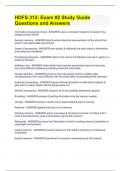
HDFS 312- Exam #2 Study Guide Questions and Answers
Information-processing model - ANSWER-uses a computer metaphor to explain how people process stimuli Sensory memory - ANSWER-brief & almost identical representation of the stimuli that exists in the observable environment Speed of processing - ANSWER-how quickly & efficiently the early steps in information processing are completed Processing resources - ANSWER-refers to the amount of attention one has to apply to a particular situation Inhibitory loss - ANSWER-older adults have reduced processing resources because they have difficulty inhibiting processing irrelevant information Divided attention - ANSWER-concerns how well people preform multiple talks simultaneously (OA's have difficulty with the actual tasks not spreading their attention) Automatic processing - ANSWER-places minimal demands on attentional capacity & gets info to system largely without being aware of it Effortful processing - ANSWER-requires all of the available attentional capacity Encoding - ANSWER-process of getting information into the memory system storage - ANSWER-manner in which info is represented & kept in memory Retrieval - ANSWER-getting info back out of memory Working memory - ANSWER-active processes & structures involved in holding info in mind & simultaneously using it (processes right at the moment) Rehearsal - ANSWER-process that information is held in working memory (repetition or meaningful connections) Implicit memory - ANSWER-involves retrieval of info without conscious or intentional recollection Explicit memory - ANSWER-intentional & conscious remembering of info learned
Escuela, estudio y materia
- Institución
- HDFS
- Grado
- HDFS
Información del documento
- Subido en
- 19 de abril de 2024
- Número de páginas
- 7
- Escrito en
- 2023/2024
- Tipo
- Examen
- Contiene
- Preguntas y respuestas
Temas
-
hdfs 312 exam 2 study guide questions and answer
-
information processing model answer uses a compu

Documento también disponible en un lote