lOMoARcPSD|14266361
Mental Health Progression Practice Test- Answer Key
Mental Health (HCI College)
StuDocu is not sponsored or endorsed by any college or university
Downloaded by Heidi Chandler ()
, lOMoARcPSD|14266361
Detailed Answer Key
Mental Health Progression Practice
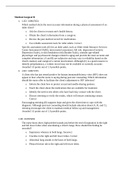
1. A nurse is caring for a client who is dying. The client says, "My mother died in the hospital, but I did not get there
before she died." Which of the following statements should the nurse make?
A. "We will call your family in time for them to get here."
Rationale: The nurse dismisses the client’s concerns and gives false reassurance.
B. "I wonder if you are fearful of dying alone."
Rationale: The nurse dismisses the client’s concerns and gives false reassurance.
C. "I will make sure a staff member is in your room at all times."
Rationale: The nurse dismisses the client’s concerns and gives false reassurance.
D. "I will tell your family of your concern so that they can be here."
Rationale: The nurse dismisses the client’s concerns and gives false reassurance.
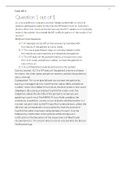
2. A nurse is caring for a young adult client who says he is experiencing increased anxiety and an inability to
concentrate. Which of the following responses should the nurse make?
A. "It sounds like you're having a difficult time."
Rationale: This therapeutic response is an open-ended, empathetic statement that encourages the client to
talk.
B. "Have you talked to your parents about this yet?"
Rationale: This nontherapeutic response is focused inappropriately on the client's parents. It does not
address the client's need to communicate or express feelings.
C. "Why do you think you are so anxious?"
Rationale: This nontherapeutic response can make the client feel defensive, and he might not be able to
tell the nurse why.
D. "How long has this been going on?"
Rationale: This nontherapeutic response is a closed-ended statement that does not encourage the client to
talk.
3. A nurse is admitting a client who is in the manic phase of bipolar disorder. The nurse should plan to make which of
the following room assignments for the client?
A. A private room in a quiet location on the unit
Rationale: A private room in a quiet location is ideal for a client with mania. The client may easily become
overstimulated by the number of people and activities in a nursing care unit. A private room can
Created on:02/05/2018 Page 1
Downloaded by Heidi Chandler ()
, lOMoARcPSD|14266361
Detailed Answer Key
Mental Health Progression Practice
be used for time-out during the day and to settle down to sleep at night.
B. A semi-private room with a roommate who has a similar diagnosis
Rationale: The client should not be given a semi-private room with a roommate who is also experiencing
mania because the situation would be too stimulating for each of them.
C. A private room close to the nursing station
Rationale: The client should not be given a private room close to the nursing station because of the high
level of activity in that area.
D. A seclusion room until the client’s activity level becomes more subdued.
Rationale: Legal and ethical guidelines require treatment in the least restrictive setting. Seclusion requires
a provider’s s order and can only be used when there is a specific, documented need to do so.
4. A nurse is admitting a client who has experienced a weight loss of 11 kg (25 lb) in the past 3 months. The client
weighs 40 kg (88 lb) and believes she is fat. Which of the following aspects of care should the nurse consider the
first priority for this client?
A. Identify the client's nutritional status.
Rationale: According to the nursing process, the nurse should perform an assessment first to gather
enough data regarding nutritional status and other findings in order to plan, implement, and
evaluate care. The assessment identifies client nutrition needs as well as complications the
client might be experiencing related to the eating disorder.
B. Request a mental health consult.
Rationale: Requesting a mental health consult might be necessary but another aspect of care is the
priority.
C. Plan a therapeutic diet for the client.
Rationale: Rationale C. Planning a therapeutic diet for the client will be necessary but another aspect of
care is the priority.
D. Provide a structured environment for the client.
Rationale: It is important to provide a structured environment for the client regarding meals, times for
weighing, and monitoring of eating, but another aspect of care is the priority.
5. A nurse is caring for a client who has severe manifestations of schizophrenia and is medicated PRN for agitation
with haloperidol. The nurse should assess the client for which of the following adverse effects?
A. Dysrhythmias
Rationale: Cardiac dysrhythmias are a risk for clients taking haloperidol and other conventional
antipsychotic medications. The client should be monitored for changes in vital signs,
tachycardia, and ECG changes, including prolonged QT interval, while taking haloperidol. There
Created on:02/05/2018 Page 2
Downloaded by Heidi Chandler ()
, lOMoARcPSD|14266361
Detailed Answer Key
Mental Health Progression Practice
is a risk for cardiac arrest due to torsades de pointes.
B. Cataracts
Rationale: The client who takes haloperidol is at risk for glaucoma, but cataracts are not an adverse effect.
C. Pancreatitis
Rationale: The client who takes haloperidol is at risk for hepatitis, but pancreatitis is not an adverse effect.
D. Bleeding
Rationale: The client who takes haloperidol does not have an increased risk for bleeding.
6. A client becomes very dejected and states, "No one really cares what happens to me. Life isn't worth living
anymore." Which of the following responses should the nurse make?
A. "Of course people care. Your family comes to visit every day."
Rationale: Trying to convince the client that his family members care about him is false reassurance that
minimizes the feelings he just communicated.
B. "Why do you feel that way?"
Rationale: Asking the client a "why" question minimizes his feelings and is nontherapeutic.
C. "Tell me who you think doesn't care about you."
Rationale: By asking the client to tell what people don't care about him, the nurse is challenging the client's
beliefs and changing the focus of the client away from his feelings and onto another subject.
D. "I care about you, and I am concerned that you feel so sad."
Rationale: This is an open-ended therapeutic statement that focuses on the client's feelings, shows
empathy, and allows for further exploration of the client's belief that life is not worth living in
order to keep the client safe from suicidal thoughts.
7. A nurse on a mental health unit is caring for a client who has generalized anxiety disorder. The client received a
telephone call that was upsetting, and now the client is pacing up and down the corridors of the unit. Which of the
following actions should the nurse take?
A. Instruct the client to sit down and stop pacing.
Rationale: The client is experiencing severe or panic-level anxiety and in this condition has difficulty
comprehending instructions.
B. Allow the client to pace alone until physically tired.
Rationale: Not intervening for the client's pacing and allowing it to continue could be a safety hazard for the
client and other clients in the area. The nurse should take measures to reduce the client's
anxiety.
Created on:02/05/2018 Page 3
Downloaded by Heidi Chandler ()
Mental Health Progression Practice Test- Answer Key
Mental Health (HCI College)
StuDocu is not sponsored or endorsed by any college or university
Downloaded by Heidi Chandler ()
, lOMoARcPSD|14266361
Detailed Answer Key
Mental Health Progression Practice
1. A nurse is caring for a client who is dying. The client says, "My mother died in the hospital, but I did not get there
before she died." Which of the following statements should the nurse make?
A. "We will call your family in time for them to get here."
Rationale: The nurse dismisses the client’s concerns and gives false reassurance.
B. "I wonder if you are fearful of dying alone."
Rationale: The nurse dismisses the client’s concerns and gives false reassurance.
C. "I will make sure a staff member is in your room at all times."
Rationale: The nurse dismisses the client’s concerns and gives false reassurance.
D. "I will tell your family of your concern so that they can be here."
Rationale: The nurse dismisses the client’s concerns and gives false reassurance.
2. A nurse is caring for a young adult client who says he is experiencing increased anxiety and an inability to
concentrate. Which of the following responses should the nurse make?
A. "It sounds like you're having a difficult time."
Rationale: This therapeutic response is an open-ended, empathetic statement that encourages the client to
talk.
B. "Have you talked to your parents about this yet?"
Rationale: This nontherapeutic response is focused inappropriately on the client's parents. It does not
address the client's need to communicate or express feelings.
C. "Why do you think you are so anxious?"
Rationale: This nontherapeutic response can make the client feel defensive, and he might not be able to
tell the nurse why.
D. "How long has this been going on?"
Rationale: This nontherapeutic response is a closed-ended statement that does not encourage the client to
talk.
3. A nurse is admitting a client who is in the manic phase of bipolar disorder. The nurse should plan to make which of
the following room assignments for the client?
A. A private room in a quiet location on the unit
Rationale: A private room in a quiet location is ideal for a client with mania. The client may easily become
overstimulated by the number of people and activities in a nursing care unit. A private room can
Created on:02/05/2018 Page 1
Downloaded by Heidi Chandler ()
, lOMoARcPSD|14266361
Detailed Answer Key
Mental Health Progression Practice
be used for time-out during the day and to settle down to sleep at night.
B. A semi-private room with a roommate who has a similar diagnosis
Rationale: The client should not be given a semi-private room with a roommate who is also experiencing
mania because the situation would be too stimulating for each of them.
C. A private room close to the nursing station
Rationale: The client should not be given a private room close to the nursing station because of the high
level of activity in that area.
D. A seclusion room until the client’s activity level becomes more subdued.
Rationale: Legal and ethical guidelines require treatment in the least restrictive setting. Seclusion requires
a provider’s s order and can only be used when there is a specific, documented need to do so.
4. A nurse is admitting a client who has experienced a weight loss of 11 kg (25 lb) in the past 3 months. The client
weighs 40 kg (88 lb) and believes she is fat. Which of the following aspects of care should the nurse consider the
first priority for this client?
A. Identify the client's nutritional status.
Rationale: According to the nursing process, the nurse should perform an assessment first to gather
enough data regarding nutritional status and other findings in order to plan, implement, and
evaluate care. The assessment identifies client nutrition needs as well as complications the
client might be experiencing related to the eating disorder.
B. Request a mental health consult.
Rationale: Requesting a mental health consult might be necessary but another aspect of care is the
priority.
C. Plan a therapeutic diet for the client.
Rationale: Rationale C. Planning a therapeutic diet for the client will be necessary but another aspect of
care is the priority.
D. Provide a structured environment for the client.
Rationale: It is important to provide a structured environment for the client regarding meals, times for
weighing, and monitoring of eating, but another aspect of care is the priority.
5. A nurse is caring for a client who has severe manifestations of schizophrenia and is medicated PRN for agitation
with haloperidol. The nurse should assess the client for which of the following adverse effects?
A. Dysrhythmias
Rationale: Cardiac dysrhythmias are a risk for clients taking haloperidol and other conventional
antipsychotic medications. The client should be monitored for changes in vital signs,
tachycardia, and ECG changes, including prolonged QT interval, while taking haloperidol. There
Created on:02/05/2018 Page 2
Downloaded by Heidi Chandler ()
, lOMoARcPSD|14266361
Detailed Answer Key
Mental Health Progression Practice
is a risk for cardiac arrest due to torsades de pointes.
B. Cataracts
Rationale: The client who takes haloperidol is at risk for glaucoma, but cataracts are not an adverse effect.
C. Pancreatitis
Rationale: The client who takes haloperidol is at risk for hepatitis, but pancreatitis is not an adverse effect.
D. Bleeding
Rationale: The client who takes haloperidol does not have an increased risk for bleeding.
6. A client becomes very dejected and states, "No one really cares what happens to me. Life isn't worth living
anymore." Which of the following responses should the nurse make?
A. "Of course people care. Your family comes to visit every day."
Rationale: Trying to convince the client that his family members care about him is false reassurance that
minimizes the feelings he just communicated.
B. "Why do you feel that way?"
Rationale: Asking the client a "why" question minimizes his feelings and is nontherapeutic.
C. "Tell me who you think doesn't care about you."
Rationale: By asking the client to tell what people don't care about him, the nurse is challenging the client's
beliefs and changing the focus of the client away from his feelings and onto another subject.
D. "I care about you, and I am concerned that you feel so sad."
Rationale: This is an open-ended therapeutic statement that focuses on the client's feelings, shows
empathy, and allows for further exploration of the client's belief that life is not worth living in
order to keep the client safe from suicidal thoughts.
7. A nurse on a mental health unit is caring for a client who has generalized anxiety disorder. The client received a
telephone call that was upsetting, and now the client is pacing up and down the corridors of the unit. Which of the
following actions should the nurse take?
A. Instruct the client to sit down and stop pacing.
Rationale: The client is experiencing severe or panic-level anxiety and in this condition has difficulty
comprehending instructions.
B. Allow the client to pace alone until physically tired.
Rationale: Not intervening for the client's pacing and allowing it to continue could be a safety hazard for the
client and other clients in the area. The nurse should take measures to reduce the client's
anxiety.
Created on:02/05/2018 Page 3
Downloaded by Heidi Chandler ()