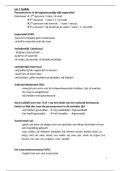
NUR 265 Exam 2 Study Questions Verified 2023/2024
NUR 265 Exam 2 Study Questions What is the normal arterial blood gas (ABG) range for the partial pressure of oxygen (PO2)? o 80-100 mmHg o What if it’s higher than 100? What if it’s lower than 80? ▪ Higher = too much oxygenation … lower = hypoxia What is the normal arterial blood gas (ABG) range for the partial pressure of carbon dioxide (PaCO2)? o 35-45 mmHg o What if it’s lower than 35? What is it’s higher than 45? ▪ Decreased = Respiratory alkalosis … increased = Respiratory Acidosis What is the normal range for the compensatory arterial blood gas (ABG) bicarbonate (HCO3)? o 21-28 mEq/L o What is it’s higher than 28? What if it’s lower than 21? ▪ Higher = respiratory acidosis (compensation for metabolic alkalosis) … Lower = respiratory alkalosis (compensating for metabolic acidosis) What is the normal range for glucose? o 60-100 mg/dL What is the range of pre-diabetes for an impaired fasting glucose (IFG) test? o 100-125 mg/dL What is the range of pre-diabetes for a 2 hour oral glucose tolerance (IGT) test? o 140-199 mg/dL What is the normal range for a glycosylated hemoglobin (HbA1C) test? ▪ 4-6% What is the reference range for the electrolyte phosphorus? o 3 – 4.5 mg/deciLiter What is the reference range for the electrolyte magnesium? o 1.3 – 2.1 milli-Equivalents/Liter What is the reference range for the electrolyte chloride? o 98 – 106 milli-Equivalents/Liter What is the reference range for the electrolyte calcium? o 9 – 10.5 mg/deciLiter What is the reference range for the electrolyte potassium? o 3.5 – 5 milli-Equivalents/Liter What is the reference range for the electrolyte sodium? o 136 – 145 milli-Equivalents/Liter What is the reference range for hemoglobin? o 14-18 gram/deciliter What is the reference range for hematocrit? o 42-52% What is the reference range for blood osmolarity? o 285-295 mOsm/kg What are the normal levels for serum creatinine? o 0.6-1.2 What are the normal levels for BUN? o 10-20 What are major risk factors for VTE? [Name 5] o (1) prolonged immobility (2) central venous catheter (3) surgery (4) obesity (5) older age (6) blood prone to clotting (7) prior history If a patient has a VTE, what are the priority nursing interventions? [Name all in order] o (1) oxygen therapy (2) anticoagulant or fibrinolytic therapy (3) monitoring patient’s response If a patient is suspected of a VTE, when should you sit them in high- Fowler’s position? o Immediately after putting them on oxygen If a patient with a VTE is receiving fibrinolytics, what antidotes should be ready in case of overdose? [Name all] o (1) clotting factors (2) fresh frozen plasma (3) aminocaproic acid (Amicar) What are 4 priority problems for a patient with a PE? [Name all in order] o (1) hypoxemia (2)hypotension (3) potential for bleeding related to anticoagulant/fibrinolytic therapy (4) anxiety What are the classic symptoms for a PE? [Name all] o (1) sudden onset of dyspnea (2) sharp, stabbing chest pain (3) restlessness (4) feeling of impending doom (5) cough (6) hemoptysis o What other symptoms may they experience? [Name 3] ▪ (1) tachypnea (2) crackles (3) pleural friction rub (4) tachycardia (5) sweating (6) low-grade fever (7) decreased O2 Saturation (8) S3 or S4 heart sounds/gallop (9) petechiae all over chest What conditions could cause a patient to be at risk for ventilatory failure? [Name 5] o (1) COPD (2) Pulmonary Embolism or PE (3) ARDS (4) pulmonary edema (5) stroke (6) increased intracranial pressure (7) opioids (8) spinal cord injury (9) massive obesity (10) sleep apnea What is the hallmark of acute respiratory distress syndrome (ARDS)? o Hypoxemia that persists even with 100% oxygen If your patient is at risk for a PE, what symptoms would let you know to notify the rapid response team? [Name all] o (1) jugular vein distention (2) syncope (3) cyanosis (4) hypotension What method is most commonly used to diagnose a PE? o CT scan Despite the different causes for acute lung injury, what triggers ARDS? o Systemic inflammatory response What is the nursing priority in the prevention of ARDS? o Early recognition in high risk patients What kind of patients are considered at high risk for ARDS? o (1) patients with tube feeding and impaired swallow/gag reflex because of aspirating very acidic gastric contents (2) pancreatitis (3) transfusion reactions (4) trauma o What physical assessments indicate early symptoms of ARDS? ▪ (1)assess breathing – (a) for increased rate (b) noisy respirations (c) retractions (d) increased effort; (2) cyanosis (3) mental status (4) pallor (5) hypotension (6) tachycardia (5) dysrhythmias ▪ Why don’t you assess for abnormal lung sounds? ● Because it occurs in the interstitial spaces first and not the airways What is FiO2? o Fraction of inspired oxygen What ABG result will diagnose ARDS? o Lowered PaO2 (partial pressure of oxygen) o What does this value look like later? ▪ Increased What are common interventions for a patient with ARDS? [Name all] o (1) intubation (2) mechanical ventilation with PEEP (3) positioning (4) corticosteroids to reduce inflammatory response (5) maintaining fluid balance against pulmonary edema (6) TPN/tube feeding ▪ When should a nurse first implement these interventions? ● When they suspect ARDS What is refractory hypoxemia? o PaO2 that continues to drop despite 100% oxygen What are 3 modes of mechanical ventilation? How does each work? o (1) Assist Control (AC) Ventilation – takes over work of breathing for patient and responds if they begin to breathe (2) Synchronized Intermittent Mandatory Ventilation (SIMV) – preset volume and rate, but allows patient to breathe spontaneously (3) Positive End-Expiratory Pressure (PEEP) – machine throws in volume of air at the end of expiration to keep alveoli open longer What is the benefit of PEEP? o Allows for better gas exchange by ridding CO2 in alveoli and pushes back fluid buildup in lungs What is an adverse reaction of PEEP? o Tension pneumothorax o How does this occur? ▪ Positive pressure causes a break in the visceral lining and air is pushed in the pleural space until lung collapses What should you do if your patient, who is on a mechanical ventilator, goes into respiratory distress? o Remove ventilator from ET tube and begin to manually resuscitate When should you suction a patient with a mechanical ventilator? o (1) when there are secretions (2) wheezes from increased peak airway pressure (3) decreased breath sounds When would a high-pressure alarm on a mechanical ventilator sound? o When peak inspiratory pressure reaches its limit o What could cause this? [Name 3] ▪ (1) increased secretions/plug (2) patient coughs, gags, or bites ET tube (3) patient becomes anxious or fights ventilator (4) wheezing (5) bronchospasm (6) pneumothorax (7) tube becomes displaced When would a low-pressure alarm on a mechanical ventilator sound? o When there is a disconnection or leak in the ventilator circuit or in patient’s artificial airway cuff o What could cause this? ▪ (1) leak in ventilator circuit (2) patient stops spontaneously breathing (3) cuff leak in ET tube What is a common GI problem for patients with mechanical ventilators? o Stress ulcers How can ventilator-associated pneumonia be avoided? [know both] o (1) By sticking to strict infection control policy – including hand washing (2) be sure that fluids are not seeping back into humidifier What is the most common cause of pulmonary contusions? o Rapid deceleration in a car crash The force applied to the ribs, during blunt trauma to the chest, fractures them and drives the bone into the chest. Therefore, what deep chest injuries are this patient at risk for? [name all] o (1) pulmonary contusion (2) pneumothorax (3) hemothorax What is the priority nursing focus for a patient with a fractured rib? o Pain management What is flail chest? o The inward movement of the thorax during inspiration and outward movement during expiration (chest moves opposite of how it should) o What is the name of the movement? ▪ Paradoxic chest movement What causes flail chest? o multiple rib fractures that leave a segment of the chest wall loose What interventions are done for a patient with flail chest? [name 3] o (1) mechanical ventilation (2) monitor ABGs (3) monitor vital capacity (4) monitor vital signs (5) monitor fluid status (6) monitor electrolytes (7) pain What is a pneumothorax? o Any chest injury that allows air to enter the pleural space o How does this affect the lungs? ▪ Higher chest pressure, but low vital capacity How is pneumothorax treated? o By inserting a chest tube What are the assessment findings associated with pneumothorax? [name all] o (1) reduced breath sounds (2) hyper-resonance on percussion (3) affected side moved poorly during respirations (4) affected sided is prominent (5) tracheal deviation Which chest trauma poses most life-threatening? o Tension pneumothorax o What is this? ▪ When air is forced in the pleural space during inspiration, but doesn’t exit on expiration ▪ How is this a problem? ● It compresses the blood vessels and limits blood return, which leads to decreased filling of the heart and reduced cardiac output What are the assessment findings of tension pneumothorax? [name 5] o (1) asymmetrical thorax (2) trachea deviates toward unaffected side (3) respiratory distress (4) unilateral absent breath sounds (5) jugular vein distention (6) cyanosis (7) hypertympanic sound on affected side o What abnormals could you expect to see in their ABGs? ▪ Hypoxia and respiratory alkalosis What does bubbling in a water seal chest tube indicate? o air drainage from the patient, like exhaling, coughing, sneezing o What would cause all bubbling to stop? ▪ Blocked or kinked tube o What would cause excessive bubbling? ▪ Air leak What should happen to the water level if the water seal chest tube is working correctly? o It should rise inhalation and fall during exhalation o What would an absence of the fluctuation mean? ▪ Obstruction in chest tube or lungs have fully re-expanded What is chamber one in a water seal chest tube? o Collects fluid draining from the patient What is chamber two in a water seal chest tube? o Water seal to prevents air from re-entering patient’s pleural space (one-way valve) What is chamber three in a water seal chest tube? o The suction control system – water level prescribed by doctor What should a nurse do if a chest tube get pulled out of a patient’s chest? o 1st cover with sterile dressing and then notify rapid response or doctor What should a nurse do If a chest tube disconnects from the drainage system? o 1st put end of tube in a container of sterile water and keep below patient’s chest, then notify doctor or rapid response ● What is the order of nursing interventions (5) to monitor for manifestations for DKA? o Check airway, level of consciousness, hydration status, electrolytes, and blood glucose levels o What is given in an IV? ▪ IV glucose and insulin drip with fluid resuscitation o What should you check for? ▪ Fluid volume overload! o What could the IV therapy cause to happen? ▪ Hypokalemia; fatigue, malaise, confusion, shallow respirations, hypotension, abdominal distention, weak pulse What are the classic signs and symptoms resulting from DKA? o (1) Polyuria (2) polyphagia (3) polydipsia (4) weight loss (5) vomiting (6) abdominal pain (7) dehydration (8) weakness (9) change in mental status (10) shock (11) coma o What will occur if the kidneys are working? ▪ Fluid volume deficit from excessive urination ▪ What kidney problem could this lead to? ● Prerenal Acute Kidney Failure o What will occur if the kidneys are not functioning properly? ▪ Hypervolemia/fluid volume excess After a DKA patient has begun treatment, what should you watch for? o Congestive heart failure and pulmonary edema from hypervolemia/fluid volume excess What would the laboratory findings look like for a patient with DKA? [read words in parentheses] o (serum glucose) over 300 (pH) acidic, less than 7.35 (Bicarb) acidic, less than 15 (sodium) varies (B.U.N.) greater than 30 because of dehydration (creatinine) greater than 1.5 because of dehydration What is normal urine output levels? o 30ml/hr
École, étude et sujet
- Établissement
- Galen College Of Nursing
- Cours
- NUR 265 (NUR265)
Infos sur le Document
- Publié le
- 1 août 2023
- Nombre de pages
- 19
- Écrit en
- 2023/2024
- Type
- Examen
- Contient
- Questions et réponses
Sujets
-
nur 265 exam 2
-
nur 265 exam
-
nur 265
-
nur 265 exam 2 study questions verified 20232024
-
nur 265 exam 2 study questions
-
nur 265 exam 2 study questions 20232024

Document également disponible en groupe