Nucleic acids
DNA – deoxyribonucleic acid
- Double helix = shape of DNA molecule due to coiling of the two sugar-phosphate backbone strands into a
right-handed spiral configuration
- Monomer = molecule that when repeated makes a polymer – nucleotides are monomers of nucleic acids
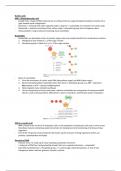
- Nucleotide = molecule consisting of five-carbon sugar, a phosphate group and a nitrogenous base
- Polynucleotide = large molecule containing many nucleotides
Nucleotides
- Nucleotides are phosphate esters of pentose sugars where by covalent bonds from condensation reaction
1. Nitrogenous base linked to C1 of the sugar residue
2. Phosphate group is linked to C5 or C3 of the sugar residue
- Roles of nucleotides:
1. Form the monomers of nucleic acids DNA (deoxyribose sugar) and RNA (ribose sugar)
2. Become phosphorylated nucleotides when they have 1+ phosphate groups e.g. ADP – adenosine
diphosphate or ATP – adenosine triphosphate
3. Helps regulate many metabolic pathways
4. Can be components of many coenzymes- adenine nucleotides are components of coenzymes NADP
which is used in photosynthesis, NAD which is used in respiration, and FAD also used in respiration
DNA as a nucleic acid
- DNA is found in the nuclei of all eukaryotic cells, in the cytoplasm of prokaryotic cells and in some viruses
- Hereditary material containing coded instructions for development and functioning of all known living
organisms
- One of the 4 important macromolecule that makes up the structure of living organisms (others are
proteins, carbohydrates and lipids)
Structure of DNA
- Polymer since it is made up of many repeating nucleotide monomers
- 1 molecule of DNA has 2 polynucleotide strands that run in opposite directions – antiparallel
- Each DNA nucleotide has 1. Phosphate group, 2. 5-carbon sugar called deoxyribose, 3. One of four
nitrogenous bases: adenine, guanine, thymine, cytosine
, - Covalent bond between the sugar residue and phosphate group = the phosphodiester bond, it broken
when polynucleotides break down and formed when polynucleotides are synthesised
- DNA molecules are long so carry lots of encoded genetic information
Purines and pyrimidines
- DNA consists of 4 types of nucleotide where the phosphate and sugar groups are the same but the organic
(nitrogenous) base differs
- Could be a pure – adenine or guanine (2 rings)
- Could be a pyrimidine – thymine or cytosine (1 ring)
Hydrogen bonds
- The 2 antiparallel DNA strands are joined together by hydrogen bonds between the nitrogenous bases:
• Adenine and thymine pair with 2 hydrogen bonds
• Guanine and cytosine pair with 3 hydrogen bonds
- A purine always pairs with a pyrimidine to give equal sized ‘rungs’ on the DNA ladder at each pair
- These can then twist into a double helix to give the molecule stability
- Hydrogen bonds allow the molecule to unzip for transcription and replication
The antiparallel sugar – phosphate backbones
- The upright ‘ladder’ part of the large DNA molecule is formed by the sugar-phosphate backbones of the
antiparallel polynucleotide strands
- The ‘opposite directions’ of the 2 strands refers to the direction that the third and fifth carbon molecules
on the five-carbon sugar – deoxyribose – are facing
- The 5’ end is where the phosphate group is attached to the fifth carbon atom of the deoxyribose sugar
- The 3’ end is where the phosphate group is attached to the third carbon atom of the deoxyribose sugar
- The rungs of the ‘ladder’ consist of the complementary base pairs joined by hydrogen bonds
- The molecule is very stable, the integrity of the coded information within the base sequences is protected
DNA – deoxyribonucleic acid
- Double helix = shape of DNA molecule due to coiling of the two sugar-phosphate backbone strands into a
right-handed spiral configuration
- Monomer = molecule that when repeated makes a polymer – nucleotides are monomers of nucleic acids
- Nucleotide = molecule consisting of five-carbon sugar, a phosphate group and a nitrogenous base
- Polynucleotide = large molecule containing many nucleotides
Nucleotides
- Nucleotides are phosphate esters of pentose sugars where by covalent bonds from condensation reaction
1. Nitrogenous base linked to C1 of the sugar residue
2. Phosphate group is linked to C5 or C3 of the sugar residue
- Roles of nucleotides:
1. Form the monomers of nucleic acids DNA (deoxyribose sugar) and RNA (ribose sugar)
2. Become phosphorylated nucleotides when they have 1+ phosphate groups e.g. ADP – adenosine
diphosphate or ATP – adenosine triphosphate
3. Helps regulate many metabolic pathways
4. Can be components of many coenzymes- adenine nucleotides are components of coenzymes NADP
which is used in photosynthesis, NAD which is used in respiration, and FAD also used in respiration
DNA as a nucleic acid
- DNA is found in the nuclei of all eukaryotic cells, in the cytoplasm of prokaryotic cells and in some viruses
- Hereditary material containing coded instructions for development and functioning of all known living
organisms
- One of the 4 important macromolecule that makes up the structure of living organisms (others are
proteins, carbohydrates and lipids)
Structure of DNA
- Polymer since it is made up of many repeating nucleotide monomers
- 1 molecule of DNA has 2 polynucleotide strands that run in opposite directions – antiparallel
- Each DNA nucleotide has 1. Phosphate group, 2. 5-carbon sugar called deoxyribose, 3. One of four
nitrogenous bases: adenine, guanine, thymine, cytosine
, - Covalent bond between the sugar residue and phosphate group = the phosphodiester bond, it broken
when polynucleotides break down and formed when polynucleotides are synthesised
- DNA molecules are long so carry lots of encoded genetic information
Purines and pyrimidines
- DNA consists of 4 types of nucleotide where the phosphate and sugar groups are the same but the organic
(nitrogenous) base differs
- Could be a pure – adenine or guanine (2 rings)
- Could be a pyrimidine – thymine or cytosine (1 ring)
Hydrogen bonds
- The 2 antiparallel DNA strands are joined together by hydrogen bonds between the nitrogenous bases:
• Adenine and thymine pair with 2 hydrogen bonds
• Guanine and cytosine pair with 3 hydrogen bonds
- A purine always pairs with a pyrimidine to give equal sized ‘rungs’ on the DNA ladder at each pair
- These can then twist into a double helix to give the molecule stability
- Hydrogen bonds allow the molecule to unzip for transcription and replication
The antiparallel sugar – phosphate backbones
- The upright ‘ladder’ part of the large DNA molecule is formed by the sugar-phosphate backbones of the
antiparallel polynucleotide strands
- The ‘opposite directions’ of the 2 strands refers to the direction that the third and fifth carbon molecules
on the five-carbon sugar – deoxyribose – are facing
- The 5’ end is where the phosphate group is attached to the fifth carbon atom of the deoxyribose sugar
- The 3’ end is where the phosphate group is attached to the third carbon atom of the deoxyribose sugar
- The rungs of the ‘ladder’ consist of the complementary base pairs joined by hydrogen bonds
- The molecule is very stable, the integrity of the coded information within the base sequences is protected