Theme 8:
Sick child
Summary
1
,Inhoud
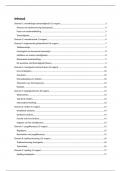
Week 29: The yellow child....................................................................................................................... 6
Introduction......................................................................................................................................... 6
Visiting NICU patients .......................................................................................................................... 7
Foetal → neonatal ........................................................................................................................... 7
Adaptation of spontaneous ventilation .......................................................................................... 8
IRDS ............................................................................................................................................... 10
Bronchopulmonary dysplasia ........................................................................................................ 10
Adaptation circulation ................................................................................................................... 11
Glucose regulation after birth ....................................................................................................... 12
Intraventricular haemorrhage ....................................................................................................... 13
Periventricular leukomalacia ......................................................................................................... 13
Asphyxia......................................................................................................................................... 14
Are Dutch children healthy? .............................................................................................................. 16
Measurement of health................................................................................................................. 16
Lalonde .............................................................................................................................................. 19
Model of population-based health in the future .......................................................................... 19
Rainbow of Dahlgren-Whitehead .................................................................................................. 20
Commission social determinants of health ................................................................................... 20
The organisation of vulnerable children and adolescents ................................................................ 21
Organisation of health systems ..................................................................................................... 21
Changes from intra- to extrauterine: circulation .............................................................................. 22
Congenital heart defects ............................................................................................................... 23
Transposition of the large vessels ................................................................................................. 23
Tetralogy of Fallot.......................................................................................................................... 24
Normal heart sounds vs murmurs ................................................................................................. 24
Changes from intra- to extrauterine: lungs ....................................................................................... 27
Dyspnoea ....................................................................................................................................... 27
Stridor and wheezing..................................................................................................................... 27
Allergic reactions ........................................................................................................................... 29
Anaphylactic shock ........................................................................................................................ 30
Bilirubin metabolism ......................................................................................................................... 32
Anaemia and hyperbilirubinemia ...................................................................................................... 34
Classification .................................................................................................................................. 34
Aetiology........................................................................................................................................ 34
Diagnosis and management .......................................................................................................... 35
2
, Neonatal jaundice ......................................................................................................................... 35
Kernicterus .................................................................................................................................... 37
Week 30: The blue baby ........................................................................................................................ 38
Introduction: Congenital heart defects ............................................................................................. 38
Embryonic development of the heart ............................................................................................... 40
Anatomy of the heart .................................................................................................................... 40
Development of the heart ............................................................................................................. 41
Foetal remnants in the adult heart ............................................................................................... 45
Atrial septation .............................................................................................................................. 47
Ventricle septation ........................................................................................................................ 48
Physiology of congenital heart diseases............................................................................................ 49
Transition....................................................................................................................................... 53
Cyanosis ......................................................................................................................................... 53
Duct dependent cardiac anomalies ............................................................................................... 55
Pressure load of the left ventricle ................................................................................................. 55
Compensation vs decompensation ............................................................................................... 56
Syncope, chest pain, dysrhythmias, heart failure, and cardiomyopathy in children ........................ 57
Syncope ......................................................................................................................................... 57
Chest pain ...................................................................................................................................... 57
Dysrhythmias ................................................................................................................................. 58
Heart failure .................................................................................................................................. 59
Rheumatic fever ............................................................................................................................ 60
Cardiomyopathies ......................................................................................................................... 61
The blue boy ...................................................................................................................................... 62
Case ............................................................................................................................................... 62
Congenital heart defects ............................................................................................................... 62
Social medicine: What does a youth doctor do?............................................................................... 65
Week 31: Child with fever ..................................................................................................................... 66
Introduction....................................................................................................................................... 66
Fever .............................................................................................................................................. 66
Alarm symptoms ........................................................................................................................... 66
Diagnosis........................................................................................................................................ 67
Balance of infections ..................................................................................................................... 68
The innate immune system ........................................................................................................... 69
The acquired immune system ....................................................................................................... 70
When do you start with antibiotics ............................................................................................... 70
3
, Fever and neurological signs ............................................................................................................. 71
Febrile seizures .............................................................................................................................. 71
Sepsis or meningitis ....................................................................................................................... 71
Meningitis ...................................................................................................................................... 72
Fever and skin manifestations........................................................................................................... 73
Fever in children: paediatric concepts .............................................................................................. 83
Maturation of the immune system: .............................................................................................. 84
Immunisation and prophylaxis .......................................................................................................... 85
Infections ........................................................................................................................................... 86
Brain .............................................................................................................................................. 86
ENT ................................................................................................................................................ 87
Heart .............................................................................................................................................. 89
GI-tract........................................................................................................................................... 90
Social medicine: healthcare for asylum seekers ............................................................................... 93
Week 32: Dyspnoeic child ..................................................................................................................... 94
Introduction....................................................................................................................................... 94
Coughing ............................................................................................................................................ 95
History taking .................................................................................................................................... 97
Physical examination ......................................................................................................................... 99
Auscultation..................................................................................................................................... 102
Upper airways.................................................................................................................................. 103
Laryngomalacia............................................................................................................................ 103
Croup/pseudocroup/laryngeotracheobronchitits/laryngitis subglottica .................................... 103
Epiglottitis.................................................................................................................................... 103
Inhaled foreign body ................................................................................................................... 104
Lower airways.................................................................................................................................. 105
Asthma and whooping cough .......................................................................................................... 107
Pertussis ...................................................................................................................................... 108
BPD-CF-PCD ..................................................................................................................................... 110
Bronchopulmonary dysplasia ...................................................................................................... 110
Cystic fibrosis ............................................................................................................................... 110
Primary ciliary dyskinesia ............................................................................................................ 111
Allergic rhinitis ................................................................................................................................. 112
Atopic dermatitis ............................................................................................................................. 113
Pharmacology: drugs for asthma and COPD .................................................................................... 116
Drug delivery to the lungs ............................................................................................................ 116
4
, Drugs............................................................................................................................................ 116
Asthma management strategy..................................................................................................... 117
Social medicine: the role of environmental health physicians ....................................................... 118
5
,Week 29: The yellow child
Introduction
20% of babies are born at home
Neonatology = intensive care for newborns
• Premature birth
• Asphyxia
• Congenital anomalies
• Support of vital functions:
o Infections
o Postoperative
To the NICU:
• Intrauterine transportation
o <32 weeks and/or 1250 g
o Congenital abnormalities
• Extrauterine transportation when vital functions are impaired:
o Sepsis
o Asphyxia = lack of oxygen during labour → cooling to 33 C for three days
(within 6 hours after birth)
Apgar score:
• Breathing
• Heart rate
• Colour
• Tone
• Reactivity
>7 is good
Lower temperature = higher oxygen demand
6
,Visiting NICU patients
First step: wash hands!
In Netherlands: 180000 babies born per year
→ some need support of their organs
Definitions:
• Moderate preterm: 32-36 weeks
• Very preterm: 26-32 weeks
• Extremely preterm: 24-26 weeks
Three groups:
• Premature babies: <37 weeks → treatment from 24 weeks
• Babies that have problems during birth: asphyxia or sepsis
• Babies with congenital anomalies
Annually: 10000 32-37 weeks
→ 2550 <32 weeks
Respiratory support for premature babies:
• C-section: no mechanical compression of the birth canal → no chest compression to
get the fluid out
• Surfactant deficiency
→ transitional problems
Vulnerability:
• Lungs
• Cardiovascular
• Gut
• Kidneys
• Brain
• Immune system
• Liver
• Skin
Prognosis: prematurity + weight + complications
Foetal → neonatal
Changes:
• Ventilation: aeration of the lungs → clearance of foetal lung fluid
• Circulation: transition of the circulation → closing of the ductus arteriole
• Placenta: removal of low resistance circulation → no more nutrients
• Metabolism: to prevent hypoglycaemia
• Body temperature control
7
, Adaptation of spontaneous ventilation
Foetal breathing movements: from week 10-11
→ Around birth no breathing movements
First breath: 6-93 seconds after birth → mostly >20 seconds
Triggers:
• Cooling
• Activation central pCO2 chemoreceptor
High inspiratory pressure: 39 cm H2O
Active expiration: crying → 72 cm H2O
Amniotic fluid = gas mixture
Foetal lung: produces fluid (for foetal lung development) → after birth water resorption in
the lung
Causes:
• Mechanical: birth canal
• Partus (birth)
• Endogenous catecholamines: T3/T4 and cortisol → maturation
Wet lung = transient tachypnoea of the newborn
Also: production of surfactant!
Foetal lung development:
8
Sick child
Summary
1
,Inhoud
Week 29: The yellow child....................................................................................................................... 6
Introduction......................................................................................................................................... 6
Visiting NICU patients .......................................................................................................................... 7
Foetal → neonatal ........................................................................................................................... 7
Adaptation of spontaneous ventilation .......................................................................................... 8
IRDS ............................................................................................................................................... 10
Bronchopulmonary dysplasia ........................................................................................................ 10
Adaptation circulation ................................................................................................................... 11
Glucose regulation after birth ....................................................................................................... 12
Intraventricular haemorrhage ....................................................................................................... 13
Periventricular leukomalacia ......................................................................................................... 13
Asphyxia......................................................................................................................................... 14
Are Dutch children healthy? .............................................................................................................. 16
Measurement of health................................................................................................................. 16
Lalonde .............................................................................................................................................. 19
Model of population-based health in the future .......................................................................... 19
Rainbow of Dahlgren-Whitehead .................................................................................................. 20
Commission social determinants of health ................................................................................... 20
The organisation of vulnerable children and adolescents ................................................................ 21
Organisation of health systems ..................................................................................................... 21
Changes from intra- to extrauterine: circulation .............................................................................. 22
Congenital heart defects ............................................................................................................... 23
Transposition of the large vessels ................................................................................................. 23
Tetralogy of Fallot.......................................................................................................................... 24
Normal heart sounds vs murmurs ................................................................................................. 24
Changes from intra- to extrauterine: lungs ....................................................................................... 27
Dyspnoea ....................................................................................................................................... 27
Stridor and wheezing..................................................................................................................... 27
Allergic reactions ........................................................................................................................... 29
Anaphylactic shock ........................................................................................................................ 30
Bilirubin metabolism ......................................................................................................................... 32
Anaemia and hyperbilirubinemia ...................................................................................................... 34
Classification .................................................................................................................................. 34
Aetiology........................................................................................................................................ 34
Diagnosis and management .......................................................................................................... 35
2
, Neonatal jaundice ......................................................................................................................... 35
Kernicterus .................................................................................................................................... 37
Week 30: The blue baby ........................................................................................................................ 38
Introduction: Congenital heart defects ............................................................................................. 38
Embryonic development of the heart ............................................................................................... 40
Anatomy of the heart .................................................................................................................... 40
Development of the heart ............................................................................................................. 41
Foetal remnants in the adult heart ............................................................................................... 45
Atrial septation .............................................................................................................................. 47
Ventricle septation ........................................................................................................................ 48
Physiology of congenital heart diseases............................................................................................ 49
Transition....................................................................................................................................... 53
Cyanosis ......................................................................................................................................... 53
Duct dependent cardiac anomalies ............................................................................................... 55
Pressure load of the left ventricle ................................................................................................. 55
Compensation vs decompensation ............................................................................................... 56
Syncope, chest pain, dysrhythmias, heart failure, and cardiomyopathy in children ........................ 57
Syncope ......................................................................................................................................... 57
Chest pain ...................................................................................................................................... 57
Dysrhythmias ................................................................................................................................. 58
Heart failure .................................................................................................................................. 59
Rheumatic fever ............................................................................................................................ 60
Cardiomyopathies ......................................................................................................................... 61
The blue boy ...................................................................................................................................... 62
Case ............................................................................................................................................... 62
Congenital heart defects ............................................................................................................... 62
Social medicine: What does a youth doctor do?............................................................................... 65
Week 31: Child with fever ..................................................................................................................... 66
Introduction....................................................................................................................................... 66
Fever .............................................................................................................................................. 66
Alarm symptoms ........................................................................................................................... 66
Diagnosis........................................................................................................................................ 67
Balance of infections ..................................................................................................................... 68
The innate immune system ........................................................................................................... 69
The acquired immune system ....................................................................................................... 70
When do you start with antibiotics ............................................................................................... 70
3
, Fever and neurological signs ............................................................................................................. 71
Febrile seizures .............................................................................................................................. 71
Sepsis or meningitis ....................................................................................................................... 71
Meningitis ...................................................................................................................................... 72
Fever and skin manifestations........................................................................................................... 73
Fever in children: paediatric concepts .............................................................................................. 83
Maturation of the immune system: .............................................................................................. 84
Immunisation and prophylaxis .......................................................................................................... 85
Infections ........................................................................................................................................... 86
Brain .............................................................................................................................................. 86
ENT ................................................................................................................................................ 87
Heart .............................................................................................................................................. 89
GI-tract........................................................................................................................................... 90
Social medicine: healthcare for asylum seekers ............................................................................... 93
Week 32: Dyspnoeic child ..................................................................................................................... 94
Introduction....................................................................................................................................... 94
Coughing ............................................................................................................................................ 95
History taking .................................................................................................................................... 97
Physical examination ......................................................................................................................... 99
Auscultation..................................................................................................................................... 102
Upper airways.................................................................................................................................. 103
Laryngomalacia............................................................................................................................ 103
Croup/pseudocroup/laryngeotracheobronchitits/laryngitis subglottica .................................... 103
Epiglottitis.................................................................................................................................... 103
Inhaled foreign body ................................................................................................................... 104
Lower airways.................................................................................................................................. 105
Asthma and whooping cough .......................................................................................................... 107
Pertussis ...................................................................................................................................... 108
BPD-CF-PCD ..................................................................................................................................... 110
Bronchopulmonary dysplasia ...................................................................................................... 110
Cystic fibrosis ............................................................................................................................... 110
Primary ciliary dyskinesia ............................................................................................................ 111
Allergic rhinitis ................................................................................................................................. 112
Atopic dermatitis ............................................................................................................................. 113
Pharmacology: drugs for asthma and COPD .................................................................................... 116
Drug delivery to the lungs ............................................................................................................ 116
4
, Drugs............................................................................................................................................ 116
Asthma management strategy..................................................................................................... 117
Social medicine: the role of environmental health physicians ....................................................... 118
5
,Week 29: The yellow child
Introduction
20% of babies are born at home
Neonatology = intensive care for newborns
• Premature birth
• Asphyxia
• Congenital anomalies
• Support of vital functions:
o Infections
o Postoperative
To the NICU:
• Intrauterine transportation
o <32 weeks and/or 1250 g
o Congenital abnormalities
• Extrauterine transportation when vital functions are impaired:
o Sepsis
o Asphyxia = lack of oxygen during labour → cooling to 33 C for three days
(within 6 hours after birth)
Apgar score:
• Breathing
• Heart rate
• Colour
• Tone
• Reactivity
>7 is good
Lower temperature = higher oxygen demand
6
,Visiting NICU patients
First step: wash hands!
In Netherlands: 180000 babies born per year
→ some need support of their organs
Definitions:
• Moderate preterm: 32-36 weeks
• Very preterm: 26-32 weeks
• Extremely preterm: 24-26 weeks
Three groups:
• Premature babies: <37 weeks → treatment from 24 weeks
• Babies that have problems during birth: asphyxia or sepsis
• Babies with congenital anomalies
Annually: 10000 32-37 weeks
→ 2550 <32 weeks
Respiratory support for premature babies:
• C-section: no mechanical compression of the birth canal → no chest compression to
get the fluid out
• Surfactant deficiency
→ transitional problems
Vulnerability:
• Lungs
• Cardiovascular
• Gut
• Kidneys
• Brain
• Immune system
• Liver
• Skin
Prognosis: prematurity + weight + complications
Foetal → neonatal
Changes:
• Ventilation: aeration of the lungs → clearance of foetal lung fluid
• Circulation: transition of the circulation → closing of the ductus arteriole
• Placenta: removal of low resistance circulation → no more nutrients
• Metabolism: to prevent hypoglycaemia
• Body temperature control
7
, Adaptation of spontaneous ventilation
Foetal breathing movements: from week 10-11
→ Around birth no breathing movements
First breath: 6-93 seconds after birth → mostly >20 seconds
Triggers:
• Cooling
• Activation central pCO2 chemoreceptor
High inspiratory pressure: 39 cm H2O
Active expiration: crying → 72 cm H2O
Amniotic fluid = gas mixture
Foetal lung: produces fluid (for foetal lung development) → after birth water resorption in
the lung
Causes:
• Mechanical: birth canal
• Partus (birth)
• Endogenous catecholamines: T3/T4 and cortisol → maturation
Wet lung = transient tachypnoea of the newborn
Also: production of surfactant!
Foetal lung development:
8