CRIMINAL LAW REVISION NOTES
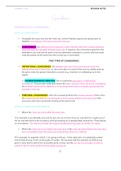
INTRODUCTION TO COINCIDENCE:
WHAT IS COINCIDENCE?
• Alongside the actus reus and the mens rea, criminal liability requires the prosecution to
establish coincidence of the actus reus and mens rea.
• COINCIDENCE: the definitional and temporal match between what the accused did (actus
reus) and what he intended/ foresaw (mens rea). In essence, the crime that results from the
defendant’s act must be the same crime the defendant intended to commit and that intent
must be present at the same time the criminal act is committed.
TWO TYPES OF COINCIDENCE:
→ DEFINITIONAL COINCIDENCE: the defined mens rea of the crime should match the
defined actus reus of the crime, i.e. the crime that is a result of the act (e.g. death) must be
the same crime the person intended to commit (e.g. intention or recklessness as to this
death).
⇢ CORRESPONDENCE PRINCIPLE: this is a particular application of definitional
coincidence. The principle holds that, where the actus reus and mens rea do not correspond,
the accused should not be liable for a crime whose actus reus is of greater gravity than the
accused’s mens rea.
→ TEMPORAL COINCIDENCE: when the accused performs the conduct element of the crime,
the mental attitude behind committing the crime must be present at the same time (the
actus reus and mens rea should coincide at the same time).
WHEN IS THERE NO COINCIDENCE?
• Where the mens rea occurs after the actus reus.
! For example, A accidentally runs over B, who ran out in front of his car, and kills him. A gets out of
his car and sees that it is B, his enemy, and not knowing he is already dead, shoots him. There will be
no coincidence. The intent to kill after the original accidental killing does not render him liable.
• Where the mens rea occurs before the actus reus: if the mens rea exists before the actus reus
but is not present when the actus reus is performed, there is no offence.
! For example, A, angered, tells B, ‘I am going to kill you.’ A few days later, A accidentally crashes
into B while driving. A will not be guilty of murder. He may have had the intention to kill B at one
point in time and he did kill him at another point in time, but the two did not coincide; he did not
intend to kill him when performing the death-causing act.
⇩
, CRIMINAL LAW REVISION NOTES
A. DEFINITIONAL COINCIDENCE:
GENERAL RULE: the definitional mens rea must concur with the exact same definitional actus reus.
• Essentially, the defendant cannot be convicted for crime X, if they had the mens rea for
crime Y.
⇒ Pembliton (1874): Pembliton wanted to disperse a crowd and thus, threw stones into the crowd.
However, he ended up hitting a window with a stone. The prosecutors charged him with criminal
damage for breaking the window. On appeal, the initial conviction was quashed because there was
no concurrence of the actus reus with the mens rea. His intention had been to assault those in the
crowd (assault arising from GBH), not to cause criminal damage. These were very distinct crimes, so
his intention could not be transferred either.
! This shows that the doctrine of transferred malice is limited because it cannot apply to render the
accused guilty of a crime for which he completely lacked the mens rea for – it is not a form of
constructive liability that can be used to impose liability for crime B, in order to punish him for having
the mens rea for crime B. This is shown in the above case, where there could be no transferred
malice between assault and criminal damage. However, Pembliton could have been easily found
guilty had it been argued that he was (Cunningham) reckless with respect to the damage sustained
by the window.
EXAMPLE:
→ A poisons B’s drink, intending to poison her. After B has drunk the poison, A regrets her
actions and consequently, calls the ambulance and walks her round the room in an attempt
to keep her alive. The ambulance arrives too late and B dies.
• A has the mens rea for murder and has committed the actus reus of murder (poisoning).
When he poisoned her, he had the intention to kill her and this caused her death. Her regret
of her actions did not prevent that concurrence of mens rea and actus reus. Thus, she is
guilty of murder.
EXCEPTION 1: there will be no breach of definitional coincidence if the doctrine of transferred
malice is applicable.
→ DOCTRINE OF TRANSFERRED MALICE: “if the defendant intends a particular
consequence, he is guilty of a crime of intention, even though his act takes effect upon an
object (whether person or property, [but they must be the same]) that was not intended.” –
G Williams.
• The doctrine of transferred malice holds that the requirement of definitional coincidence is
not breached where the accused has committed the offence they have been charged with
and they intended/ foresaw the result of that offence (the actus reus and mens rea formally
concurred), but the object of the crime is not the same as what they intended/ foresaw.
⇒ Gore (1611): the defendant, wanting to kill her sick husband, laced his medicine with rat poison.
She also knew that the medicine was also taken by her father-in-law. Both of their conditions
deteriorated and as a result, they went to the apothecary and complained that the medicine was not
effective. To prove the effectiveness of the medicine, the apothecary drank it but, due to the poison,
INTRODUCTION TO COINCIDENCE:
WHAT IS COINCIDENCE?
• Alongside the actus reus and the mens rea, criminal liability requires the prosecution to
establish coincidence of the actus reus and mens rea.
• COINCIDENCE: the definitional and temporal match between what the accused did (actus
reus) and what he intended/ foresaw (mens rea). In essence, the crime that results from the
defendant’s act must be the same crime the defendant intended to commit and that intent
must be present at the same time the criminal act is committed.
TWO TYPES OF COINCIDENCE:
→ DEFINITIONAL COINCIDENCE: the defined mens rea of the crime should match the
defined actus reus of the crime, i.e. the crime that is a result of the act (e.g. death) must be
the same crime the person intended to commit (e.g. intention or recklessness as to this
death).
⇢ CORRESPONDENCE PRINCIPLE: this is a particular application of definitional
coincidence. The principle holds that, where the actus reus and mens rea do not correspond,
the accused should not be liable for a crime whose actus reus is of greater gravity than the
accused’s mens rea.
→ TEMPORAL COINCIDENCE: when the accused performs the conduct element of the crime,
the mental attitude behind committing the crime must be present at the same time (the
actus reus and mens rea should coincide at the same time).
WHEN IS THERE NO COINCIDENCE?
• Where the mens rea occurs after the actus reus.
! For example, A accidentally runs over B, who ran out in front of his car, and kills him. A gets out of
his car and sees that it is B, his enemy, and not knowing he is already dead, shoots him. There will be
no coincidence. The intent to kill after the original accidental killing does not render him liable.
• Where the mens rea occurs before the actus reus: if the mens rea exists before the actus reus
but is not present when the actus reus is performed, there is no offence.
! For example, A, angered, tells B, ‘I am going to kill you.’ A few days later, A accidentally crashes
into B while driving. A will not be guilty of murder. He may have had the intention to kill B at one
point in time and he did kill him at another point in time, but the two did not coincide; he did not
intend to kill him when performing the death-causing act.
⇩
, CRIMINAL LAW REVISION NOTES
A. DEFINITIONAL COINCIDENCE:
GENERAL RULE: the definitional mens rea must concur with the exact same definitional actus reus.
• Essentially, the defendant cannot be convicted for crime X, if they had the mens rea for
crime Y.
⇒ Pembliton (1874): Pembliton wanted to disperse a crowd and thus, threw stones into the crowd.
However, he ended up hitting a window with a stone. The prosecutors charged him with criminal
damage for breaking the window. On appeal, the initial conviction was quashed because there was
no concurrence of the actus reus with the mens rea. His intention had been to assault those in the
crowd (assault arising from GBH), not to cause criminal damage. These were very distinct crimes, so
his intention could not be transferred either.
! This shows that the doctrine of transferred malice is limited because it cannot apply to render the
accused guilty of a crime for which he completely lacked the mens rea for – it is not a form of
constructive liability that can be used to impose liability for crime B, in order to punish him for having
the mens rea for crime B. This is shown in the above case, where there could be no transferred
malice between assault and criminal damage. However, Pembliton could have been easily found
guilty had it been argued that he was (Cunningham) reckless with respect to the damage sustained
by the window.
EXAMPLE:
→ A poisons B’s drink, intending to poison her. After B has drunk the poison, A regrets her
actions and consequently, calls the ambulance and walks her round the room in an attempt
to keep her alive. The ambulance arrives too late and B dies.
• A has the mens rea for murder and has committed the actus reus of murder (poisoning).
When he poisoned her, he had the intention to kill her and this caused her death. Her regret
of her actions did not prevent that concurrence of mens rea and actus reus. Thus, she is
guilty of murder.
EXCEPTION 1: there will be no breach of definitional coincidence if the doctrine of transferred
malice is applicable.
→ DOCTRINE OF TRANSFERRED MALICE: “if the defendant intends a particular
consequence, he is guilty of a crime of intention, even though his act takes effect upon an
object (whether person or property, [but they must be the same]) that was not intended.” –
G Williams.
• The doctrine of transferred malice holds that the requirement of definitional coincidence is
not breached where the accused has committed the offence they have been charged with
and they intended/ foresaw the result of that offence (the actus reus and mens rea formally
concurred), but the object of the crime is not the same as what they intended/ foresaw.
⇒ Gore (1611): the defendant, wanting to kill her sick husband, laced his medicine with rat poison.
She also knew that the medicine was also taken by her father-in-law. Both of their conditions
deteriorated and as a result, they went to the apothecary and complained that the medicine was not
effective. To prove the effectiveness of the medicine, the apothecary drank it but, due to the poison,