NURS 602 Applying Critical Reflective Practice Research Examples
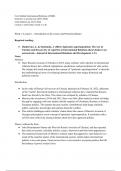
NURS 602 Applying Critical Reflective Practice Research Examples Example 1 UBG331 Applying Critical Reflective Practice Part A Aim and Context Human Resource professionals face an environment that is “complex, uncertain and changeable” (Gardner 2009), as I have experienced this within areas of a Management role and faced with this perception, I still wish to pursue a career within HR. The aim and purpose of this research is to explore whether my maternity (trigger) was the influence that led me to my career crossroad of leaving my job and undertaking an undergraduate degree. To discover this, my research context is framed around the professional body of Chartered Institute of Personnel and Development (CIPD). My reasoning for this is because CIPD are known for setting the professional benchmark in HR whilst being a highly recognised accreditation. I am able to identify a deeper understanding about them from their vision and purpose, which is to; “Define, improve and represent practices in people and organisation development to benefit individuals, businesses, economies and society” (Our purpose, vision and mission - About us - CIPD, 2016). Using the CIPD Profession Map I am able to demonstrate through active imagination a diagnosis of why these three behaviors; Curious, Courage to Challenge and Driven to Deliver ("Behaviours | CIPD") describe my maternity trigger and most describe my HR journey and experience so far. Importantly, Pettica-Harris and McKenna (2013) argues that a professional person may have choices in which career path they take but will face struggles at the heart of discovering professional knowledge. This is due to CIPD’s own knowledge in action framework ("Profession Map For HR And L&D | CIPD") which shape’s and moulds professionals to be specific behaviours of what they have to ‘be’ (du Gay, 1994; McKenna, 2010 cited in Peticca‐Harris and McKenna, 2013, pg.823). This draws internal identity conversations of ‘Inside’ work (Peticca‐ Harris and McKenna, 2013) such as questions of; “Who am I? What should I be? How should I be it?” (Archer, 2003 cited in Peticca‐Harris and McKenna, 2013 pg. 824). Theoretical Direction As the focus of this research is knowledge in action (Schon, 1983) this will consider how my professional knowledge (practical wisdom) was triggered by my maternity. I begin my theoretical direction by researching critical reflection, Bolton (2010) Through-the-Mirror writing 5 step approach takes control of our experience by analysing our own stories through the lens to aid a better understanding of knowledge and experience to create awareness of HR developmental areas. Similarly, Bassot (2013) identifies the same reflection process as the metaphorical mirror, using the Driver’s Mirror is a way to see ‘what is behind us and identify how to move forward’. In order to critically reflective an individual need’s to understand their own values, Mezirow (1978; 1981) 7 levels of reflexivity focuses upon an individual’s feelings, attitudes and values, as Van Woerkom (2004) suggests individuals face implications when organisational and individual learning needs, behaviours and values collide, as my individual personal values attached to CIPD’s may differ, however the concept of critical reflective work can bridge understanding between the two (Van Woerkom, 2004). Mezirow 7 step process could identify ways to solve these implications. Gardner (2009) Affirming Values, stated within the research report “that workers believed the job was personally challenging and valuable to the wider community, and they perceived themselves as making a difference within their field”. The focus of this research is knowledge in action taking into account the reflective practitioner approach presented by Schon (1983). This approach supports the writing through-the-mirror as it allows me to see the professional knowledge I have collected over a period of time. The construction of personal and professional knowledge from learning from experience is an approach which gives me meaning because it allows me to look back at ‘action’ and how this ‘action’ has influenced my evolution of professional identity (McIntosh, 2008). The experiential approach to reflection allows me to consider the stages of the trigger using metaphor as a tangible event (Bolton, 2010). Umberto Eco (1979) stated 'live metaphors help our understanding of reality and that they should be kept if they work but once they become restricting they should be disregarded' (Source: Extracted from Czarniawska, 2016, pg.618). I am able to identify my personal trigger ‘maternity as my turtle’ (Hunt, 2006) which lead me to my experience framing my professional identity and ultimately my transformation as an aspiring HR professional. By re-imaging the Pixar movie ‘Inside Out’ which illustrated how Riley’s (main character) emotions lead her everyday reactions to tangible events, I am able to express my active and artistic imagination (Winter et al., 1999) (see part b for method), with a dialogic process of journal entries (Ripamonti et al., 2016). Reflexive emergence allows transformation to begin from personal experience (in-action) to discussion and observation (diary) by placing my knowledge in action events (experience) with the Through-the-Mirror writing approach as a way of linking internal personal values with professional identity (Mcintosh, 2008). Bibliography Armstrong, P-A. (2016). Deciding the Theoretical Direction of the Research. Bassot, Barbara. The Reflective Journal. 1st ed. Basingstoke: Palgrave Macmillan, 2013. Print. Bolton, G. (2010) Reflective practice. 3rd ed. Los Angeles: Sage, p. 4, 31, 128.
Geschreven voor
- Instelling
- Grand Canyon University
- Vak
- NURS 602 Applying Critical Reflective Pr
Documentinformatie
- Geüpload op
- 27 juni 2023
- Aantal pagina's
- 24
- Geschreven in
- 2022/2023
- Type
- Tentamen (uitwerkingen)
- Bevat
- Vragen en antwoorden
Onderwerpen
-
nurs 602 applying critical reflective practice re