Lecture 11: 10/11- 4/12
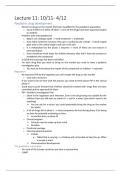
Paediatric drug development
- Almost no drugs on the market that been qualified for the paediatric popula9on
o Up to children it is o;en off label -> none of the drugs have been approved to give
to children
- Problem with chloramphenicol
o Baby’s can undergo sep9s -> need treatment -> an9bio9cs
o Grey baby syndrome because they get a cardiovascular collaps -> blood supply
goes only to the cri9cal organs and not to the skin
o It is metabolized by the phase 2 enzymes -> most of these are not mature in
neonatal baby’s.
o Dose should be much lower for children because they don’t have the enzyme to
metabolise the compound
- In 2016 the landscape has been reshuffled
- For each drug that you want to bring on the market you need to have a pediatric
inves9ga9on plan
o You have to think about the impact of the compound on children -> ra9onale
Regula'on
- No improved PIP by the regulators you will not get the drug on the market
o Cost extra recourses
- If you want to be on 9me with the process you need to think about PIP in the clinical
phase II
- Good way to push forward that children should be treated with drugs that are been
controlled and be approved for them
- PIP = Pediatric Inves9ga9on Plan
o Show to the regulators your inten9on. Even is the drug being not suitable for the
children then you s9ll have to submit it -> ask for a waver (you dom’t need to do
anything)
§ You can ask for a refuel: you could poten9ally bring the drug on the market
for adults
o A lot of drugs fail in phase 1 -> most companies do that during phase 2 for being
on 9me for poten9al marke9ng on 9me
§ In prac9ce prior in phase III
o Clinical program
§ Clinicals need to make up their mind.
§ Dura9on
o Preclinical package
o Chemical pharmaceu9cal
§ Cri9cal
• Tablet that is very big -> a children will not be able to take this up. O;en
a syrupe is used.
§ Pharmaceu9cal development
The paediatric commi4ee
- For each of the Europe countries you have a represen9ve
- CHMP
Paediatric drug development
- Almost no drugs on the market that been qualified for the paediatric popula9on
o Up to children it is o;en off label -> none of the drugs have been approved to give
to children
- Problem with chloramphenicol
o Baby’s can undergo sep9s -> need treatment -> an9bio9cs
o Grey baby syndrome because they get a cardiovascular collaps -> blood supply
goes only to the cri9cal organs and not to the skin
o It is metabolized by the phase 2 enzymes -> most of these are not mature in
neonatal baby’s.
o Dose should be much lower for children because they don’t have the enzyme to
metabolise the compound
- In 2016 the landscape has been reshuffled
- For each drug that you want to bring on the market you need to have a pediatric
inves9ga9on plan
o You have to think about the impact of the compound on children -> ra9onale
Regula'on
- No improved PIP by the regulators you will not get the drug on the market
o Cost extra recourses
- If you want to be on 9me with the process you need to think about PIP in the clinical
phase II
- Good way to push forward that children should be treated with drugs that are been
controlled and be approved for them
- PIP = Pediatric Inves9ga9on Plan
o Show to the regulators your inten9on. Even is the drug being not suitable for the
children then you s9ll have to submit it -> ask for a waver (you dom’t need to do
anything)
§ You can ask for a refuel: you could poten9ally bring the drug on the market
for adults
o A lot of drugs fail in phase 1 -> most companies do that during phase 2 for being
on 9me for poten9al marke9ng on 9me
§ In prac9ce prior in phase III
o Clinical program
§ Clinicals need to make up their mind.
§ Dura9on
o Preclinical package
o Chemical pharmaceu9cal
§ Cri9cal
• Tablet that is very big -> a children will not be able to take this up. O;en
a syrupe is used.
§ Pharmaceu9cal development
The paediatric commi4ee
- For each of the Europe countries you have a represen9ve
- CHMP