INHOUD
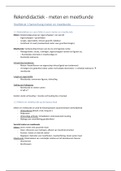
Chapter 1: introduction 2
Chapter 2: competitiveness, Strategy and Productivity 4
Chapter 3: forecasting 7
Chapter 4: strategic capacity planning 13
Chapter 5: process selection and facility layout 16
Chapter 6: inventory management – inventory ordering policies 21
Chapter 7: supply chain management and location planning 26
1
, Chapter 1: introduction
1. Introduction
- Goods: physical items that include raw materials and parts and final products
- Services: activities that provide some combination of time, location, form or
psychological value
- Important in all parts of the organisation
- Three basic functional areas of an organisation: finance, marketing and operations
- Operations management: management of systems or processes that create goods
and/or provide services
- Simple supply chain: supplier – direct supplier – producer – distributor – final
costumer
- If any part of the chain fails, it interrupts the entire flow of the supply chain
- Supply chain is internal and external to the organisation, you have input and
produce this input into output
- Goods and services often occur together
ex. A painter paints a wall. This is a service but the paint is a good that is used to
perform the service
- Added value: the difference between the cost of inputs and the value of outputs
o The greater the value added, the greater the effectiveness of the operations
o Value can also be psychological, as in branding
- The greater the degree of costumer involvement, the more challenging
- Managing transformation processes
o Typical material processors: mining, food production, retail, transport…
o Typical information processors: accountants, news service, research…
o Typical people processors: hairdressers, hospital, hotel, theme parks…
2. Production of goods vs providing services
- Differences goods and services
o Degree of costumer contact: more with some services, but not with all services
(ex. Internet)
o Labor content of jobs: often not automated
o Uniformity of inputs: services have more variety
o Measurement of productivity: harder with services ex. Hospital – number of
patients??
o Quality assurance: harder for services because of the variety of inputs
o Inventory: services have less inventory
o Wages: service jobs have a higher wage variation
o Ability to patent: products are easier to patent
- Similarities: all the topics in the book
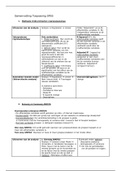
Characteristic Goods Services
Output Tangible Intangible
Costumer contact Low High
Labor content Low High
Uniformity of input High Low
Measurement of Easy Difficult
productivity
Opportunity to correct High Low
problems before delivery
Inventory High Low
Wages Narrow range Wide range
2
Chapter 1: introduction 2
Chapter 2: competitiveness, Strategy and Productivity 4
Chapter 3: forecasting 7
Chapter 4: strategic capacity planning 13
Chapter 5: process selection and facility layout 16
Chapter 6: inventory management – inventory ordering policies 21
Chapter 7: supply chain management and location planning 26
1
, Chapter 1: introduction
1. Introduction
- Goods: physical items that include raw materials and parts and final products
- Services: activities that provide some combination of time, location, form or
psychological value
- Important in all parts of the organisation
- Three basic functional areas of an organisation: finance, marketing and operations
- Operations management: management of systems or processes that create goods
and/or provide services
- Simple supply chain: supplier – direct supplier – producer – distributor – final
costumer
- If any part of the chain fails, it interrupts the entire flow of the supply chain
- Supply chain is internal and external to the organisation, you have input and
produce this input into output
- Goods and services often occur together
ex. A painter paints a wall. This is a service but the paint is a good that is used to
perform the service
- Added value: the difference between the cost of inputs and the value of outputs
o The greater the value added, the greater the effectiveness of the operations
o Value can also be psychological, as in branding
- The greater the degree of costumer involvement, the more challenging
- Managing transformation processes
o Typical material processors: mining, food production, retail, transport…
o Typical information processors: accountants, news service, research…
o Typical people processors: hairdressers, hospital, hotel, theme parks…
2. Production of goods vs providing services
- Differences goods and services
o Degree of costumer contact: more with some services, but not with all services
(ex. Internet)
o Labor content of jobs: often not automated
o Uniformity of inputs: services have more variety
o Measurement of productivity: harder with services ex. Hospital – number of
patients??
o Quality assurance: harder for services because of the variety of inputs
o Inventory: services have less inventory
o Wages: service jobs have a higher wage variation
o Ability to patent: products are easier to patent
- Similarities: all the topics in the book
Characteristic Goods Services
Output Tangible Intangible
Costumer contact Low High
Labor content Low High
Uniformity of input High Low
Measurement of Easy Difficult
productivity
Opportunity to correct High Low
problems before delivery
Inventory High Low
Wages Narrow range Wide range
2