READING EXPERIMENTAL RESEARCH TOE
Morling & Carr
479 – 495
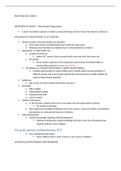
Steps of Null Hypothesis Significance Testing:
1. Assume there is no effect (null hypothesis)
2. Collect data
3. Calculate the probability of getting such data, or even more extreme data, if the null
hypothesis is true
4. Decide whether to reject or retain the null hypothesis
When we reject the null hypothesis, we are saying that:
Data like these could have come about by chance, but, data like these happen very rarely by
chance, therefore, we are pretty sure the data were not the result of chance.
When we retain the null hypothesis, we are saying that:
Data like these could have happened just by chance, in fact, data like these are likely to
happen by chance 16% of the time, therefore, we conclude that we are not confident enough
based on these data to reject the null hypothesis.
Alpha level the point at which researchers will decide whether the p is too high (retain) or
very low (reject. Typically used is 5% or less.
Type 1 error we could conclude that Sarah probably has special abilities, when really she
does not. “false positive”
Type 2 error we could conclude that Sarah probably does not have special abilities, when
really she does. “miss”
Preventing type 1 errors alpha
Preventing type 2 errors power, effect size and alpha
T-test allows researchers to test whether the difference between two groups means in an
independent-groups design is statistically significant.
T-test steps:
1. Stating the null hypothesis
2. Computing the t-test for independent groups
3. Calculating the probability of the result, or one even more extreme, if the null
hypothesis is true
4. Deciding whether to reject or retain the null hypothesis
Sampling distribution of t this method estimates the probability of obtaining the t we got,
just by chance, from a null hypothesis population.
Confidence interval provides a range which is likely to include the true population value
, H10
Experiment means that the researchers manipulated at least one variable and measured
another.
A manipulated variable a variable that is controlled, such as when the researchers assign
participants to a particular level (value) of the variable.
Measured variables take the form of records of behavior or attitudes, such as self-reports,
behavioral observations, or physiological measures.
Control variable any variable that an experimenter holds constant on purpose.
The manipulated variable is the independent variable.
The measured variable is the dependent variable.
Three rules for causation:
1. Covariance are the variables related, is there a relation
2. Temporal precedence does the study design ensure that the causal variable comes
before the outcome variable in time?
3. Internal validity does the study design rule out alternative explanations for the
results?
Independent-groups design different groups of participants are placed into different levels
of the independent variable.
Within-groups design there is only one group of participants, and each person is presented
with all levels of the independent variable.
Posttest-only design participants are randomly assigned to independent variable groups and
are tested on the dependent variable once.
Pretest/posttest design participants are randomly assigned to at least two different groups
and are tested on the key dependent variable twice-once before and once after exposure to the
independent variable.
H11
Six potential internal validity threats in one-group, pretest/posttest designs:
1. Maturation threats to internal validity
2. History threats to internal validity
3. Regression threats to internal validity
4. Attrition threats to internal validity
5. Testing threats to internal validity
6. Instrumentation threats to internal validity
Morling & Carr
479 – 495
Steps of Null Hypothesis Significance Testing:
1. Assume there is no effect (null hypothesis)
2. Collect data
3. Calculate the probability of getting such data, or even more extreme data, if the null
hypothesis is true
4. Decide whether to reject or retain the null hypothesis
When we reject the null hypothesis, we are saying that:
Data like these could have come about by chance, but, data like these happen very rarely by
chance, therefore, we are pretty sure the data were not the result of chance.
When we retain the null hypothesis, we are saying that:
Data like these could have happened just by chance, in fact, data like these are likely to
happen by chance 16% of the time, therefore, we conclude that we are not confident enough
based on these data to reject the null hypothesis.
Alpha level the point at which researchers will decide whether the p is too high (retain) or
very low (reject. Typically used is 5% or less.
Type 1 error we could conclude that Sarah probably has special abilities, when really she
does not. “false positive”
Type 2 error we could conclude that Sarah probably does not have special abilities, when
really she does. “miss”
Preventing type 1 errors alpha
Preventing type 2 errors power, effect size and alpha
T-test allows researchers to test whether the difference between two groups means in an
independent-groups design is statistically significant.
T-test steps:
1. Stating the null hypothesis
2. Computing the t-test for independent groups
3. Calculating the probability of the result, or one even more extreme, if the null
hypothesis is true
4. Deciding whether to reject or retain the null hypothesis
Sampling distribution of t this method estimates the probability of obtaining the t we got,
just by chance, from a null hypothesis population.
Confidence interval provides a range which is likely to include the true population value
, H10
Experiment means that the researchers manipulated at least one variable and measured
another.
A manipulated variable a variable that is controlled, such as when the researchers assign
participants to a particular level (value) of the variable.
Measured variables take the form of records of behavior or attitudes, such as self-reports,
behavioral observations, or physiological measures.
Control variable any variable that an experimenter holds constant on purpose.
The manipulated variable is the independent variable.
The measured variable is the dependent variable.
Three rules for causation:
1. Covariance are the variables related, is there a relation
2. Temporal precedence does the study design ensure that the causal variable comes
before the outcome variable in time?
3. Internal validity does the study design rule out alternative explanations for the
results?
Independent-groups design different groups of participants are placed into different levels
of the independent variable.
Within-groups design there is only one group of participants, and each person is presented
with all levels of the independent variable.
Posttest-only design participants are randomly assigned to independent variable groups and
are tested on the dependent variable once.
Pretest/posttest design participants are randomly assigned to at least two different groups
and are tested on the key dependent variable twice-once before and once after exposure to the
independent variable.
H11
Six potential internal validity threats in one-group, pretest/posttest designs:
1. Maturation threats to internal validity
2. History threats to internal validity
3. Regression threats to internal validity
4. Attrition threats to internal validity
5. Testing threats to internal validity
6. Instrumentation threats to internal validity