RPSGT Practice guide Question and answer 100% correct 2023
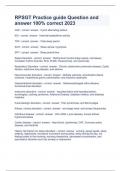
RPSGT Practice guide Question and answer 100% correct 2023CAP Cyclic alternating pattern IEA Interictal epileptiform activity TSP Total sleep period SAH Sleep apnea- hypopnea SPT Sleep period time Sleep Disorders Obstructive/ Central sleep apnea, narcolepsy, Circadian rhythm disorder, RLS, PLMS, Parasomnias, and Insomnias Respiratory Disorders Chronic obstructive pulmonary disease, Cystic fibrosis, restrictive lung disease, and asthma Neuromuscular disorders Multiple sclerosis, amyotrophic lateral sclerosis, myasthenia gravis, poliomyelitis, and myotonic dystrophy Gastrointestinal disorders Gastroesophageal reflux disease, functional bowl disorders endocrine disorders hypothyroidism and hyperthyroidism, acromegaly, cushing syndrome, Addisons Disease, diabetes mellitus, and diabetes insipidus. rheumatologic disorders Pain syndromes, and fibromyalgia Kidney, urinary disorders end stage renal, and urinary frequencies Infectious disease HIV/ AIDS, Lyme disease, human african trypanosomiases Cardio disease Heart block, dysrthmias, CHF, Coronary artery disease, and Atrial-fib History risk factors for sleep disorders snoring, apnea spells, sleep walking, nightmares, excessive movement during sleep, sleep during the day, not feeling rested in the morning, morning headaches, decreased concentration, and psychiatrics disorder such has anxiety or depression Physical exam risk factors Hypertension, Obesity diabetes, CHF, Atrial- Fib, retrognathia ( underdeveloped chin ) Primary insomnia Is difficulty falling asleep, staying asleep, a combination of both or having non refreshing sleep for atleast 1 month. Sleep may occur after stressful episode. PSG shows increase in alpha and beta waves during sleep. Some people may appear lethargic ( sluggish ) when having Insomnia you may have INCREASE in stage 1 and DECREASE in Stage 2 and 3. Stress related disorders my cause insomnia like muscle tension, headaches, stress, and metabolic rate. Insomnia is a common problem, occurring In 35% adults. Insomnia maybe caused due to a psychiatric disorder, heart problem, gastro problem, or urinary problems. Insomnia is common with Depression and bipolar Chronic Insomnia- Occurs over prolonged periods of time and has several forms Chronic Insomnia- Psychological anxiety may cause inability to sleep. PSG shows increased sleep wakefulness, increased S.L, and Decreased S.E Chronic Insomnia- Sleep state misperception- Shows normal sleep, Pt reports reduced or no sleep and often does not believe lab reports Chronic Insomnia- Hypnotic dependent sleep disorder Pt develops a tolerance to hypnotics, requiring increased doses, he is unable to fall asleep without the meds. With drawl can cause insomnia, nervousness, and agitation Chronic Insomnia- fatal familial fatal neurologic disorder were the patient is unable to fall asleep. Absence of SWS. Hypersomnia increased sleepiness and prolonged sleep ( 8-12 hours ) and Daytime sleepiness on a daily bases for atleast a month. May have hard time awakening and having a hard time working or having a social life. Naps may last an hour or so. this may occur during slower times in life such as driving or watching TV. PSG shows normal to prolonged sleep. Hypersomnia on a MSLT shows- Sleepiness through the daytime and with

Geschreven voor
- Instelling
- RPSGT Practice
- Vak
- RPSGT Practice
Documentinformatie
- Geüpload op
- 4 juni 2023
- Aantal pagina's
- 3
- Geschreven in
- 2022/2023
- Type
- Tentamen (uitwerkingen)
- Bevat
- Vragen en antwoorden
Onderwerpen
-
tsp total sleep period
-
sah sleep apnea hypopnea
-
spt sleep period time
-
sleep diso
-
rpsgt practice guide question and answer 100 corr
-
cap cyclic alternating pattern
-
iea interictal epileptiform activity

Ook beschikbaar in voordeelbundel