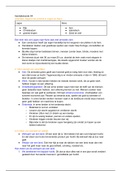
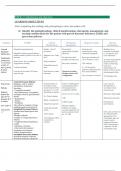
Item A Many sociologists have examined the relationship between social
class and achievement and have found that there is a clear pattern of
middle-class pupils outperforming working-class pupils. However,
sociologists also want to understand the reasons for this pattern.
Sociologists may use official statistics to investigate social class
differences in achievement. This allows researchers to see trends and
patterns over time which can help to reveal cause-and-effect
relationships. Official statistics can be highly representative because they
are often collected across a wide range of institutions. However, it is very
difficult for the researcher to be sure that official statistics have not been
manipulated in some way by the organisations responsible for their
collection.
Applying material from Item A and your knowledge, evaluate the
strengths & limitations of official statistics for the study of social class
differences in achievement (20-marks).
To investigate social class differences in achievement many sociologists
use official statistics, as suggested in Item A. These are quantitative data
which are gathered by the government or other official bodies such as
exam results, birth certificates, marriages and more. However, there are
many advantages and disadvantages when using official statistics to
investigate social class differences in achievement which consist of
practical factor as it relates to how costly the data is, theoretical which
means how good the data collected is and ethical associating to moral
issues of right and wrong.
An example of a theoretical factor on investigating social class differences
in achievement are supported by Positivists, these sociologists such as
Durkheim believe in the approach of science to investigate how the
society functions. For instant, they argue that official statistics often
produce a representative sample to the wider society, this means that
sociologists are able to get large data sets only because the government
can have access to every information and facts. An example to support
this point is the official crime survey for England and Welsh 2014 which
had a sample size od 50,000 people in total. By far, this emphasises that
class and achievement and have found that there is a clear pattern of
middle-class pupils outperforming working-class pupils. However,
sociologists also want to understand the reasons for this pattern.
Sociologists may use official statistics to investigate social class
differences in achievement. This allows researchers to see trends and
patterns over time which can help to reveal cause-and-effect
relationships. Official statistics can be highly representative because they
are often collected across a wide range of institutions. However, it is very
difficult for the researcher to be sure that official statistics have not been
manipulated in some way by the organisations responsible for their
collection.
Applying material from Item A and your knowledge, evaluate the
strengths & limitations of official statistics for the study of social class
differences in achievement (20-marks).
To investigate social class differences in achievement many sociologists
use official statistics, as suggested in Item A. These are quantitative data
which are gathered by the government or other official bodies such as
exam results, birth certificates, marriages and more. However, there are
many advantages and disadvantages when using official statistics to
investigate social class differences in achievement which consist of
practical factor as it relates to how costly the data is, theoretical which
means how good the data collected is and ethical associating to moral
issues of right and wrong.
An example of a theoretical factor on investigating social class differences
in achievement are supported by Positivists, these sociologists such as
Durkheim believe in the approach of science to investigate how the
society functions. For instant, they argue that official statistics often
produce a representative sample to the wider society, this means that
sociologists are able to get large data sets only because the government
can have access to every information and facts. An example to support
this point is the official crime survey for England and Welsh 2014 which
had a sample size od 50,000 people in total. By far, this emphasises that