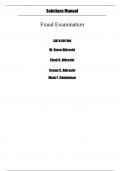
Solutions Manual
Fraud Examination
SIXTH EDITION
W. Steve Albrecht
Chad O. Albrecht
Conan C. Albrecht
Mark F. Zimbelman
, CONTENTS
Chapter 1 THE NATURE OF FRAUD ........................................................................1
Chapter 2 WHY PEOPLE COMMIT FRAUD ..........................................................15
Chapter 3 FIGHTING FRAUD: AN OVERVIEW ....................................................29
Chapter 4 PREVENTING FRAUD ............................................................................46
Chapter 5 RECOGNIZING THE SYMPTOMS OF FRAUD ....................................57
Chapter 6 DATA-DRIVEN FRAUD DETECTION ..................................................71
Chapter 7 INVESTIGATING THEFT .......................................................................87
Chapter 8 INVESTIGATING CONCEALMENT .....................................................99
Chapter 9 CONVERSION INVESTIGATION METHODS....................................106
Chapter 10 INQUIRY METHODS AND FRAUD REPORTS..................................127
Chapter 11 FINANCIAL STATEMENT FRAUD.....................................................140
Chapter 12 REVENUE AND INVENTORY-RELATED
FINANCIAL STATEMENT FRAUDS ..................................................157
Chapter 13 LIABILITY, ASSET, AND INADEQUATE
DISCLOSURE FRAUDS ........................................................................176
Chapter 14 FRAUD AGAINST ORGANIZATIONS ................................................190
Chapter 15 CONSUMER FRAUD .............................................................................204
Chapter 16 BANKRUPTCY, DIVORCE, AND TAX FRAUD ................................213
Chapter 17 FRAUD IN E-COMMERCE ...................................................................226
Chapter 18 LEGAL FOLLOW-UP ............................................................................237
, Chapter 1
THE NATURE OF FRAUD
Discussion Questions
1. Fraud always involves deception, confidence, and trickery. The following is one of
the most common definitions of fraud:
a. “Fraud is a generic term, and embraces all the multifarious means which
human ingenuity can devise, which are resorted to by one individual, to get an
advantage over another by false representations. No definite and invariable
rule can be laid down as a general proposition in defining fraud, as it
includes surprise, trickery, cunning and unfair ways by which another is
cheated. The only boundaries defining it are those which limit human
knavery.”
Fraud is deception that includes the following elements:
1. A representation
2. About a material point
3. That is false,
4. Intentionally or recklessly so,
5. Which is believed
6. And acted upon by the victim
7. To the victim’s damage.
2. Fraud affects individuals, consumers, and organizations in various ways. Fraud
usually lowers organizations’ net income dollar for dollar. To recover these costs,
consumers and individuals must pay more for goods and services. For example,
health care fraud and insurance fraud increase premiums that individuals must pay.
The cost of fraud eventually reaches every part of the economy, including individuals,
consumers, and organizations.
The 2008 study by The Association of Certified Fraud Examiners estimates that U.S.
organizations lose roughly 7 percent of their annual revenues to fraud. Applied to the
U.S. gross domestic product (GDP), this 7 percent figure translates to approximately
$994 billion in fraud losses.
3.
a. Employee Embezzlement: In this type of fraud, employees deceive their
employers by taking company assets. Embezzlement can be either direct or
indirect.
1
© 2019 Cengage Learning, Inc. May not be scanned, copied or duplicated, or posted to a publicly accessible website, in whole or in part.
, Albrecht: Fraud Examination, 6e
b. Management Fraud: Distinguished from other types of fraud both by the
nature of the perpetrators and by the method of deception. In its most common
form, management fraud is deception perpetrated by top management’s
manipulation of financial statements. The victims of management fraud are
typically stockholders, lenders, and others who rely on financial statement
information.
c. Investment Scams or Consumer Scams: A type of fraud that is perpetrated
when fraudulent and usually worthless investments are sold to unsuspecting
investors.
d. Vendor Fraud: Perpetrated by vendors; comes in two main varieties: fraud
perpetrated by vendors acting alone, and fraud perpetrated through collusion
between buyers and vendors. Vendor fraud usually results in an overcharge
for purchased goods, the shipment of inferior goods, or the nonshipment of
goods even though payment was made.
e. Customer Fraud: Usually involves customers not paying for goods
purchased, getting something for nothing, or deceiving organizations into
giving them something they should not have.
4.
a. Criminal law is the branch of law that deals with offenses of a public nature.
Criminal laws generally deal with offenses against society as a whole.
Violators of criminal laws are prosecuted either federally or by a state for
violating a statute that prohibits some type of activity.
b. Civil law is the body of law that provides remedies for violations of private
rights. Civil law deals with rights and duties between individuals. The purpose
of a civil lawsuit is to compensate for harm done to an individual. Unlike
criminal cases, where juries consist of 12 jurors, juries in civil cases may have
as few as six jurors, and the verdict of the jury need not be unanimous.
Additionally, judges often hear civil cases instead of juries. In civil lawsuits,
plaintiffs must only prove their case by the “preponderance of the evidence.”
In other words, there need be only slightly more evidence supporting the
plaintiff than supporting the defendant.
5.
a. Civil
b. Criminal
c. Civil
d. Criminal
e. Criminal
f. Civil
g. Criminal
h. Civil
2 Chapter 1
© 2019 Cengage Learning, Inc. May not be scanned, copied or duplicated, or posted to a publicly accessible website, in whole or in part.
Fraud Examination
SIXTH EDITION
W. Steve Albrecht
Chad O. Albrecht
Conan C. Albrecht
Mark F. Zimbelman
, CONTENTS
Chapter 1 THE NATURE OF FRAUD ........................................................................1
Chapter 2 WHY PEOPLE COMMIT FRAUD ..........................................................15
Chapter 3 FIGHTING FRAUD: AN OVERVIEW ....................................................29
Chapter 4 PREVENTING FRAUD ............................................................................46
Chapter 5 RECOGNIZING THE SYMPTOMS OF FRAUD ....................................57
Chapter 6 DATA-DRIVEN FRAUD DETECTION ..................................................71
Chapter 7 INVESTIGATING THEFT .......................................................................87
Chapter 8 INVESTIGATING CONCEALMENT .....................................................99
Chapter 9 CONVERSION INVESTIGATION METHODS....................................106
Chapter 10 INQUIRY METHODS AND FRAUD REPORTS..................................127
Chapter 11 FINANCIAL STATEMENT FRAUD.....................................................140
Chapter 12 REVENUE AND INVENTORY-RELATED
FINANCIAL STATEMENT FRAUDS ..................................................157
Chapter 13 LIABILITY, ASSET, AND INADEQUATE
DISCLOSURE FRAUDS ........................................................................176
Chapter 14 FRAUD AGAINST ORGANIZATIONS ................................................190
Chapter 15 CONSUMER FRAUD .............................................................................204
Chapter 16 BANKRUPTCY, DIVORCE, AND TAX FRAUD ................................213
Chapter 17 FRAUD IN E-COMMERCE ...................................................................226
Chapter 18 LEGAL FOLLOW-UP ............................................................................237
, Chapter 1
THE NATURE OF FRAUD
Discussion Questions
1. Fraud always involves deception, confidence, and trickery. The following is one of
the most common definitions of fraud:
a. “Fraud is a generic term, and embraces all the multifarious means which
human ingenuity can devise, which are resorted to by one individual, to get an
advantage over another by false representations. No definite and invariable
rule can be laid down as a general proposition in defining fraud, as it
includes surprise, trickery, cunning and unfair ways by which another is
cheated. The only boundaries defining it are those which limit human
knavery.”
Fraud is deception that includes the following elements:
1. A representation
2. About a material point
3. That is false,
4. Intentionally or recklessly so,
5. Which is believed
6. And acted upon by the victim
7. To the victim’s damage.
2. Fraud affects individuals, consumers, and organizations in various ways. Fraud
usually lowers organizations’ net income dollar for dollar. To recover these costs,
consumers and individuals must pay more for goods and services. For example,
health care fraud and insurance fraud increase premiums that individuals must pay.
The cost of fraud eventually reaches every part of the economy, including individuals,
consumers, and organizations.
The 2008 study by The Association of Certified Fraud Examiners estimates that U.S.
organizations lose roughly 7 percent of their annual revenues to fraud. Applied to the
U.S. gross domestic product (GDP), this 7 percent figure translates to approximately
$994 billion in fraud losses.
3.
a. Employee Embezzlement: In this type of fraud, employees deceive their
employers by taking company assets. Embezzlement can be either direct or
indirect.
1
© 2019 Cengage Learning, Inc. May not be scanned, copied or duplicated, or posted to a publicly accessible website, in whole or in part.
, Albrecht: Fraud Examination, 6e
b. Management Fraud: Distinguished from other types of fraud both by the
nature of the perpetrators and by the method of deception. In its most common
form, management fraud is deception perpetrated by top management’s
manipulation of financial statements. The victims of management fraud are
typically stockholders, lenders, and others who rely on financial statement
information.
c. Investment Scams or Consumer Scams: A type of fraud that is perpetrated
when fraudulent and usually worthless investments are sold to unsuspecting
investors.
d. Vendor Fraud: Perpetrated by vendors; comes in two main varieties: fraud
perpetrated by vendors acting alone, and fraud perpetrated through collusion
between buyers and vendors. Vendor fraud usually results in an overcharge
for purchased goods, the shipment of inferior goods, or the nonshipment of
goods even though payment was made.
e. Customer Fraud: Usually involves customers not paying for goods
purchased, getting something for nothing, or deceiving organizations into
giving them something they should not have.
4.
a. Criminal law is the branch of law that deals with offenses of a public nature.
Criminal laws generally deal with offenses against society as a whole.
Violators of criminal laws are prosecuted either federally or by a state for
violating a statute that prohibits some type of activity.
b. Civil law is the body of law that provides remedies for violations of private
rights. Civil law deals with rights and duties between individuals. The purpose
of a civil lawsuit is to compensate for harm done to an individual. Unlike
criminal cases, where juries consist of 12 jurors, juries in civil cases may have
as few as six jurors, and the verdict of the jury need not be unanimous.
Additionally, judges often hear civil cases instead of juries. In civil lawsuits,
plaintiffs must only prove their case by the “preponderance of the evidence.”
In other words, there need be only slightly more evidence supporting the
plaintiff than supporting the defendant.
5.
a. Civil
b. Criminal
c. Civil
d. Criminal
e. Criminal
f. Civil
g. Criminal
h. Civil
2 Chapter 1
© 2019 Cengage Learning, Inc. May not be scanned, copied or duplicated, or posted to a publicly accessible website, in whole or in part.