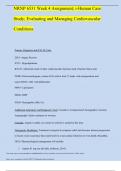
3A Ornamental Pest Control: Unit 1. Introduction - Test Your Knowledge with Complete Solutions!
What is the main purpose of this manual? - ANSWER-To prepare people for the Ornamental Pest Control (3A) certification examination. In general, it is a reference for safe and effective pesticide and pest management decisions for professionals installing or maintaining ornamentals. How do ornamental plantings enhance people's lives? - ANSWER-1. Plants filter pollutants from the air. 2. Plant roots anchor soil and prevent erosion. 3. Plants provide food and shelter for animals we value or enjoy. 4. Trees offer shade. Some types of trees and shrubs are effective windbreaks. As a result, well-planned landscapes can reduce heating and cooling costs. 5. Along rights-of-way, shrub plantings make roadways safer. They reduce glare, serve as a crash barrier, and add interest and color to the corridor. 6. Many types of plantings reduce noise. 7. The beauty of landscapes and interiorscapes contributes to our sense of well-being. True or False: A commercial applicator who uses pesticides to control turf pests needs certification in Category 3A. - ANSWER-False. Use of pesticides to maintain turf requires certification in Category 3B (Turf Pest Control). What publications provide current pest control recommendations? - ANSWER-Pest Management Guides (PMGs). The PMGs, produced by Virginia Cooperative Extension at Virginia Tech, are revised annually. The recommendations found in the PMGs are specific for growing conditions and pest problems found in Virginia. What is integrated pest management (IPM)? - ANSWER-A management plan that combines all suitable pest control tactics into a single, unified plan. IPM includes biological, cultural, mechanical, and/or chemical methods. The goal of an IPM plan is to reduce pests and their damage to an acceptable level through monitoring and prevention. What are the main categories of pests that harm ornamental plants? - ANSWER-Insects, mites, diseases, nematodes, mollusks, and weeds. Certain vertebrates may also harm ornamentals. However, vertebrate pest control is outside the scope of this manual. As an ornamental plant manager, how should you approach a pesticide operation? - ANSWER-1. Be well informed about the target pest, the site, and the specifics of the operation. 2. Listen to and respect public concerns. 3. Use great care every time you apply pesticides. What part does pesticide use play in ornamental pest control? - ANSWER-Pesticides are useful tools in managing ornamental pests if they are handled properly. Balance the ben

Geschreven voor
- Instelling
- 3A Ornamental
- Vak
- 3A Ornamental
Documentinformatie
- Geüpload op
- 1 februari 2024
- Aantal pagina's
- 2
- Geschreven in
- 2023/2024
- Type
- Tentamen (uitwerkingen)
- Bevat
- Vragen en antwoorden
Onderwerpen
-
3a ornamental pest control unit 1 introduction
-
3a ornamental pest control unit 1stuvia
-
what is the main purpose of this manual answer
-
how do ornamental plantings enhance peoples lives

Ook beschikbaar in voordeelbundel