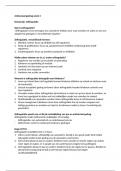
Intro to Counseling Final Exam 2024 Questions With Latest With Correct Solutions
Intro to Counseling Final Exam Attentive Silence - ANS Not ignoring but rather just accepting what the other person is saying with full attention. ASOCIAL: not social Closed question - ANS question that can be answered with a yes or no Example: Did you get fired? Collaboration - ANS recognizing that the counselor and client are a team and are committed to the therapeutic goals. Countertransference - ANS the counselor's conscious or unconscious emotional reaction to the client Ex: client reminds you of your little brother Directive counseling - ANS embracing the role of a mental health expert and guiding the session and client change Emotional intelligence - ANS recognizing what you feel and being able to accept and cope with distressing feelings. Empathy - ANS willingness to transcend one's own situation and see through the eyes of the other Encouragers - ANS a variety of verbal and non-verbal ways of prompting clients to continue talking. Ex: "Okay." "Uh-huh." "Yes." "Can you tell me more about that?" Non-directive counseling - ANS lets the client take the lead and does not prescribe, give advice, or overtly guide the client. The counselor believes that the answers to the client's problems are within the client Open questions - ANS leaves options for the client to respond Ex: Tell me more about the blowup at the office. Reflection of feeling - ANS identifying the clients emotions Ex: "You're really embarrassed about what has happened and a little afraid people don't trust you to act professionally." Reflection of meaning - ANS identifying what the problem means to the client Ex: "Your identity has always been tied up with your job. Now it is hard to feel good about yourself." Reflective practitioner - ANS making a commitment to being aware of our own reactions so we can grow and so we can analyze what effect we are having on others from our own baggage. Ask yourself questions such as: Why does this client make me angry? Why am I having such a strong reaction (positive or negative) to this client? Roadmap of the helping process - ANS an analogy that helps counselors and clients remember the basic journey that counseling entails. 1. Relationship building 2. Assessment 3. Treatment planning 4. Intervention & action 5. Evaluation & reflection Termination - ANS can occur in stage of evaluation & reflection. Counselor and client jointly analyze progress, plan further treatment, or end (terminate) counseling. Therapeutic alliance - ANS trust, liking, respect and caring between client and counselor Addictions counselor - ANS A counselor who works with clients to help overcome addictions, either as part of a larger intervention or as a focus of treatment Adult Congregate Living Facility (ACLF) - ANS Facility for people suffering from chronic mental disorders. No formal treatment; however, clients learn to live independently and deal effectively with others. Best used for those that need minimal supervision and assistance Art (expressive) Therapy - ANS A counselor uses the creative process to improve and enhance physical, mental, and emotional well-being of clients of all ages. Career counselor - ANS a counselor who helps clients with career exploration, career change, and personal career development College counselor - ANS A counselor who provides direct services to students as well as outreach programming to the university community, crisis prevention and intervention, and consultation with faculty and administration Classroom guidance - ANS Efficient method to get important information and skills to students within the school structure Has students usually at a similar developmental stage/age College student personnel - ANS A counselor helps students adjust to campus life through campus student affairs and assists students to develop a journey of lifelong learning and discovery. Community counselor - ANS A counselor who works with people in the community who have a variety of mental health concerns and a wide range of mental health functioning. Gerontological counselor - ANS A counselor who provides services to elderly clients and their families as they face developmental changes Rehabilitation counselor - ANS A counselor who works with clients who have disabilities to help them maximize their potential, including their personal, social, and vocational goals. School counselor - ANS counselors who works in elementary, middle, or high school to provide academic, career, and personal/social competencies to students through comprehensive school counseling programs Inpatient hospitalization - ANS A hospital setting. Clients remain in the hospital voluntarily, but most are committed involuntarily due to a danger to self or others. Ward is often locked. Residential treatment - ANS Most programs are voluntary. Less restrictive than a hospital, but clients normally agree to stay for the entire course of treatment. Residential treatment is commonly used for treatment of addictions, eat- ing disorders, and adolescent behavior problems. Partial hospitalization (day treatment) - ANS partial hospitalization takes place in a hospital setting. Day treatment is open to the same kinds of clients but is generally less restrictive. Clients receive psychoeducational and therapeutic groups along with some individual counseling and recreation. Outpatient counseling - ANS Clients receive individual, group, couples, family, or multifamily group counseling in the offices of the agency or private practice or college counseling center. In-home counseling - ANS Counselor conducts assessments or individual, couples, or family counseling in the home. Psychoeducation - ANS Clients do not have the skills necessary to cope with a particular problem and could benefit from the support of a group. Ageism - ANS prejudice or discrimination on the basis of a person's age. Assimilation - ANS acquiring traits and characteristics of one culture by another, whereby the minority culture eventually loses all the distinct characteristics that it once had. More extreme reaction than acculturation to the blending of two cultures, and when people are assimilated into a new culture, their original culture disappears. Acculturation - ANS occurs when individuals from one culture come into firsthand contact with another culture, as when an immigrant moves to the United States. the minority group must conform to the dominant culture's values, language, and expectations. Disability - ANS physical or mental impairment that substantially limits a major life activity Discrimination - ANS putting members of a group at a disadvantage or treating them unfairly because of their group membership Ethnicity - ANS Hispanic/latino and non hispanic/latino More based on culture Race - ANS White, black, american indian, mixed. social definition Ethnocentrism - ANS the belief that one's own culture is the standard by which all other cultures are judged Gender - ANS a social construct that emphasizes attitudes, behaviors, beliefs, and relationships that are typically associated with being male or female Generational status - ANS baby boomers, generation x, millennials Heterosexism - ANS assuming someone is heterosexual or assuming heterosexual is the standard by which others are judged Homophobia - ANS a specific type of stigma that involves irrational fear or hatred of sexual minorities. Stigma - ANS severe social disapproval of people based on characteristics or beliefs that differ from the norm Internalized homophobia - ANS gay persons believing in the homophobic heterosexist messages Maximization - ANS overemphasize the significance of ones race/ethnicity Minimization - ANS underemphasize the significance of ones race/ethnicity Multicultural counseling competencies (MCCs) - ANS help guide the interpersonal interactions of counselors engaging in cross-cultural counseling. Multiculturalism - ANS the practice of acknowledging and respecting the various cultures, religions, races, ethnicities, attitudes, and opinions within an environment. Prejudice - ANS a prejudgment, or making decisions or assumptions about individuals or groups without sufficient knowledge or understanding. Helm's Six-Stage model of racial identity development - ANS 1. pre-encounter 2. encounter 3. immersion 4. emersion 5. internalization 6. integrative-awareness Racially color blind - ANS claiming to not seeing the persons race or color just seeing the person Social justice - ANS promoting access and equity to ensure full participation in the life of a society, particularly for those who have been systematically excluded Socioeconomic Status (SES) - ANS an economic and sociological construction that is a combined index of a person's income, education, and occupation. The Big Five Theory of Personality - ANS 1. Conscientiousness: Responsible and dependable, you are a planner, organized and productive, with a high need for achievement. 2. Extraversion & Sociability: Talkative and sociable, you are ambitious, assertive, and active— generally a positive person. 3. Agreeableness: You are cooperative, trusting, sympathetic, good-natured, and empathic. 4. Neuroticism: Your mood fluctuates a lot; you often feel fed up. You frequently find that you are irritable, guilty, or self-conscious. 5. Openness to Experience, Intellectance, & Culture: You are imaginative, artistic, aesthetically interested, curious, and have a need for variety. You are intellectual and feel deeply. Assessment - ANS trying to understand the person. collecting and analyzing information and using it to guide the session extensive Testing - ANS a means of assessment Big Three Assessment Mistakes - ANS 1. Evidence of a severe mental disorder such as schizophrenia or bipolar disorder that affects all aspects of the client's functioning 2. Evidence that the client is abusing alcohol or drugs 3. Evidence that the client is dangerous to self or others, including failure to assess bullying, suicide, child abuse, and domestic violence. Diagnostic Interviewing - ANS a specialized type of interview that helps counselors arrive at a client's diagnosis. Galen's Four Temperaments - ANS Choleric (yellow bile): excitable, emotional Melancholic (black bile): sad and inhibited Sanguine (blood): active and enthusiastic but changeable Phlegmatic (phlegm): inactive, calm Type theories - ANS people can be divided into somewhat distinct categories like introverts or extroverts. Trait theories - ANS all people have the same characteristics or traits to a greater or lesser degree. what makes people unique is the personal combination of these qualities, such as flexibility, trust, sympathy, or rebelliousness Intake session - ANS the counselor elicits background information from the client. Minnesota Multiphasic Personality Inventory (MMPI) - ANS a psychological test that assesses personality traits and psychopathology. It is primarily intended to test people who are suspected of having mental health or other clinical issues. Neuropsychological assessment - ANS Impairment in a psychological function such as memory due to problems in the central nervous system Nonstandardized instruments - ANS do not have the same rigorous test development and do not allow for comparisons across individuals. Ex: Intake interviews or projective drawings Positive Psychology - ANS seeks to study the efficacy of treatments such as hope, forgiveness, gratitude, optimism and happiness, self-efficacy, love, and many others. Strengths based Signs vs. Symptoms - ANS Signs are things the counselor observes, such as "disheveled appearance." Symptoms are things the client complains about, such as "feelings of sadness" Somatotypes - ANS body physique categories 1. Endomorph: soft rounded bodies and love comfort, sociability, food, affection, and people. 2. Mesomorph: strong, tough, and muscled and love adventure, risk taking, and physical activity 3. Ectomorph: thin and lightly muscled and are restrained, secretive, self-conscious, and prefer solitude Standardized tests - ANS structured instruments that have been developed according to rigorous criteria and allow comparisons to be made across individuals. voluntariness - ANS client must have the freedom to enter into counseling without coercion or under duress ACA Code of Ethics - ANS the primary responsibility of counselors is to respect the dignity and to promote the welfare of clients; ethical practice empowers counselors to help clients grow and develop; counselors should be aware of their own values and avoid imposing values that are inconsistent with counseling goals; students have the same obligations to clients as those required of professional counselors Americans with Disabilities Act (ADA) - ANS prohibits discrimination on the basis of disability and improves accessibility for persons with disabilities in everyday life. ASCA Code of Ethics - ANS primary obligation is to the students, who are to be treated with dignity and respect as unique individuals Aspirational ethics - ANS the attempt to accomplish the maximum in moral and ethical outcomes; counselors continually scan their interventions and approaches to make sure they are always aware of the effects of their actions on their clients; less prescriptive and more general than mandatory ethics (integrity, social responsibility, justice); continuous active process involving self-awareness and self-monitoring; highly ethical Autonomy - ANS the right of clients to make their own choices. Unless there is a compelling reason to the contrary (e.g., danger to self or others), clients should be free to act as they desire. Beneficence - ANS counselors act in a way that contributes to the well-being of their clients. It is an obligation to provide aid and assistance, to be proactive, and to help clients. Nonmaleficence - ANS "above all, do no harm." counselors refrain from intentionally inflicting harm on their clients and refraining from any action that may cause harm. Justice - ANS involves fairness. clients have equal access to services and resources, and counselors ensure that they do not discriminate. If counselors treat clients differently, then there must be a therapeutic rationale for doing so. Fidelity - ANS keeping promises and commitments and being loyal to clients. based on a bond of trust in the counseling relationship. Counselors know that their primary responsibility is to their clients. Buckley Amendments (Family Educational Rights and Privacy Act) (FERPA) - ANS law states that federal funds can be withheld from any educational institution that (a) fails to provide parents access to their child's educational records (b) disseminates any information from a student's educational records (with a few exceptions) to any third party without the parent's permission. Capacity - ANS to be able to make rational decisions. When it is lacking (either because the client is a minor or because he or she lacks the cognitive ability to have it), typically a parent or guardian must give consent for the counseling relationship to begin. Informed Consent - ANS 1. Capacity 2. Comprehension 3. Voluntariness Comprehension - ANS The information must be presented by the counselor in a clear and unambiguous manner, using common language (not clinical language or psychological terms). Case law - ANS Determined by precedent. Judges and juries make legal decisions, which are then codified into case law and are referenced to help determine the legal standing of a particular issue be- fore the courts. Ex: the counselors' duty to warn or duty to protect. Malpractice requires the following three elements: - ANS • The counselor must have a duty to the client (that is, there must be a contract, or implied contract, of a professional relationship between the counselor and client). • The counselor must have acted in a negligent or improper manner (that is, acted outside of what is the professional standard of practice). • There must be a causal relationship between negligence and the damage claimed by the client (the counselor's action—or inaction—caused harm to the client Dual relationship - ANS Counselor and client have an additional personal or professional relationship Health Insurance Portability and Accountability Act (HIPPA) - ANS counselors must follow the act's requirements; clients have a reasonable expectation that all health records will be kept private and confidential; applies to all medical professionals Individualized Education Plans (IEP) - ANS allow children with physical, emotional, or intellectual disabilities and their parents to participate in the educational process. Negligence - ANS not meeting the professional standards of care Practice act - ANS determine who can conduct counseling or call themselves a counselor Privileged communication - ANS legal concept that ensures that whatever is discussed in the therapeutic relationship cannot be revealed in a legal proceeding, unless certain criteria are met professional disclosure statement - ANS used to inform clients of that individual's scope of practice. Tarasoff vs. Regents of the University of California - ANS court case ruling that a mental health professional must warn a potential victim of a dangerous client, overriding the client's right to confidentiality Title Act - ANS state law regulating mental health counseling and determining who can call themselves a counselor Title IX - ANS requires schools with federal funding to provide equal access to students of both sexes; school counselors adhere to requirements by using gender-neutral, non-stereotypical materials in their counseling and classroom guidance instruction and promoting equality between the sexes in their schools Assessment-Driven Treatment - ANS many counselors are not trained at the master's level to conduct full-scale psychological assessment batteries. Counselors must be more involved in assessment, especially in the area of risk for suicide and violence and for monitoring client progress. The future will probably involve more use and more training in assessment if individual counselors and the profession as a whole seek to justify its effectiveness Complementary and Alternative Medicines (CAMs) - ANS chiropractic care, homeopathy (highly diluted drugs made from natural ingredients), acupuncture, and massage therapy Cultural awareness/competence - ANS in the future, counselors will need to be even more willing to cross social/class boundaries and recognize the needs of those who are economically disadvantaged. A counselor's best source of training is working with clients who are culturally or socially different from them. It may require counselors to work outside of their comfort zone Chi Sigma Iota - ANS the counseling honor society Eclectic/Integrative therapy - ANS open to new ideas and discoveries. integrate new findings with basic tenets of older theory. Ecotherapy - ANS nature therapy Ethical awareness - ANS Being ethically aware means that you do not need to react immediately and make snap decisions in most cases. Hybrid instruction - ANS a type of instruction that involves some typical classroom instruction blended with online assignments. The ability to learn online and master the associated technologies Japanese (Quiet) Therapy - ANS involve periods of isolation and reflection. Their primary goal is to spur client action in the face of inaction. Process addictions - ANS addictions that do not involve a substance but are the result of repetitively engaging in a particular process such as watching Internet pornography, playing a video game, gambling, spending money, and even working too much. They become addictions when they cause disruptions in the person's career, finances, and relationships second life - ANS an online virtual world that serves as a location for professional conferences and workshops in the counseling profession. It allows counselors from all over the world to "attend" these professional workshops without the cost of travel, hotels and conference centers. The conferences and workshops are given by avatars who represent the presenter. Technophilia - ANS the unhealthy belief that all technology is good for you Culturally encapsulated counselor - ANS a counselor who is ill-equipped to address needs to minority clients

Geschreven voor
- Instelling
- Intro To Clinical Mental Health Counseling
- Vak
- Intro To Clinical Mental Health Counseling
Documentinformatie
- Geüpload op
- 24 februari 2024
- Aantal pagina's
- 11
- Geschreven in
- 2023/2024
- Type
- Tentamen (uitwerkingen)
- Bevat
- Vragen en antwoorden
Onderwerpen
-
intro to counseling final exam