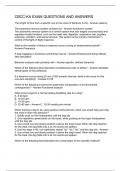
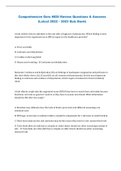
CBCC-KA EXAM QUESTIONS AND ANSWERS
The length of time from a specific cue to the onset of behavior is the - Answer-Latency The peripheral nervous system includes the - Answer-Autonomic system The autonomic nervous system is a control system that acts largely unconsciously and regulates bodily functions, such as the heart rate, digestion, respiratory rate, pupillary response, urination, and sexual arousal. This system is the primary mechanism in control of the fight-or-flight response. What is the number of times a response occurs during an observational period? - Answer-Frequency A dog engaging in excessive self-licking may be - Answer-Relaxed and being offered little stimulation Behavior analysts work primarily with - Answer-specific, defined behaviors Which of the following best describes a professional code of ethics? - Answer-Identifies ethical goals of the profession If a behavior occurs during 25 out of 200 sample intervals, what is the score for this one-zero sampling? - Answer-0.125 Which of the following involves the systematic manipulation of environmental contingencies? - Answer-Functional analysis What is the range for a normal resting breathing rate for a dog? A. 5-30 bpm B. 10-20 bpm C. 10-35 bpm D. 12-40 bpm - Answer-C. 10-35 breaths per minute When training a dog to sit, using positive reinforcement, which cue would help your dog the most to learn this behavior? 1. Gently push on the hindquarters until the dog sits 2. Give repetitive upward jerks on the leash, while pushing on the dog's hindquarters until the dog sits 3. Use

Geschreven voor
- Instelling
- CBCC-KA
- Vak
- CBCC-KA
Documentinformatie
- Geüpload op
- 8 juni 2024
- Aantal pagina's
- 14
- Geschreven in
- 2023/2024
- Type
- Tentamen (uitwerkingen)
- Bevat
- Vragen en antwoorden
Onderwerpen
-
cbcc ka exam questions and answers

Ook beschikbaar in voordeelbundel