ServSafe Manager exam Certification questions 2023 with 100% correct answers
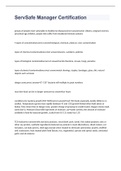
groups of people most vulnerable to foodborne diseases senior citizens, pregnant women, preschool age children, people who suffer from weakened immune systems 4 types of contamination biological, chemical, physical, cross contamination types of chemical contamination cleaners, sanitizers, polishes types of biological contamination harmful bacteria, viruses, fungi, parasites types of physical contamination metal shavings, staples, bandages, glass, dirt, natural objects such as bones danger zone 41º-135º bacteria will multiply in great numbers max time food can be in danger zone four hours conditions for bacteria growth (FAT TOM) Food (TCS foods especially, Acidity (little to no acidity), Temperature (grows most rapidly between 41 and 135) growth limited when held above or below, Time (more time in danger zone, greater change of growing to unsafe levels), Oxygen (some need, some don't), Moisture (food with high levels of moisture, aw=water activity; the amount of moisture available in food for bacterial growth, scales from 0.0-1.0, water has 1.0) TCS food milk and dairy products, meat (beef, pork, lamb), fish, baked potatoes, tofu or other soy protein, synthetic ingredients (textured soy protein in meat alternatives), sliced melons, cut tomatoes, cut leafy greens, shell eggs (except when treated to eliminate salmonella), poultry, shellfish and crustaceans, heat treated plant food (beans, rice, vegetables), sprouts and sprout seeds, untreated garlic and oil mixtures bacteria produced toxins toxins that are produced by bacteria cannot be killed by heat or cold spores created by bacteria, won't reproduce unless conditions are right, have a thick shell costs of foodborne illness to an operation loss of customers and sales, loss of reputation, negative media exposure, lowered staff morale, lawsuits and legal fees, staff missing work, increased insurance premiums, staff retraining 5 risk factors for foodborne illness 1) purchasing food from unsafe sources 2) failing to cook food correctly 3) holding food at incorrect temperatures 4) using contaminated equipment 5) practicing poor personal hygiene how food becomes unsafe (four reason) 1) time/temperature abuse 2) cross contamination 3) poor personal hygiene 4) poor cleaning and sanitizing time/temperature abuse when food has stayed too long at temperatures good for pathogen growth; food has not been held or stored at correct temperature, it is not cooked or reheated enough to kill pathogens, it is not cooled correctly
Geschreven voor
- Instelling
- ServSafe Manager
- Vak
- ServSafe Manager
Documentinformatie
- Geüpload op
- 31 maart 2023
- Aantal pagina's
- 10
- Geschreven in
- 2022/2023
- Type
- Tentamen (uitwerkingen)
- Bevat
- Vragen en antwoorden
Onderwerpen
-
servsafe manager exam certification questions 2023 with 100 correct answers

Ook beschikbaar in voordeelbundel