NR-503 Epidemiology Final Exam Already Passed!!
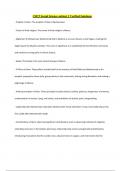
Cultural Awareness - ANSWER:Self-examination of one's own prejudices and biases toward other cultures. An in-depth exploration of one's own cultural/ethnic background. Cultural competence in nursing consists of four principles. - ANSWERCare is designed for the specific client. Care is based on the uniqueness of the person's culture and includes cultural norms and values. Care includes self-employment strategies to facilitate client decision making to improve health behaviors. Care is provided with sensitivity and is based on the cultural uniqueness of clients. The APN may also use the Kleinman Explanatory Model of Illness (1978). Below are the questions that can be utilized. - ANSWERWhat do you call your problem? What do you think caused your problem? Why do you think it started when it did? What does your sickness do to you? What do you fear most about your sickness? What are the chief problems your sickness has caused you? What kind of treatment do you think you should receive? What is the most important result you hope to receive from the treatment? According to Giger and Davidhizer (2000), although cultures differ, they all have the same basic organizing factors that must be assessed in order to provide care for culturally diverse patients. These factors include - ANSWERcommunication (verbal and nonverbal); personal space; social organization; time perception; environmental control; and biological variations. The NCCC uses four major approaches to fulfill its mission, including - ANSWERWeb-based technical assistance, (2) knowledge development and dissemination, (3) supporting a community of learners, and (4) collaboration and partnerships with diverse groups. Epidemiological Triad: - ANSWERhost, agent, environment Genetics - ANSWERThe study of individual genes and their impact on relatively rare single gene disorders Absolute risk - ANSWERis the probability of an event, such as illness, injury, or death. Gives no indication of how its magnitude compares with others The odds ratio - ANSWERclosely approximates the relative risk if the disease is rare. Odds ratio and the relative risk are used - ANSWERto assess the strength of association between risk factor and outcome. How is Attributible risk used - ANSWERis used to make risk-based decisions for individuals. Population-attributable risk measures - ANSWERare used to form public health decisions EGAPP: - ANSWEREvaluation of Genomic Applications in Practice and Prevention GAPPNet - ANSWERGenomic Applic
École, étude et sujet
- Établissement
- NR-503
- Cours
- NR-503
Infos sur le Document
- Publié le
- 1 mai 2023
- Nombre de pages
- 23
- Écrit en
- 2022/2023
- Type
- Examen
- Contenu
- Questions et réponses
Sujets
- nr 503 epidemiology
- nr 503
-
nr 503 epidemiology final exam already passed
-
nr 503 epidemiology final exam
-
cultural awareness answerself examination of ones own prejudices and biases toward othe