Essentials of Pediatric Nursing CH 3 (A+ Guaranteed)
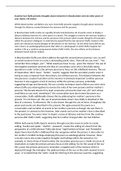
Origin: Chapter 3, 1 The nurse is examining a 10-month-old boy who was born 10 weeks early. Which finding is cause for concern? A) The child has doubled his birth weight. B) The child exhibits plantar grasp reflex. C) The child's head circumference is 19.5 inches. D) No primary teeth have erupted yet. correct answers Ans: C Feedback: The child's head size is large for his adjusted age (7.5 months), which would be cause for concern. Birth weight doubles by about 4 months of age. Plantar grasp reflex does not disappear until 9 months adjusted age. Primary teeth may not erupt until 8 months adjusted age. Origin: Chapter 3, 2 The nurse is teaching a new mother about the drastic growth and developmental changes her infant will experience in the first year of life. Which statement describes a developmental milestone occurring in infancy? A) By 6 months of age the infant's brain weighs half that of the adult brain; at age 12 months, the brain weighs 2.5 times what it did at birth. B) Most infants triple their birthweight by 4 to 6 months of age and quadruple their birthweight by the time they are 1 year old. C) The head circumference increases rapidly during the first 6 months: the average increase is about 1 inch per month. D) The heart triples in size over the first year of life; the average pulse rate decreases from 120 to 140 in the newborn to about 100 in the 1-year-old. correct answers Ans: A Feedback: By 6 months of age the infant's brain weighs half that of the adult brain; at age 12 months, the brain weighs 2.5 times what it did at birth. Most infants double their birthweight by 4 to 6 months of age and triple their birthweight by the time they are 1 year old. The head circumference increases rapidly during the first 6 months: the average increase is about 0.6 inch (1.5 cm) per month. The heart doubles in size over the first year of life. As the cardiovascular system matures, the average pulse rate decreases from 120 to 140 in the newborn to about 100 in the 1-year-old. Origin: Chapter 3, 3 The nurse is assessing the respiratory system of a newborn. Which anatomic differences place the infant at risk for respiratory compromise? Select all that apply. A) The nasal passages are narrower. B) The trachea and chest wall are less compliant. C) The bronchi and bronchioles are shorter and wider. D) The larynx is more funnel shaped. E) The tongue is smaller. F) There are significantly fewer alveoli. correct answers Ans: A, D, F Feedback:
Written for
- Institution
- Essentials of Pediatric Nursing CH 3
- Course
- Essentials of Pediatric Nursing CH 3
Document information
- Uploaded on
- May 15, 2023
- Number of pages
- 10
- Written in
- 2022/2023
- Type
- Exam (elaborations)
- Contains
- Questions & answers
Subjects
-
origin chapter 3
-
1 the nurse is examining a 10 month old boy who was born 10 weeks early which finding is cause for concern a the child has doubled his birth weight b the child exhibits plantar

Also available in package deal