PCCN Exam Review With 100% Correct Answers 2023
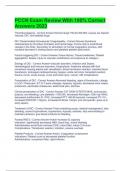
PCCN Exam Review With 100% Correct Answers 2023 Thrombocytopenia Normal range 150,00-350,000, causes are heparin induced, DIC, Anti-platelet drugs DIC: Disseminated Intravascular Coagulopathy Syndrome characterized by thrombus formation and hemorrhage. Forms clots in small blood vessels in the body. Secondary to stimulation of normal coagulation process, with resultant decrease in clotting factors and platelets-platelet dysfunction. Factors triggering DIC Tissue factors: Tissue breakdown, Platelet aggregation: Sepsis, Injury to vascular endothelium and exposure to collagen... Etiology of DIC Vascular disorders, Infection and Sepsis, Hematological and immune disorders, Anaphylaxis- histamine release with fluid movement causing edema and vasodilation, blood transfusion reaction, massive blood transfusion, prolonged cardiopulmonary bypass, sickle cell crisis, transplant reaction, trauma, burns, acute anoxia, crush and head injury, cancer, OB complications Presentation of DIC Abnormal bleeding, signs of thrombosis, change in LOC, Chest pain, S-T & T wave changes, dyspnea, hypoxia, decreased urine output, protienuria, electrolyte imbalances, abdominal pain, diarrhea Clinical presentation of DIC 1ST SIGN IS PETECHIAE, ecchymosis, purpura, and bleeding, Low platelets- 100,000, decreased fibrinogen 200 mg/100ml, decreased antithrombin III 70%, Increased PTT 60-90 seconds, Increased PT 15, Increased FDP/FSP 10g/mL, Increased D-Dimer 2mg/L (not clot specific, goes up in early sepsis) Treatment of DIC Treat underlying cause, medical management, stop bleeding, correct hypovolemia, hypotension, hypoxia, acidosis, stop microclotting to maintain perfusion, give blood products for bleeding Packed RBC's Action-Increase 02 capacity Indication- significantly decreased H&H, blood loss, active bleeding Administration-avoid fluid overload (CHF), blood filter, infuse 2-4 hours Complications- Transfusion reaction, infection, volume overload Platelet Products Action: Coagulation components Indications: Platelet count or decreased platelet function Administration: component filter, rapid infusion FFP (fresh frozen plasma) Action: increase clotting factors, water and electrolytes, has no platelets Indications: coagulation deficiencies Factor V and VIII Administration: filter, rapid infusion (can give over 2 hours) Complications: viral, fluid overload Cryoprecipitate Indications: Given for DIC, von Willebrands Actions: raises factors VIII + XII, prevents and controls bleeding, contains fibrinogen and antithrombin III Administration- filter, give rapidly Adverse reactions of Blood transfusions Hyperkalemia, hypocalcemia, decreased 23dpg , ammonia intoxication, hypothermia, infection, fluid overload, Transfusion-related acute lung injury (TRALI) occurs within 6 hours of transfusion Renal Blood flow requirements MAP 80-180 mmHg Filtration ceases with MAP less than 40 mmHg Renal function assessment- creatinine, GFR, Urine output, weight changes/fluid changes Renal Labs Serum osmolality: 275-295 (increased osmolality=dry) BUN/Creatinine ratio 10:1 If disproportionate, Dehydration, Blood in gut, Catabolic states are causes Hypovolemia Tachycardia, NARROW pulse pressure, orthostatic hypotension, low filling pressures, high systemic vascular resistance, flat jugular veins, weakness, lethargy, anorexia, poor skin turgor, thirst, low-grade fever, syncope, oliguria, INCREASED BUN with NORMAL CREATININE, HIGH SERUM OSMOLALITY, INCREASED H&H (hemoconcentration). Management: Return Volume Hypervolemia Causes Excessive fluid intake, retention of NA and water. Caused by stress response, steroid therapy, heart failure, liver failure, nephrotic syndrome, acute or chronic renal failure
Written for
- Institution
- PCCN
- Course
- PCCN
Document information
- Uploaded on
- September 27, 2023
- Number of pages
- 10
- Written in
- 2023/2024
- Type
- Exam (elaborations)
- Contains
- Questions & answers
Subjects
-
pccn exam review with 100 correct answers 2023

Also available in package deal