A Level Chemistry 13.4 Electrophilic addition in alkenes
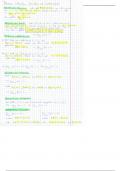
A Level Chemistry 13.4 Electrophilic addition in alkenes addition of a hydrogen halide to an unsymmetrical alkene forms the ? product via the ? carbocation. - correct answers1. major 2. most stable How are carbocations classified? - correct answersBy the number of alkyl groups attached to the positively charged carbon atom. how is an alkyl group represented? - correct answersnormally represented by the symbol -R. in 1870 Markownikoon a Russain chemist stated... - correct answersthat when a hydrogen halide reacts with an unsymmetrical alkene the hydrogen of the hydrogen halide attaches itself to the carbon atom of the alkene with the greater number of hydrogen atoms and the smaller number of carbon atoms. Markownikoff's rule - correct answersyou always have a major and minor product mechanism of the reaction between propene and bromine - correct answersbromine is a non polar molecule. when bromine approaches an alkene, the pi electrons interact with the electrons in the br-br bond. 1. the interaction causes polarisation of the Br-Br bond with one end of the molecule Bromine s+ and the other end of the molecule s-. known as an induced pole. 2. the electron pair in the pi bond is attracted to the Br s+ end of the molecule, causing the double bond to break. 3. a bond has now formed between one of the carbon atoms from the double bond to the bromine atom. 4. the Br-Br breaks by heterolytic fission with the electrons pair going to the Br s- end of the molecule. 5. a bromine io (Br-) and a carbocation is formed. 6. in the final stages of the reaction mechanism the Br- ion reacts with the carbocation to form the addition product of the reaction. mechanism of the reaction between propene and bromine (picture) - correct answers reaction between but-2-ene and hydrogen bromine - correct answershydrogen bromide adds to but-2-ene to form a single addition product. pic p211
Written for
- Institution
- Advance nursing
- Course
- Advance nursing
Document information
- Uploaded on
- May 23, 2024
- Number of pages
- 3
- Written in
- 2023/2024
- Type
- Exam (elaborations)
- Contains
- Questions & answers
Subjects
-
a level chemistry 134 electrophilic addition in