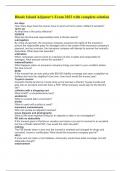
Hematologic DisordersPractice Quiz
2024-2025. With detailed solutions
(Check the last part for detailed solutions)
1. The nurse is preparing to teach a client with microcytic hypochromic anemia about the diet
tofollow after discharge. Which of the following foods should be included in the diet?
A. Eggs
B. Lettuce
C. Citrus fruits
D. Cheese
2. The nurse would instruct the client to eat which of the following foods to obtain the
bestsupply of vitamin B12?
A. Whole grains
B. Green leafy vegetables
C. Meats and dairy products
D. Broccoli and Brussels sprouts
3. The nurse has just admitted a 35-year-old female client who has a serum B12
concentration of 800 pg/ml. Which of the following laboratory findings would cue the nurse
to focus the clienthistory on specific drug or alcohol abuse?
A. Total bilirubin, 0.3 mg/dL
B. Serum creatinine, 0.5 mg/dL
C. Hemoglobin, 16 g/dL
D. Folate, 1.5 ng/mL
4. The nurse understands that the client with pernicious anemia will have which
distinguishinglaboratory findings?
A. Schilling’s test elevated
B. Intrinsic factor, absent.
C. Sedimentation rate, 16 mm/hour
D. RBCs 5.0 million
5. The nurse devises a teaching plan for the patient with aplastic anemia. Which of the
followingis the most important concept to teach for health maintenance?
A. Eat animal protein and dark leafy vegetables each day
,B. Avoid exposure to others with acute infection
C. Practice yoga and meditation to decrease stress and anxiety
D. Get 8 hours of sleep at night and take naps during the day
6. A client comes into the health clinic 3 years after undergoing a resection of the terminal
ileumcomplaining of weakness, shortness of breath, and a sore tongue. Which client
statement indicates a need for intervention and client teaching?
A. “I have been drinking plenty of fluids.”
B. “I have been gargling with warm salt water for my sore tongue.”
C. “I have 3 to 4 loose stools per day.”
D. “I take a vitamin B12 tablet every day.”
7. A vegetarian client was referred to a dietitian for nutritional counseling for anemia.
Which client outcome indicates that the client does not understand nutritional counseling?
The client:
A. Adds dried fruit to cereal and baked goods
B. Cooks tomato-based foods in iron pots
C. Drinks coffee or tea with meals
D. Adds vitamin C to all meals
8. A client was admitted with iron deficiency anemia and blood-streaked emesis.
Which question is most appropriate for the nurse to ask in determining the extent of
the client’sactivity intolerance?
A. “What activities were you able to do 6 months ago compared to the present?”
B. “How long have you had this problem?”
C. “Have you been able to keep up with all your usual activities?”
D. “Are you more tired now than you used to be?”
9. The primary purpose of the Schilling test is to measure the client’s ability to:
A. Store vitamin B12
B. Digest vitamin B12
C. Absorb vitamin B12
D. Produce vitamin B12
10. The nurse implements which of the following for the client who is starting a Schilling test?
A. Administering methylcellulose (Citrucel)
B. Starting a 24- to 48 hour urine specimen collection
C. Maintaining NPO status
D. Starting a 72 hour stool specimen collection
, 11. A client with pernicious anemia asks why she must take vitamin B12 injections for the
restof her life. What is the nurse’s best response?
A. “The reason for your vitamin deficiency is an inability to absorb the vitamin because
thestomach is not producing sufficient acid.”
B. “The reason for your vitamin deficiency is an inability to absorb the vitamin because
thestomach is not producing sufficient intrinsic factor.”
C. “The reason for your vitamin deficiency is an excessive excretion of the vitamin
because ofkidney dysfunction.”
D. “The reason for your vitamin deficiency is an increased requirement for the vitamin
becauseof rapid red blood cell production.”
12. The nurse is assessing a client’s activity intolerance by having the client walk on a
treadmillfor 5 minutes. Which of the following indicates an abnormal response?
A. Pulse rate increased by 20 bpm immediately after the activity
B. Respiratory rate decreased by 5 breaths/minute
C. Diastolic blood pressure increased by 7 mm Hg
D. Pulse rate within 6 bpm of resting phase after 3 minutes of rest.
13. When comparing the hematocrit levels of a post-op client, the nurse notes that the
hematocrit decreased from 36% to 34% on the third day even though the RBC and
hemoglobinvalues remained stable at 4.5 million and 11.9 g/dL, respectively. Which nursing
intervention ismost appropriate?
A. Check the dressing and drains for frank bleeding
B. Call the physician
C. Continue to monitor vital signs
D. Start oxygen at 2L/min per NC
14. A client is to receive epoetin (Epogen) injections. What laboratory value should the
nurseassess before giving the injection?
A. Hematocrit
B. Partial thromboplastin time
C. Hemoglobin concentration
D. Prothrombin time
15. A client states that she is afraid of receiving vitamin B12 injections because of the
potentialtoxic reactions. What is the nurse’s best response to relieve these fears?
A. “Vitamin B12 will cause ringing in the eats before a toxic level is reached.”
B. “Vitamin B12 may cause a very mild skin rash initially.”
C. “Vitamin B12 may cause mild nausea but nothing toxic.”
2024-2025. With detailed solutions
(Check the last part for detailed solutions)
1. The nurse is preparing to teach a client with microcytic hypochromic anemia about the diet
tofollow after discharge. Which of the following foods should be included in the diet?
A. Eggs
B. Lettuce
C. Citrus fruits
D. Cheese
2. The nurse would instruct the client to eat which of the following foods to obtain the
bestsupply of vitamin B12?
A. Whole grains
B. Green leafy vegetables
C. Meats and dairy products
D. Broccoli and Brussels sprouts
3. The nurse has just admitted a 35-year-old female client who has a serum B12
concentration of 800 pg/ml. Which of the following laboratory findings would cue the nurse
to focus the clienthistory on specific drug or alcohol abuse?
A. Total bilirubin, 0.3 mg/dL
B. Serum creatinine, 0.5 mg/dL
C. Hemoglobin, 16 g/dL
D. Folate, 1.5 ng/mL
4. The nurse understands that the client with pernicious anemia will have which
distinguishinglaboratory findings?
A. Schilling’s test elevated
B. Intrinsic factor, absent.
C. Sedimentation rate, 16 mm/hour
D. RBCs 5.0 million
5. The nurse devises a teaching plan for the patient with aplastic anemia. Which of the
followingis the most important concept to teach for health maintenance?
A. Eat animal protein and dark leafy vegetables each day
,B. Avoid exposure to others with acute infection
C. Practice yoga and meditation to decrease stress and anxiety
D. Get 8 hours of sleep at night and take naps during the day
6. A client comes into the health clinic 3 years after undergoing a resection of the terminal
ileumcomplaining of weakness, shortness of breath, and a sore tongue. Which client
statement indicates a need for intervention and client teaching?
A. “I have been drinking plenty of fluids.”
B. “I have been gargling with warm salt water for my sore tongue.”
C. “I have 3 to 4 loose stools per day.”
D. “I take a vitamin B12 tablet every day.”
7. A vegetarian client was referred to a dietitian for nutritional counseling for anemia.
Which client outcome indicates that the client does not understand nutritional counseling?
The client:
A. Adds dried fruit to cereal and baked goods
B. Cooks tomato-based foods in iron pots
C. Drinks coffee or tea with meals
D. Adds vitamin C to all meals
8. A client was admitted with iron deficiency anemia and blood-streaked emesis.
Which question is most appropriate for the nurse to ask in determining the extent of
the client’sactivity intolerance?
A. “What activities were you able to do 6 months ago compared to the present?”
B. “How long have you had this problem?”
C. “Have you been able to keep up with all your usual activities?”
D. “Are you more tired now than you used to be?”
9. The primary purpose of the Schilling test is to measure the client’s ability to:
A. Store vitamin B12
B. Digest vitamin B12
C. Absorb vitamin B12
D. Produce vitamin B12
10. The nurse implements which of the following for the client who is starting a Schilling test?
A. Administering methylcellulose (Citrucel)
B. Starting a 24- to 48 hour urine specimen collection
C. Maintaining NPO status
D. Starting a 72 hour stool specimen collection
, 11. A client with pernicious anemia asks why she must take vitamin B12 injections for the
restof her life. What is the nurse’s best response?
A. “The reason for your vitamin deficiency is an inability to absorb the vitamin because
thestomach is not producing sufficient acid.”
B. “The reason for your vitamin deficiency is an inability to absorb the vitamin because
thestomach is not producing sufficient intrinsic factor.”
C. “The reason for your vitamin deficiency is an excessive excretion of the vitamin
because ofkidney dysfunction.”
D. “The reason for your vitamin deficiency is an increased requirement for the vitamin
becauseof rapid red blood cell production.”
12. The nurse is assessing a client’s activity intolerance by having the client walk on a
treadmillfor 5 minutes. Which of the following indicates an abnormal response?
A. Pulse rate increased by 20 bpm immediately after the activity
B. Respiratory rate decreased by 5 breaths/minute
C. Diastolic blood pressure increased by 7 mm Hg
D. Pulse rate within 6 bpm of resting phase after 3 minutes of rest.
13. When comparing the hematocrit levels of a post-op client, the nurse notes that the
hematocrit decreased from 36% to 34% on the third day even though the RBC and
hemoglobinvalues remained stable at 4.5 million and 11.9 g/dL, respectively. Which nursing
intervention ismost appropriate?
A. Check the dressing and drains for frank bleeding
B. Call the physician
C. Continue to monitor vital signs
D. Start oxygen at 2L/min per NC
14. A client is to receive epoetin (Epogen) injections. What laboratory value should the
nurseassess before giving the injection?
A. Hematocrit
B. Partial thromboplastin time
C. Hemoglobin concentration
D. Prothrombin time
15. A client states that she is afraid of receiving vitamin B12 injections because of the
potentialtoxic reactions. What is the nurse’s best response to relieve these fears?
A. “Vitamin B12 will cause ringing in the eats before a toxic level is reached.”
B. “Vitamin B12 may cause a very mild skin rash initially.”
C. “Vitamin B12 may cause mild nausea but nothing toxic.”