M
AO
N
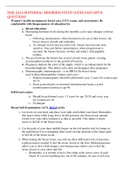
SNHD EMS Protocol Exam
Study Guide: Perfect for
JP
your study needs
Based on June 21, 2023/2024 Manual
, Patient
A person who has a complaint or mechanism suggestive of potential illness or
injury;
A person who has obvious evidence of illness or injury;
A person identified by an informed 2nd or 3rd party caller as requiring evaluation
for potential illness or injury
Pediatric Patient
For patients <18 years old, use the Pediatric Patient Destination protocol.
Patients under 12 years of age
M
Pediatric treatment protocols are to be used on children who have not yet
experienced puberty. Signs of puberty include chest or underarm hair on males,
and any breast development in females.
AO
Waiting room criteria and vital signs
1. Normal vital signs
A. Heart rate 60 - 100
B. Respiratory rate 10 - 20
C. Systolic BP 100 - 180
D. Diastolic BP 60 - 110
E. Room air pulse oximetry >94%
F. Alert and oriented x 4
N
2. Did not receive any parenteral medications during EMS transport except a single
dose of analgesia and/or an antiemetic.
3. In the judgment of the Paramedic, does not require continuous cardiac
JP
monitoring. Note: Any ECG monitoring initiated by a transferring facility may not be
discontinued by EMS personnel.
4. Can maintain a sitting position without adverse impact on their medical
condition.
5. Is left with a verbal report to hospital personnel.
You may transport a patient to a hospital that is on internal disaster IF
they are in cardiac arrest, or an airway cannot be maintained
AO
N
SNHD EMS Protocol Exam
Study Guide: Perfect for
JP
your study needs
Based on June 21, 2023/2024 Manual
, Patient
A person who has a complaint or mechanism suggestive of potential illness or
injury;
A person who has obvious evidence of illness or injury;
A person identified by an informed 2nd or 3rd party caller as requiring evaluation
for potential illness or injury
Pediatric Patient
For patients <18 years old, use the Pediatric Patient Destination protocol.
Patients under 12 years of age
M
Pediatric treatment protocols are to be used on children who have not yet
experienced puberty. Signs of puberty include chest or underarm hair on males,
and any breast development in females.
AO
Waiting room criteria and vital signs
1. Normal vital signs
A. Heart rate 60 - 100
B. Respiratory rate 10 - 20
C. Systolic BP 100 - 180
D. Diastolic BP 60 - 110
E. Room air pulse oximetry >94%
F. Alert and oriented x 4
N
2. Did not receive any parenteral medications during EMS transport except a single
dose of analgesia and/or an antiemetic.
3. In the judgment of the Paramedic, does not require continuous cardiac
JP
monitoring. Note: Any ECG monitoring initiated by a transferring facility may not be
discontinued by EMS personnel.
4. Can maintain a sitting position without adverse impact on their medical
condition.
5. Is left with a verbal report to hospital personnel.
You may transport a patient to a hospital that is on internal disaster IF
they are in cardiac arrest, or an airway cannot be maintained