TEMA 6: DERIVADAS
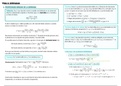
1. PROPIEDADES BÁSICAS DE LA DERIVADA Teorema. Sean 𝑓 y 𝑔 dos funciones derivables en 𝑎. Entonces las funciones
𝑐𝑓 (c es una constante), 𝑓 + 𝑔, 𝑓𝑔 y 𝑓/𝑔 son derivables en 𝑎, excepto 𝑓/𝑔 si
Definición. Sea 𝑓 una función real de variable real definida en un intervalo 𝑔 (𝑎) = 0, pues en ese caso 𝑓/𝑔 no está definida en a. Las derivadas son
abierto conteniendo al punto 𝑎. Decimos que 𝑓 es derivable en 𝑎 si existe y
1. (𝑐𝑓)′(𝑎) = 𝑐 · 𝑓′(𝑎)
es finito el límite
𝑓(𝑥) − 𝑓(𝑎) 2. (𝑓 + 𝑔)′(𝑎) = 𝑓′(𝑎) + 𝑔′(𝑎)
lim 3. Regla del producto: (𝑓𝑔)′(𝑎) = 𝑓′(𝑎)𝑔(𝑎) + 𝑓(𝑎)𝑔′(𝑎)
𝑥→𝑎 𝑥−𝑎
𝑓 ′ 𝑓′ (𝑎)𝑔(𝑎)−𝑓(𝑎)𝑔′ (𝑎)
4. Regla del cociente: (𝑔) (𝑎) = 𝑔2 (𝑎)
𝑠𝑖 𝑔(𝑎) ≠ 0
Se dice también que 𝑓 diferenciable en a. El valor del límite anterior, cuando
existe y es finito se escribe 𝑓′(𝑎):
Teorema (Regla de la cadena). Si 𝑓 es derivable en 𝑎 y 𝑔 es derivable en 𝑓(𝑎)
𝑓(𝑥) − 𝑓(𝑎) 𝑓(𝑎 + ℎ) − 𝑓(𝑎) entonces la función compuesta ℎ = 𝑔 ∘ 𝑓 es derivable en 𝑎 y
𝑓 ′ (𝑎) = lim = lim
𝑥→𝑎 𝑥−𝑎 ℎ→0 ℎ ℎ′ (𝑎) = (𝑔 ∘ 𝑓)′ (𝑎) = 𝑔′ (𝑓(𝑎)) · 𝑓′(𝑎)
Estaremos interesados en estudiar la función 𝑓 ′ , llamada derivada primera de 𝑓 ,
su dominio es el conjunto de puntos donde 𝑓 sea derivable. Teorema. Sea 𝑓 una función inyectiva, continua definida en un intervalo
Si consideramos los límites laterales, aparece el concepto de derivada lateral. Así, abierto I. Sea J = 𝑓(I). Si 𝑓 es derivable en 𝑥0 ∈ 𝐼 y 𝑓′(𝑥0 ) , 0, entonces 𝑓 −1 es
derivable en 𝑦0 = 𝑓(𝑥0 ) y se cumple que
𝑓(𝑥)−𝑓(𝑎)
Derivada lateral a la derecha: 𝑓+′ (𝑎) = lim+
𝑥→𝑎 𝑥−𝑎
−1
1 ′
(𝑓 )′(𝑦0 ) =
𝑓(𝑥)−𝑓(𝑎) 𝑓′(𝑥0 )
Derivada lateral a la izquierda: 𝑓−′ (𝑎) = lim− 𝑥−𝑎
𝑥→𝑎
Para que una función sea derivable en un punto, las derivadas laterales deben • CÁLCULO DE ALGUNAS DERIVADAS
coincidir en ese punto.
− 𝑓 (𝑥) = 𝑐 (𝑐𝑜𝑛𝑠𝑡𝑎𝑛𝑡𝑒) ⇒ 𝑓′(𝑥) = 0, ∀𝑥 ∈ ℝ
Teorema. Si 𝑓 es derivable en 𝑎, 𝑓 es continua en 𝑎. Siempre es 0
𝑓 (𝑥)−𝑓 (𝑎) 𝑐−𝑐
1. 𝑓′ (𝑎) = lim = =0
𝑥→𝑎 𝑥−𝑎 𝑥−𝑎
𝑓(𝑥)−𝑓(𝑎) Nunca llega a ser 𝑎, por lo que nunca es 0
Demostración. Supongamos que 𝑓 ′ (𝑎) = lim
𝑥−𝑎
. Entonces,
𝑥→𝑎
− 𝑓 (𝑥) = 𝑥 𝑛 , 𝑛 ∈ ℕ ⇒ 𝑓′ (𝑥) = 𝑛𝑥 𝑛−1 , ∀𝑥 ∈ ℝ
𝑓(𝑥) − 𝑓(𝑎)
𝑓(𝑥) − 𝑓(𝑎) = (𝑥 − 𝑎), ∀𝑥 ∈ 𝑑𝑜𝑚(𝑓), 𝑥 ≠ 𝑎 1. Por inducción: 𝑛 = 1, 𝑓 ′ (𝑥) = 1
𝑥−𝑎 𝑓 (𝑥) − 𝑓 (𝑎) 𝑥−𝑎
▪ 𝑓′ (𝑎) = lim = lim = lim 1 = 1, ∀𝑥 ∈ ℝ
Y tenemos que lim 𝑓(𝑥) = 𝑓(𝑎) , es decir, 𝑓 es continua en 𝑎. 𝑥→𝑎 𝑥−𝑎 𝑥→𝑎 𝑥 − 𝑎 𝑥→𝑎
𝑥→𝑎
2. Cierto para 𝑛 ⇒ cierto para 𝑛 + 1: 𝑓 (𝑥) = 𝑥 𝑛+1 = 𝑥 𝑛 · 𝑥
Conclusión inmediata es que si una función tiene derivada lateral a la derecha ▪ 𝑓′ (𝑎) = 𝑛𝑥 𝑛−1 · 𝑥 + 𝑥 𝑛 · 1 = (𝑛 + 1)𝑥 𝑛 ⇒ cierto para 𝑛 + 1
(izquierda), es continua a la derecha (izquierda).
, − 𝑓 (𝑥) = 𝑠𝑒𝑛 𝑥 ⇒ 𝑓′ (𝑥) = 𝑐𝑜𝑠 𝑥, ∀𝑥 ∈ ℝ DERIVADAS DE FUNCIONES INVERSAS
𝑥−𝑎 𝑥+𝑎 1
𝑠𝑒𝑛 𝑥−𝑠𝑒𝑛 𝑎 2𝑠𝑒𝑛 ( )·𝑐𝑜𝑠 ( ) • 𝑓(𝑥) = 𝑠𝑒𝑛 𝑥 = 𝑦 ⇒ 𝑓 −1 (𝑦) = 𝑎𝑟𝑐𝑠𝑒𝑛 𝑦 ⇒ (𝑓 −1 )′(𝑦) = √1−𝑦2 , ∀𝑦 ∈ (−1,1)
1. 𝑓 ′ (𝑎) = lim 𝑥−𝑎
= lim 2
𝑥−𝑎
2
=
𝑥→𝑎 𝑥→𝑎 0/0 infinitésimo
1 1 1 1
𝑥−𝑎 𝑥+𝑎 𝑥−𝑎
equivalente 1. (𝑓 −1 )′(𝑦) = 𝑓′(𝑥) = 𝑐𝑜𝑠 𝑥 = =
2𝑠𝑒𝑛 ( )·𝑐𝑜𝑠 ( ) 𝑠𝑒𝑛 ( ) 𝑥+𝑎 √1−𝑠𝑒𝑛2 𝑥 √1−𝑦 2
2 2 2
= lim 𝑥−𝑎
= lim 𝑥−𝑎 cos ( 2
) =
𝑥→𝑎 𝑥→𝑎 2 −1
• 𝑓(𝑥) = 𝑐𝑜𝑠 𝑥 = 𝑦 ⇒ 𝑓 −1 (𝑦) = 𝑎𝑟𝑐𝑐𝑜𝑠 𝑦 ⇒ (𝑓 −1 )′(𝑦) = √1−𝑦2 , ∀𝑦 ∈ (−1,1)
′ (𝑥)
= 𝑐𝑜𝑠 𝑎 ⇒ 𝑓 = 𝑐𝑜𝑠 𝑥, ∀𝑥 ∈ ℝ
1
• 𝑓(𝑥) = 𝑡𝑎𝑛 𝑥 = 𝑦 ⇒ 𝑓−1 (𝑦) = 𝑎𝑟𝑐𝑡𝑎𝑛 𝑦 ⇒ (𝑓−1 )′(𝑦) = 1+𝑦2 , ∀𝑦 ∈ ℝ
− 𝑓 (𝑥) = 𝑐𝑜𝑠 𝑥 ⇒ 𝑓′ (𝑥) = −𝑠𝑒𝑛 𝑥, ∀𝑥 ∈ ℝ
𝜋 1 1 1
1. 𝑓 (𝑥) = 𝑐𝑜𝑠 𝑥 = 𝑠𝑒𝑛 ( 2 − 𝑥) 1. (𝑓 −1 )′(𝑦) = 𝑓′(𝑥) = = 1+𝑦2
1+𝑡𝑎𝑛2 𝑥
𝜋
2. 𝑓′ (𝑥) = 𝑐𝑜𝑠 ( 2 − 𝑥) (− 1) = −𝑠𝑒𝑛 𝑥 2. EXTREMOS Y PUNTOS CRÍTICOS
1 𝜋 Definición. Sea 𝑓 una función real de variable real
− 𝑓 (𝑥) = 𝑡𝑎𝑛 𝑥 ⇒ 𝑓 ′ (𝑥) = 𝑐𝑜𝑠2 𝑥 = 1 + 𝑡𝑎𝑛2 𝑥, ∀𝑥 ∈ ℝ\{2 + 𝑘𝜋: 𝑘 ∈ ℤ}
1. Decimos que 𝑎 ∈ 𝑑𝑜𝑚(𝑓) es máximo relativo si existe δ > 0 de modo
1. 𝑓 (𝑥) =
𝑠𝑒𝑛 𝑥 que
𝑐𝑜𝑠 𝑥
∀𝑥 ∈ (𝑎 − 𝛿, 𝑎 + 𝛿) ∩ 𝑑𝑜𝑚(𝑓), 𝑓(𝑥) ≤ 𝑓(𝑎)
𝑐𝑜𝑠2 𝑥 −𝑠𝑒𝑛 𝑥 ( − 𝑠𝑒𝑛 𝑥 ) 1
2. 𝑓′ (𝑥) = 𝑐𝑜𝑠2 𝑥
= 𝑐𝑜𝑠2 𝑥 = 1 + 𝑡𝑎𝑛2 𝑥 2. Decimos que 𝑎 es máximo absoluto si
∀𝑥 ∈ 𝑑𝑜𝑚(𝑓), 𝑓(𝑥) ≤ 𝑓(𝑎)
− 𝑓 (𝑥) = 𝑒 𝑥 ⇒ 𝑓′ (𝑥) = 𝑒 𝑥 , ∀𝑥 ∈ ℝ 0/0 infinitésimo
el máximo se dice estricto si las desigualdades son estrictas.
equivalente
𝑒 𝑥 −𝑒 𝑎 𝑒 𝑥−𝑎 −1
1. 𝑓′ (𝑎) = lim = lim 𝑒 𝑎 = 𝑒 𝑎 ⇒ 𝑓′ (𝑥) = 𝑒 𝑥 , ∀𝑥 ∈ ℝ
𝑥→𝑎 𝑥−𝑎 𝑥→𝑎 𝑥−𝑎 Cambiando ≤ por ≥ tenemos las definiciones de mínimo relativo y absoluto.
− 𝑓 (𝑥) = 𝑎 𝑥 : 𝑎 > 0 ⇒ 𝑓′ (𝑥) = 𝑎 𝑥 · 𝑙𝑜𝑔 𝑎
Definición. Un punto crítico (o estacionario) de una función 𝑓 es un punto a
1. 𝑓 (𝑥) = 𝑒 𝑥 log 𝑎 _donde 𝑓 es derivable y 𝑓 ′ (𝑎) = 0.
2. 𝑓′ (𝑎) = 𝑒 𝑥 log 𝑎 · 𝑙𝑜𝑔 𝑎 = 𝑎 𝑥 · 𝑙𝑜𝑔 𝑎
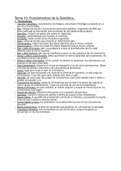
Teorema (Teorema de Fermat). Sea 𝑓 una función definida en un intervalo
1 abierto I, y supongamos que 𝑓 alcanza extremo en un punto 𝑎 ∈ I donde 𝑓 es
− 𝑓(𝑥) = 𝑙𝑜𝑔 𝑥 = 𝑙𝑛 𝑥 ⇒ 𝑓′(𝑥) = 𝑥
, ∀𝑥 ∈ℝ +
diferenciable. Entonces a es un punto crítico de 𝑓 , es decir, 𝑓 ′ (𝑎) = 0.
𝑥 𝑥
𝑙𝑜𝑔 𝑥−𝑙𝑜𝑔 𝑎 𝑙𝑜𝑔 ( ) 𝑙𝑜𝑔 ( ) 1
1. 𝑓 ′ (𝑎) = lim 𝑥−𝑎
= lim 𝑥
𝑎
= lim 𝑥
𝑎
=𝑎 ⇒ Es una condición necesaria de extremo relativo
𝑥→𝑎 𝑥→𝑎 𝑎( −1) 𝑥→𝑎 −1
𝑎 𝑎
1
⇒ 𝑓′(𝑥) = 𝑥 , ∀𝑥 ∈ ℝ+ 𝑓: 𝐼 ⟶ ℝ
𝑎 ∈ 𝐼 𝑖𝑛𝑡𝑒𝑟𝑣𝑎𝑙𝑜 𝑎𝑏𝑖𝑒𝑟𝑡𝑜
Sea { 𝑓 𝑑𝑒𝑟𝑖𝑣𝑎𝑏𝑙𝑒 𝑒𝑛 𝑎 } 𝑓′(𝑎) = 0
𝑎 = 𝑒𝑥𝑡𝑟𝑒𝑚𝑜 𝑑𝑒 𝑓
Es decir, la derivada de una función en sus extremos (extremos de la función, no
del intervalo), sea máximo o mínimo absolutos o relativos, siempre es 0.
1. PROPIEDADES BÁSICAS DE LA DERIVADA Teorema. Sean 𝑓 y 𝑔 dos funciones derivables en 𝑎. Entonces las funciones
𝑐𝑓 (c es una constante), 𝑓 + 𝑔, 𝑓𝑔 y 𝑓/𝑔 son derivables en 𝑎, excepto 𝑓/𝑔 si
Definición. Sea 𝑓 una función real de variable real definida en un intervalo 𝑔 (𝑎) = 0, pues en ese caso 𝑓/𝑔 no está definida en a. Las derivadas son
abierto conteniendo al punto 𝑎. Decimos que 𝑓 es derivable en 𝑎 si existe y
1. (𝑐𝑓)′(𝑎) = 𝑐 · 𝑓′(𝑎)
es finito el límite
𝑓(𝑥) − 𝑓(𝑎) 2. (𝑓 + 𝑔)′(𝑎) = 𝑓′(𝑎) + 𝑔′(𝑎)
lim 3. Regla del producto: (𝑓𝑔)′(𝑎) = 𝑓′(𝑎)𝑔(𝑎) + 𝑓(𝑎)𝑔′(𝑎)
𝑥→𝑎 𝑥−𝑎
𝑓 ′ 𝑓′ (𝑎)𝑔(𝑎)−𝑓(𝑎)𝑔′ (𝑎)
4. Regla del cociente: (𝑔) (𝑎) = 𝑔2 (𝑎)
𝑠𝑖 𝑔(𝑎) ≠ 0
Se dice también que 𝑓 diferenciable en a. El valor del límite anterior, cuando
existe y es finito se escribe 𝑓′(𝑎):
Teorema (Regla de la cadena). Si 𝑓 es derivable en 𝑎 y 𝑔 es derivable en 𝑓(𝑎)
𝑓(𝑥) − 𝑓(𝑎) 𝑓(𝑎 + ℎ) − 𝑓(𝑎) entonces la función compuesta ℎ = 𝑔 ∘ 𝑓 es derivable en 𝑎 y
𝑓 ′ (𝑎) = lim = lim
𝑥→𝑎 𝑥−𝑎 ℎ→0 ℎ ℎ′ (𝑎) = (𝑔 ∘ 𝑓)′ (𝑎) = 𝑔′ (𝑓(𝑎)) · 𝑓′(𝑎)
Estaremos interesados en estudiar la función 𝑓 ′ , llamada derivada primera de 𝑓 ,
su dominio es el conjunto de puntos donde 𝑓 sea derivable. Teorema. Sea 𝑓 una función inyectiva, continua definida en un intervalo
Si consideramos los límites laterales, aparece el concepto de derivada lateral. Así, abierto I. Sea J = 𝑓(I). Si 𝑓 es derivable en 𝑥0 ∈ 𝐼 y 𝑓′(𝑥0 ) , 0, entonces 𝑓 −1 es
derivable en 𝑦0 = 𝑓(𝑥0 ) y se cumple que
𝑓(𝑥)−𝑓(𝑎)
Derivada lateral a la derecha: 𝑓+′ (𝑎) = lim+
𝑥→𝑎 𝑥−𝑎
−1
1 ′
(𝑓 )′(𝑦0 ) =
𝑓(𝑥)−𝑓(𝑎) 𝑓′(𝑥0 )
Derivada lateral a la izquierda: 𝑓−′ (𝑎) = lim− 𝑥−𝑎
𝑥→𝑎
Para que una función sea derivable en un punto, las derivadas laterales deben • CÁLCULO DE ALGUNAS DERIVADAS
coincidir en ese punto.
− 𝑓 (𝑥) = 𝑐 (𝑐𝑜𝑛𝑠𝑡𝑎𝑛𝑡𝑒) ⇒ 𝑓′(𝑥) = 0, ∀𝑥 ∈ ℝ
Teorema. Si 𝑓 es derivable en 𝑎, 𝑓 es continua en 𝑎. Siempre es 0
𝑓 (𝑥)−𝑓 (𝑎) 𝑐−𝑐
1. 𝑓′ (𝑎) = lim = =0
𝑥→𝑎 𝑥−𝑎 𝑥−𝑎
𝑓(𝑥)−𝑓(𝑎) Nunca llega a ser 𝑎, por lo que nunca es 0
Demostración. Supongamos que 𝑓 ′ (𝑎) = lim
𝑥−𝑎
. Entonces,
𝑥→𝑎
− 𝑓 (𝑥) = 𝑥 𝑛 , 𝑛 ∈ ℕ ⇒ 𝑓′ (𝑥) = 𝑛𝑥 𝑛−1 , ∀𝑥 ∈ ℝ
𝑓(𝑥) − 𝑓(𝑎)
𝑓(𝑥) − 𝑓(𝑎) = (𝑥 − 𝑎), ∀𝑥 ∈ 𝑑𝑜𝑚(𝑓), 𝑥 ≠ 𝑎 1. Por inducción: 𝑛 = 1, 𝑓 ′ (𝑥) = 1
𝑥−𝑎 𝑓 (𝑥) − 𝑓 (𝑎) 𝑥−𝑎
▪ 𝑓′ (𝑎) = lim = lim = lim 1 = 1, ∀𝑥 ∈ ℝ
Y tenemos que lim 𝑓(𝑥) = 𝑓(𝑎) , es decir, 𝑓 es continua en 𝑎. 𝑥→𝑎 𝑥−𝑎 𝑥→𝑎 𝑥 − 𝑎 𝑥→𝑎
𝑥→𝑎
2. Cierto para 𝑛 ⇒ cierto para 𝑛 + 1: 𝑓 (𝑥) = 𝑥 𝑛+1 = 𝑥 𝑛 · 𝑥
Conclusión inmediata es que si una función tiene derivada lateral a la derecha ▪ 𝑓′ (𝑎) = 𝑛𝑥 𝑛−1 · 𝑥 + 𝑥 𝑛 · 1 = (𝑛 + 1)𝑥 𝑛 ⇒ cierto para 𝑛 + 1
(izquierda), es continua a la derecha (izquierda).
, − 𝑓 (𝑥) = 𝑠𝑒𝑛 𝑥 ⇒ 𝑓′ (𝑥) = 𝑐𝑜𝑠 𝑥, ∀𝑥 ∈ ℝ DERIVADAS DE FUNCIONES INVERSAS
𝑥−𝑎 𝑥+𝑎 1
𝑠𝑒𝑛 𝑥−𝑠𝑒𝑛 𝑎 2𝑠𝑒𝑛 ( )·𝑐𝑜𝑠 ( ) • 𝑓(𝑥) = 𝑠𝑒𝑛 𝑥 = 𝑦 ⇒ 𝑓 −1 (𝑦) = 𝑎𝑟𝑐𝑠𝑒𝑛 𝑦 ⇒ (𝑓 −1 )′(𝑦) = √1−𝑦2 , ∀𝑦 ∈ (−1,1)
1. 𝑓 ′ (𝑎) = lim 𝑥−𝑎
= lim 2
𝑥−𝑎
2
=
𝑥→𝑎 𝑥→𝑎 0/0 infinitésimo
1 1 1 1
𝑥−𝑎 𝑥+𝑎 𝑥−𝑎
equivalente 1. (𝑓 −1 )′(𝑦) = 𝑓′(𝑥) = 𝑐𝑜𝑠 𝑥 = =
2𝑠𝑒𝑛 ( )·𝑐𝑜𝑠 ( ) 𝑠𝑒𝑛 ( ) 𝑥+𝑎 √1−𝑠𝑒𝑛2 𝑥 √1−𝑦 2
2 2 2
= lim 𝑥−𝑎
= lim 𝑥−𝑎 cos ( 2
) =
𝑥→𝑎 𝑥→𝑎 2 −1
• 𝑓(𝑥) = 𝑐𝑜𝑠 𝑥 = 𝑦 ⇒ 𝑓 −1 (𝑦) = 𝑎𝑟𝑐𝑐𝑜𝑠 𝑦 ⇒ (𝑓 −1 )′(𝑦) = √1−𝑦2 , ∀𝑦 ∈ (−1,1)
′ (𝑥)
= 𝑐𝑜𝑠 𝑎 ⇒ 𝑓 = 𝑐𝑜𝑠 𝑥, ∀𝑥 ∈ ℝ
1
• 𝑓(𝑥) = 𝑡𝑎𝑛 𝑥 = 𝑦 ⇒ 𝑓−1 (𝑦) = 𝑎𝑟𝑐𝑡𝑎𝑛 𝑦 ⇒ (𝑓−1 )′(𝑦) = 1+𝑦2 , ∀𝑦 ∈ ℝ
− 𝑓 (𝑥) = 𝑐𝑜𝑠 𝑥 ⇒ 𝑓′ (𝑥) = −𝑠𝑒𝑛 𝑥, ∀𝑥 ∈ ℝ
𝜋 1 1 1
1. 𝑓 (𝑥) = 𝑐𝑜𝑠 𝑥 = 𝑠𝑒𝑛 ( 2 − 𝑥) 1. (𝑓 −1 )′(𝑦) = 𝑓′(𝑥) = = 1+𝑦2
1+𝑡𝑎𝑛2 𝑥
𝜋
2. 𝑓′ (𝑥) = 𝑐𝑜𝑠 ( 2 − 𝑥) (− 1) = −𝑠𝑒𝑛 𝑥 2. EXTREMOS Y PUNTOS CRÍTICOS
1 𝜋 Definición. Sea 𝑓 una función real de variable real
− 𝑓 (𝑥) = 𝑡𝑎𝑛 𝑥 ⇒ 𝑓 ′ (𝑥) = 𝑐𝑜𝑠2 𝑥 = 1 + 𝑡𝑎𝑛2 𝑥, ∀𝑥 ∈ ℝ\{2 + 𝑘𝜋: 𝑘 ∈ ℤ}
1. Decimos que 𝑎 ∈ 𝑑𝑜𝑚(𝑓) es máximo relativo si existe δ > 0 de modo
1. 𝑓 (𝑥) =
𝑠𝑒𝑛 𝑥 que
𝑐𝑜𝑠 𝑥
∀𝑥 ∈ (𝑎 − 𝛿, 𝑎 + 𝛿) ∩ 𝑑𝑜𝑚(𝑓), 𝑓(𝑥) ≤ 𝑓(𝑎)
𝑐𝑜𝑠2 𝑥 −𝑠𝑒𝑛 𝑥 ( − 𝑠𝑒𝑛 𝑥 ) 1
2. 𝑓′ (𝑥) = 𝑐𝑜𝑠2 𝑥
= 𝑐𝑜𝑠2 𝑥 = 1 + 𝑡𝑎𝑛2 𝑥 2. Decimos que 𝑎 es máximo absoluto si
∀𝑥 ∈ 𝑑𝑜𝑚(𝑓), 𝑓(𝑥) ≤ 𝑓(𝑎)
− 𝑓 (𝑥) = 𝑒 𝑥 ⇒ 𝑓′ (𝑥) = 𝑒 𝑥 , ∀𝑥 ∈ ℝ 0/0 infinitésimo
el máximo se dice estricto si las desigualdades son estrictas.
equivalente
𝑒 𝑥 −𝑒 𝑎 𝑒 𝑥−𝑎 −1
1. 𝑓′ (𝑎) = lim = lim 𝑒 𝑎 = 𝑒 𝑎 ⇒ 𝑓′ (𝑥) = 𝑒 𝑥 , ∀𝑥 ∈ ℝ
𝑥→𝑎 𝑥−𝑎 𝑥→𝑎 𝑥−𝑎 Cambiando ≤ por ≥ tenemos las definiciones de mínimo relativo y absoluto.
− 𝑓 (𝑥) = 𝑎 𝑥 : 𝑎 > 0 ⇒ 𝑓′ (𝑥) = 𝑎 𝑥 · 𝑙𝑜𝑔 𝑎
Definición. Un punto crítico (o estacionario) de una función 𝑓 es un punto a
1. 𝑓 (𝑥) = 𝑒 𝑥 log 𝑎 _donde 𝑓 es derivable y 𝑓 ′ (𝑎) = 0.
2. 𝑓′ (𝑎) = 𝑒 𝑥 log 𝑎 · 𝑙𝑜𝑔 𝑎 = 𝑎 𝑥 · 𝑙𝑜𝑔 𝑎
Teorema (Teorema de Fermat). Sea 𝑓 una función definida en un intervalo
1 abierto I, y supongamos que 𝑓 alcanza extremo en un punto 𝑎 ∈ I donde 𝑓 es
− 𝑓(𝑥) = 𝑙𝑜𝑔 𝑥 = 𝑙𝑛 𝑥 ⇒ 𝑓′(𝑥) = 𝑥
, ∀𝑥 ∈ℝ +
diferenciable. Entonces a es un punto crítico de 𝑓 , es decir, 𝑓 ′ (𝑎) = 0.
𝑥 𝑥
𝑙𝑜𝑔 𝑥−𝑙𝑜𝑔 𝑎 𝑙𝑜𝑔 ( ) 𝑙𝑜𝑔 ( ) 1
1. 𝑓 ′ (𝑎) = lim 𝑥−𝑎
= lim 𝑥
𝑎
= lim 𝑥
𝑎
=𝑎 ⇒ Es una condición necesaria de extremo relativo
𝑥→𝑎 𝑥→𝑎 𝑎( −1) 𝑥→𝑎 −1
𝑎 𝑎
1
⇒ 𝑓′(𝑥) = 𝑥 , ∀𝑥 ∈ ℝ+ 𝑓: 𝐼 ⟶ ℝ
𝑎 ∈ 𝐼 𝑖𝑛𝑡𝑒𝑟𝑣𝑎𝑙𝑜 𝑎𝑏𝑖𝑒𝑟𝑡𝑜
Sea { 𝑓 𝑑𝑒𝑟𝑖𝑣𝑎𝑏𝑙𝑒 𝑒𝑛 𝑎 } 𝑓′(𝑎) = 0
𝑎 = 𝑒𝑥𝑡𝑟𝑒𝑚𝑜 𝑑𝑒 𝑓
Es decir, la derivada de una función en sus extremos (extremos de la función, no
del intervalo), sea máximo o mínimo absolutos o relativos, siempre es 0.