Key Studies
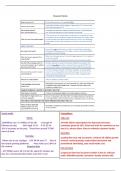
Gender Bias:
Study Name What it Found
Freud (1905) Theory of psychosexual development. During the phallic stage children develop a desire for their
opposite gender parent, this creates castration anxiety in boys, but this is resolved when the
boy identifies with his father. However, a girl’s identification with her mother is weaker, this
means that her superego is weaker as it develops from taking on the same gender parent’s
moral perspective. Therefore, women are morally inferior to men.
Wilson (1975) ‘Survival efficiency’ means that it is in a male’s interests to try and impregnate as many
females as possible to increase the chances of his genes being passed on to the next generation.
Whereas the female’s best chance to preserve her genes is to ensure the survival of the
offspring she produces.
Taylor et al (2000) Suggested that oxytocin is more abundant in females and women respond to stress by
increasing oxytocin production, this shifts attention towards caring for offspring and forming a
defensive network with other females. This is known as the tend and befriend response.
Brescoll & Uhlman Feminists oppose the diagnosis of premenstrual syndrome (PMS) as it medicalises female
(2008 emotions by explaining them in hormonal terms. However male anger is seen as a rational
response to external pressures
Maccoby & Jacklin Concluded that girls have superior verbal ability whereas boys have a better spatial ability. They
(1974) said that these differences are hardwired into the brain before birth.
Joel et al (2015) Found no evidence of Maccoby & Jacklin (1974) research in brain scans
Formanowicz et al Analysed 1000 articles relating to gender bias. They found research on gender bias is funded
(2018) less often and published by less prestigious journals. These means it is seen by less scholars
become aware and apply it in their own work.
Worell & Remer Suggests criteria that can help researchers to avoid gender bias. Women should be studied in
(1992) meaningful real-life contexts, instead of being objects in a study. Diversity between different
types of women should be studied, rather than comparisons made between men and women
and there should be a greater emphasis on research methods that collect quantitative data.
Cultural Bias:
Study Name What it Found
Henrich et al (2010) Found that 68% of research studies came from the United States.
Arnett (2008) Found that 80% of research participants are undergraduates studying psychology.
Smith & Bond (1993) Found significantly higher rates of conformity than the original studies in collectivist cultures.
Takano & Osaka Found that 14 out of 15 studies comparing the US and Japan found no evidence of a
(1999) distinction between the two cultures.
Ekman (1989) Suggests basic facial expressions for emotions are the same all over the world. Also, some
features of human attachment such as imitation and interactional synchrony are universal.
Free Will and Determinism:
Study Name What it Found
Roberts et al (2000) found that adolescents who had strong beliefs in fatalism and that their lives were decided by
events outside of their control were more at risk of developing depression. People who exhibit an
external locus of control are less likely to be optimistic.
Libet et al (1983) instructed participants to choose a random moment to flick their wrist while he measured their
brain. Participants had to say when they felt the conscious will to move. Libet found that the
unconscious brain activity leading up to the conscious decision to move came around half a
second before the participant consciously felt they had decided to move.
Gender Bias:
Study Name What it Found
Freud (1905) Theory of psychosexual development. During the phallic stage children develop a desire for their
opposite gender parent, this creates castration anxiety in boys, but this is resolved when the
boy identifies with his father. However, a girl’s identification with her mother is weaker, this
means that her superego is weaker as it develops from taking on the same gender parent’s
moral perspective. Therefore, women are morally inferior to men.
Wilson (1975) ‘Survival efficiency’ means that it is in a male’s interests to try and impregnate as many
females as possible to increase the chances of his genes being passed on to the next generation.
Whereas the female’s best chance to preserve her genes is to ensure the survival of the
offspring she produces.
Taylor et al (2000) Suggested that oxytocin is more abundant in females and women respond to stress by
increasing oxytocin production, this shifts attention towards caring for offspring and forming a
defensive network with other females. This is known as the tend and befriend response.
Brescoll & Uhlman Feminists oppose the diagnosis of premenstrual syndrome (PMS) as it medicalises female
(2008 emotions by explaining them in hormonal terms. However male anger is seen as a rational
response to external pressures
Maccoby & Jacklin Concluded that girls have superior verbal ability whereas boys have a better spatial ability. They
(1974) said that these differences are hardwired into the brain before birth.
Joel et al (2015) Found no evidence of Maccoby & Jacklin (1974) research in brain scans
Formanowicz et al Analysed 1000 articles relating to gender bias. They found research on gender bias is funded
(2018) less often and published by less prestigious journals. These means it is seen by less scholars
become aware and apply it in their own work.
Worell & Remer Suggests criteria that can help researchers to avoid gender bias. Women should be studied in
(1992) meaningful real-life contexts, instead of being objects in a study. Diversity between different
types of women should be studied, rather than comparisons made between men and women
and there should be a greater emphasis on research methods that collect quantitative data.
Cultural Bias:
Study Name What it Found
Henrich et al (2010) Found that 68% of research studies came from the United States.
Arnett (2008) Found that 80% of research participants are undergraduates studying psychology.
Smith & Bond (1993) Found significantly higher rates of conformity than the original studies in collectivist cultures.
Takano & Osaka Found that 14 out of 15 studies comparing the US and Japan found no evidence of a
(1999) distinction between the two cultures.
Ekman (1989) Suggests basic facial expressions for emotions are the same all over the world. Also, some
features of human attachment such as imitation and interactional synchrony are universal.
Free Will and Determinism:
Study Name What it Found
Roberts et al (2000) found that adolescents who had strong beliefs in fatalism and that their lives were decided by
events outside of their control were more at risk of developing depression. People who exhibit an
external locus of control are less likely to be optimistic.
Libet et al (1983) instructed participants to choose a random moment to flick their wrist while he measured their
brain. Participants had to say when they felt the conscious will to move. Libet found that the
unconscious brain activity leading up to the conscious decision to move came around half a
second before the participant consciously felt they had decided to move.