LECTURE 11
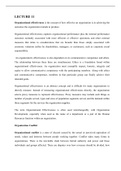
Organizational effectiveness is the concept of how effective an organization is in achieving the
outcomes the organization intends to produce.
Organizational effectiveness captures organizational performance plus the internal performance
outcomes normally associated with more efficient or effective operations and other external
measures that relate to considerations that are broader than those simply associated with
economic valuation (either by shareholders, managers, or customers), such as corporate social
responsibility.
An organization's effectiveness is also dependent on its communicative competence and ethics.
The relationship between these three are simultaneous. Ethics is a foundation found within
organizational effectiveness. An organization must exemplify respect, honesty, integrity and
equity to allow communicative competence with the participating members. Along with ethics
and communicative competence, members in that particular group can finally achieve their
intended goals.
Organizational effectiveness is an abstract concept and is difficult for many organizations to
directly measure. Instead of measuring organizational effectiveness directly, the organization
selects proxy measures to represent effectiveness. Proxy measures may include such things as
number of people served, types and sizes of population segments served, and the demand within
those segments for the services the organization supplies.
The term Organizational Effectiveness is often used interchangeably with Organization
Development, especially when used as the name of a department or a part of the Human
Resources function within an organization.
Organization Conflict
Organizational conflict is a state of discord caused by the actual or perceived opposition of
needs, values and interests between people working together. Conflict takes many forms in
organizations. There is the inevitable clash between formal authority and power and those
individuals and groups affected. There are disputes over how revenues should be divided, how
Organizational effectiveness is the concept of how effective an organization is in achieving the
outcomes the organization intends to produce.
Organizational effectiveness captures organizational performance plus the internal performance
outcomes normally associated with more efficient or effective operations and other external
measures that relate to considerations that are broader than those simply associated with
economic valuation (either by shareholders, managers, or customers), such as corporate social
responsibility.
An organization's effectiveness is also dependent on its communicative competence and ethics.
The relationship between these three are simultaneous. Ethics is a foundation found within
organizational effectiveness. An organization must exemplify respect, honesty, integrity and
equity to allow communicative competence with the participating members. Along with ethics
and communicative competence, members in that particular group can finally achieve their
intended goals.
Organizational effectiveness is an abstract concept and is difficult for many organizations to
directly measure. Instead of measuring organizational effectiveness directly, the organization
selects proxy measures to represent effectiveness. Proxy measures may include such things as
number of people served, types and sizes of population segments served, and the demand within
those segments for the services the organization supplies.
The term Organizational Effectiveness is often used interchangeably with Organization
Development, especially when used as the name of a department or a part of the Human
Resources function within an organization.
Organization Conflict
Organizational conflict is a state of discord caused by the actual or perceived opposition of
needs, values and interests between people working together. Conflict takes many forms in
organizations. There is the inevitable clash between formal authority and power and those
individuals and groups affected. There are disputes over how revenues should be divided, how