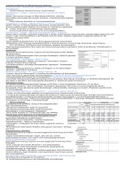
One strength of the A limitation of the behaviourist A final criticism of the The behaviourist approach
behaviourist approach is its approach is its reliance on behaviourist approach is that has also been criticised for
application to the treatment of non-human animals. it ignores other psychological being deterministic.
phobias. explanations.
Classical conditioning has led For example, Skinner's For example, it ignores The theory views all human
to the development of research was focused on rats cognitive and emotional behaviour to be determined
systematic desensitisation - a and pigeon’s whilst Pavlov’s factors, suggesting humans by their past experiences and
treatment which reduces the was focused on dogs. are a product of conditioning that we have all been
anxiety associated with alone. However, many conditioned to learn, either
phobias by using the psychologists argue that leaning through forming
principles of classical human interaction is far more associations between
conditioning to replace the complicated than a stimulus different stimuli, learning
learned response (anxiety) reinforcement relationship. through receiving
with another response reinforcement or through
(relaxation). punishment.
This is important because This matters because they This matters because it This therefore suggests that
anxiety levels can hold back are only assuming because invalidates the fact that the we learn through being
an individual, furthermore it we don’t actually know how behaviourist approach has exposed to things which are
can show that by classically the animals are truly feeling had some good outcomes but shaped by our past
conditioning someone you as they cannot verbally it still ignores other experiences so they
can lower anxiety levels. communicate like humans. approaches which in the end determine who we are as an
could add to the findings. individual.
Thus, showing that by using Thus, meaning the validity of Thus, making it a limitation of Thus making it a limitation of
the behaviourist approach it’s the behaviourist approach is using the behaviourist the behaviourist approach.
behaviourist approach is its approach is its reliance on behaviourist approach is that has also been criticised for
application to the treatment of non-human animals. it ignores other psychological being deterministic.
phobias. explanations.
Classical conditioning has led For example, Skinner's For example, it ignores The theory views all human
to the development of research was focused on rats cognitive and emotional behaviour to be determined
systematic desensitisation - a and pigeon’s whilst Pavlov’s factors, suggesting humans by their past experiences and
treatment which reduces the was focused on dogs. are a product of conditioning that we have all been
anxiety associated with alone. However, many conditioned to learn, either
phobias by using the psychologists argue that leaning through forming
principles of classical human interaction is far more associations between
conditioning to replace the complicated than a stimulus different stimuli, learning
learned response (anxiety) reinforcement relationship. through receiving
with another response reinforcement or through
(relaxation). punishment.
This is important because This matters because they This matters because it This therefore suggests that
anxiety levels can hold back are only assuming because invalidates the fact that the we learn through being
an individual, furthermore it we don’t actually know how behaviourist approach has exposed to things which are
can show that by classically the animals are truly feeling had some good outcomes but shaped by our past
conditioning someone you as they cannot verbally it still ignores other experiences so they
can lower anxiety levels. communicate like humans. approaches which in the end determine who we are as an
could add to the findings. individual.
Thus, showing that by using Thus, meaning the validity of Thus, making it a limitation of Thus making it a limitation of
the behaviourist approach it’s the behaviourist approach is using the behaviourist the behaviourist approach.