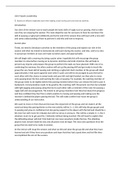
Content Revised? Happy?
UNIT ONE ‘BIOLOGICAL MOLECULES’
State what monomers and polymers are and give examples.
Describe a condensation reaction.
Describe a hydrolysis reaction.
State what an organic molecule is and what an inorganic molecule is.
Describe what monosaccharides, disaccharides and polysaccharides are and
give named examples.
Explain and draw how glycosidic bonds are formed.
Recall and describe how maltose, sucrose and lactose are formed.
Draw and recognize the two isomers of glucose.
Draw and describe the basic structures of glycogen, starch and cellulose.
Link the structure to function of glycogen, starch and cellulose.
A LEVEL BIOLOGY - YEAR 1
Describe and explain the positive tests for reducing and non-reducing sugars.
Describe and explain the positive test for starch.
Interpret qualitative tests for reducing and non-reducing sugars.
State what a lipid is and give examples.
REVISION CHECKLIST
Outline how a triglyceride is formed.
Describe how an ester bond is formed.
Compare saturated and unsaturated fatty acids.
Draw and explain the difference between triglycerides and phospholipids.
Explain the different properties of phospholipids and triglycerides.
Describe the positive test for lipids.
Name the monomer that makes up proteins.
Draw and name the general structure of an amino acid.
State how many amino acids there are and how they differ.
Describe how polypeptides are formed.
Draw how polypeptides are formed.
Outline the difference between a dipeptide and a polypeptide.
Describe the primary, secondary, tertiary and quaternary structures of
proteins.
List the different bonds found in each protein level.
List functions of different proteins.
Link the structure of different proteins to their function.
Describe the biuret test for proteins and what the positive result is.
Define the term ‘ENZYME’.
List key facts about enzymes.
Define the term ‘ACTIVATION ENERGY’.
Describe how enzymes lower the activation energy of each reaction they
catalyse.
Describe the ‘lock & key’ model of enzyme action.
Describe the ‘induced fit’ model of enzyme action.
Appreciate why models of enzyme action have changed over time.
List the properties of an enzyme and state how they relate to the tertiary
structure of its active site.
, Explain what makes an enzyme ‘specific’.
Sketch graph the effects of Temperature, pH, Enzyme Concentration &
Substrate Concentration on Rate of Reaction.
Describe the effects of Temperature, pH, Enzyme Concentration & Substrate
Concentration on Rate of Reaction.
Explain the effects of Temperature, pH, Enzyme Concentration & Substrate
Concentration on Rate of Reaction (4 points for each one).
Describe what an enzyme inhibitor is.
Outline how competitive inhibitors work.
Outline how non-competitive inhibitors work.
**REQUIRED PRACTICAL – MEASURING THE RATE OF ENZYME-CONTROLLED
REACTIONS**
State what DNA and RNA stand for and describe their basic roles.
Names the monomers of DNA and RNA.
Draw and label a basic nucleotide.
Draw and compare a DNA and an RNA nucleotide.
Name which bond is formed when two nucleotides form by a condensation
reaction.
Draw and label a section of a single polynucleotide strand.
Describe the DNA double helix model describing its key features.
Define the terms ‘COMPLEMENTARY BASE PAIRING’, ‘ANTI-PARALLEL’,
‘DOUBLE-HELIX’.
State the differences between an RNA molecule and a DNA molecule.
Outline why Scientists originally doubted that DNA could carry the genetic
code.
Define the term ‘SEMI-CONSERVATIVE REPLICATION’.
Outline the step by step process of ‘semi-conservative replication’
highlighting key words.
Explain how DNA Polymerase works including the phrases ‘three prime’ and
‘five prime’.
Summarise the evidence for Semi-Conservative Replication provided by
Meselson and Stahl.
Outline the main differences between conservative and semi-conservative
theories of DNA replication.
What does ATP stand for?
Draw and label a molecule of ATP.
Outline where energy is stored in ATP.
Outline the process by which ATP releases energy.
Outline the process by which ATP is formed from ADP + Pi.
Name the enzymes involved with ATP production and break down.
List some properties of ATP.
List functions of water in living organisms.
Draw and describe the structure of water.
Explain the properties of water; metabolite, solvent, high heat capacity,
latent heat of vaporization, cohesion between water molecules.
UNIT ONE ‘BIOLOGICAL MOLECULES’
State what monomers and polymers are and give examples.
Describe a condensation reaction.
Describe a hydrolysis reaction.
State what an organic molecule is and what an inorganic molecule is.
Describe what monosaccharides, disaccharides and polysaccharides are and
give named examples.
Explain and draw how glycosidic bonds are formed.
Recall and describe how maltose, sucrose and lactose are formed.
Draw and recognize the two isomers of glucose.
Draw and describe the basic structures of glycogen, starch and cellulose.
Link the structure to function of glycogen, starch and cellulose.
A LEVEL BIOLOGY - YEAR 1
Describe and explain the positive tests for reducing and non-reducing sugars.
Describe and explain the positive test for starch.
Interpret qualitative tests for reducing and non-reducing sugars.
State what a lipid is and give examples.
REVISION CHECKLIST
Outline how a triglyceride is formed.
Describe how an ester bond is formed.
Compare saturated and unsaturated fatty acids.
Draw and explain the difference between triglycerides and phospholipids.
Explain the different properties of phospholipids and triglycerides.
Describe the positive test for lipids.
Name the monomer that makes up proteins.
Draw and name the general structure of an amino acid.
State how many amino acids there are and how they differ.
Describe how polypeptides are formed.
Draw how polypeptides are formed.
Outline the difference between a dipeptide and a polypeptide.
Describe the primary, secondary, tertiary and quaternary structures of
proteins.
List the different bonds found in each protein level.
List functions of different proteins.
Link the structure of different proteins to their function.
Describe the biuret test for proteins and what the positive result is.
Define the term ‘ENZYME’.
List key facts about enzymes.
Define the term ‘ACTIVATION ENERGY’.
Describe how enzymes lower the activation energy of each reaction they
catalyse.
Describe the ‘lock & key’ model of enzyme action.
Describe the ‘induced fit’ model of enzyme action.
Appreciate why models of enzyme action have changed over time.
List the properties of an enzyme and state how they relate to the tertiary
structure of its active site.
, Explain what makes an enzyme ‘specific’.
Sketch graph the effects of Temperature, pH, Enzyme Concentration &
Substrate Concentration on Rate of Reaction.
Describe the effects of Temperature, pH, Enzyme Concentration & Substrate
Concentration on Rate of Reaction.
Explain the effects of Temperature, pH, Enzyme Concentration & Substrate
Concentration on Rate of Reaction (4 points for each one).
Describe what an enzyme inhibitor is.
Outline how competitive inhibitors work.
Outline how non-competitive inhibitors work.
**REQUIRED PRACTICAL – MEASURING THE RATE OF ENZYME-CONTROLLED
REACTIONS**
State what DNA and RNA stand for and describe their basic roles.
Names the monomers of DNA and RNA.
Draw and label a basic nucleotide.
Draw and compare a DNA and an RNA nucleotide.
Name which bond is formed when two nucleotides form by a condensation
reaction.
Draw and label a section of a single polynucleotide strand.
Describe the DNA double helix model describing its key features.
Define the terms ‘COMPLEMENTARY BASE PAIRING’, ‘ANTI-PARALLEL’,
‘DOUBLE-HELIX’.
State the differences between an RNA molecule and a DNA molecule.
Outline why Scientists originally doubted that DNA could carry the genetic
code.
Define the term ‘SEMI-CONSERVATIVE REPLICATION’.
Outline the step by step process of ‘semi-conservative replication’
highlighting key words.
Explain how DNA Polymerase works including the phrases ‘three prime’ and
‘five prime’.
Summarise the evidence for Semi-Conservative Replication provided by
Meselson and Stahl.
Outline the main differences between conservative and semi-conservative
theories of DNA replication.
What does ATP stand for?
Draw and label a molecule of ATP.
Outline where energy is stored in ATP.
Outline the process by which ATP releases energy.
Outline the process by which ATP is formed from ADP + Pi.
Name the enzymes involved with ATP production and break down.
List some properties of ATP.
List functions of water in living organisms.
Draw and describe the structure of water.
Explain the properties of water; metabolite, solvent, high heat capacity,
latent heat of vaporization, cohesion between water molecules.