26.11.19
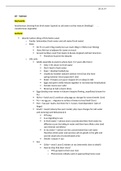
L8 – Salmon
Keywords:
Anadromous (moving from fresh water (spawn) to salt water as they mature (feeding)) ,
canadromous (opposite)
Lecture:
Atlantic Salmon (King of Fish/Salmo salar)
o Family: Salmonidae (fresh water and salt water/fresh water)
o Stats:
60-75 cm and 3-5kg mostly but can reach 36kg in 1920s (over fishing)
Bony fish but w/adipose fin (same as trout)
Around northen coast from Spain to Russia, England and East American
Therefore found in the Atlantic
o Life cycle
Adults assemble in pools to where born (1-5 years after born)
Only 1-3% return to fresh water
Don’t feed in fresh water
Kype = develop hooked jaw
Usually by October (autumn salmon rivers) but also have
spring/summer rivers (pops don’t mix)
Redd = Females cut saucer shaped (15 cm deep) in 36h
Eggs and sperm (milk) release together in red (external fertalisation)
Female covers over rudd
Breed up to half a dozen times
Eggs develop over winter in Autumn (require flowing, unpolluted stream for
O2)
Alvins = hatch out & continue using egg sac storage for several weeks (1cm)
Fry = no egg sac ؞migrates to surface of water to feed itself (5cm)
Parr = has parr marks, live there for 1-3 years, food dependent (size of
finger)
Smolt = morph (silvery/loss parr marks), phys (eye changes for salt water
and osmoreg) and behavioural ∆
W/temp
∆ as migrating to see
In fresh water = salmon more concentrated then fresh water by
diffusion occurs by taking in water and then have dilute urine (and
use minerals via kidney)
In sea water = salmon are less concentrated than salt water
therefore drink water and excretes salt via glands in the gills and
secrete small vols of concentrated urine
Slmoth -estuary→ sea
Sea
Grilse = send 1 year/2 winters at sea (extremely close to death)
How do they find their rivers?
o 95% go back to their own river
o Pheromones initially used on approaching home coast
L8 – Salmon
Keywords:
Anadromous (moving from fresh water (spawn) to salt water as they mature (feeding)) ,
canadromous (opposite)
Lecture:
Atlantic Salmon (King of Fish/Salmo salar)
o Family: Salmonidae (fresh water and salt water/fresh water)
o Stats:
60-75 cm and 3-5kg mostly but can reach 36kg in 1920s (over fishing)
Bony fish but w/adipose fin (same as trout)
Around northen coast from Spain to Russia, England and East American
Therefore found in the Atlantic
o Life cycle
Adults assemble in pools to where born (1-5 years after born)
Only 1-3% return to fresh water
Don’t feed in fresh water
Kype = develop hooked jaw
Usually by October (autumn salmon rivers) but also have
spring/summer rivers (pops don’t mix)
Redd = Females cut saucer shaped (15 cm deep) in 36h
Eggs and sperm (milk) release together in red (external fertalisation)
Female covers over rudd
Breed up to half a dozen times
Eggs develop over winter in Autumn (require flowing, unpolluted stream for
O2)
Alvins = hatch out & continue using egg sac storage for several weeks (1cm)
Fry = no egg sac ؞migrates to surface of water to feed itself (5cm)
Parr = has parr marks, live there for 1-3 years, food dependent (size of
finger)
Smolt = morph (silvery/loss parr marks), phys (eye changes for salt water
and osmoreg) and behavioural ∆
W/temp
∆ as migrating to see
In fresh water = salmon more concentrated then fresh water by
diffusion occurs by taking in water and then have dilute urine (and
use minerals via kidney)
In sea water = salmon are less concentrated than salt water
therefore drink water and excretes salt via glands in the gills and
secrete small vols of concentrated urine
Slmoth -estuary→ sea
Sea
Grilse = send 1 year/2 winters at sea (extremely close to death)
How do they find their rivers?
o 95% go back to their own river
o Pheromones initially used on approaching home coast