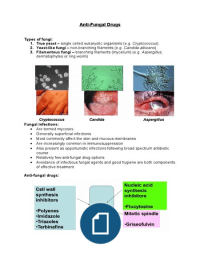
Anti-Fungal Drugs
Types of fungi:
1. True yeast – single celled eukaryotic organisms (e.g. Cryptococcus)
2. Yeast-like fungi – non-branching filaments (e.g. Candida albicans)
3. Filamentous fungi – branching filaments (mycelium) (e.g. Aspergillus,
dermatophytes or ring worm)
Fungal infections:
Are termed mycoses
Generally superficial infections
Most commonly affect the skin and mucous membranes
Are increasingly common in immunosuppression
Also present as opportunistic infections following broad spectrum antibiotic
course
Relatively few anti-fungal drug options
Avoidance of infectious fungal agents and good hygiene are both components
of effective treatment
Anti-fungal drugs:
Types of fungi:
1. True yeast – single celled eukaryotic organisms (e.g. Cryptococcus)
2. Yeast-like fungi – non-branching filaments (e.g. Candida albicans)
3. Filamentous fungi – branching filaments (mycelium) (e.g. Aspergillus,
dermatophytes or ring worm)
Fungal infections:
Are termed mycoses
Generally superficial infections
Most commonly affect the skin and mucous membranes
Are increasingly common in immunosuppression
Also present as opportunistic infections following broad spectrum antibiotic
course
Relatively few anti-fungal drug options
Avoidance of infectious fungal agents and good hygiene are both components
of effective treatment
Anti-fungal drugs: