CHAPTER 4: JOB COSTING
Document Type : Book Summary
Source : Cost Accounting: A Managerial Emphasis 15th Edition by Charles T.
Horngren, Srikant M. Datar, and Madhav V. Rajan
Learning Objective 1 : Describe the Building-Block Concepts of Costing Systems
Cost object is anything for which a measurement of costs is desired.
Direct costs of a cost object are costs related to a particular cost object that can be
traced to that cost object in an economically feasible (cost-effective) way.
Indirect costs of a cost object are costs related to a particular cost object that cannot
be traced to that cost object in an economically feasible (cost-effective) way.
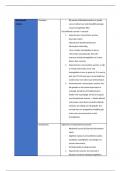
The relationship among these three concepts can be graphically represented as below.
Cost pool is a grouping of individual indirect cost items. Cost pools are often organized
in conjunction with cost-allocation bases.
Cost-allocation base is a systematic way to link an indirect cost or group of indirect
costs to cost objects. A cost-allocation base can be either financial or nonfinancial.
Organizations generally use the cause-and-effect criterion to determine cost-
allocation base to be used, followed by benefits received, and finally, and more rarely,
by ability to bear.
Learning Objective 2 : Distinguish Job Costing from Process Costing
Management accountants use two basic types of costing systems to assign costs to
products or services. They are:
Job-costing system. In a job-costing system, the cost object is a unit or multiple units
of a distinct product or service called a job. Each job generally uses different amounts
of resources.
Process-costing system. In a process-costing system, the cost object is masses of
identical or similar units of a product or service. In each period, process costing
, systems divide the total costs of producing an identical or similar product or service
by the total number of units produced to obtain a per-unit cost. This per-unit cost is
the average unit cost that applies to each of the identical or similar units produced in
that period.
Learning Objective 3 : Describe the Approaches to Evaluating and Implementing
Job-Costing Systems
One form of a job-costing system is actual costing, which is a costing system that traces
direct costs to a cost object based on the actual direct-cost rates times the actual
quantities of the direct-cost inputs used. Indirect costs are allocated based on the actual
indirect-cost rates times the actual quantities of the cost-allocation bases. An actual
indirect-cost rate is calculated by dividing actual annual indirect costs by the actual
annual quantity of the cost-allocation base. Moreover, as its name suggests, actual costing
systems calculate the actual costs of jobs. Yet actual costing systems are not commonly
found in practice because actual costs cannot be computed in a timely manner.
There are two reasons for using longer periods, such as a year, to calculate indirect-cost
rates:
The numerator reason (indirect-cost pool). The shorter the period, the greater is the
influence of seasonal patterns on the amount of costs. Moreover, levels of total
indirect costs are also affected by nonseasonal erratic costs, which are the costs
incurred in a particular month that benefit operations during future months;
The denominator reason (quantity of the cost-allocation base). Another reason for
longer periods is to avoid spreading monthly fixed indirect costs over fluctuating
levels of monthly output and fluctuating quantities of the cost-allocation base.
Another form of job costing system is normal costing, which is a costing system that (1)
traces direct costs to a cost object by using the actual direct-cost rates times the actual
quantities of the direct-cost inputs and (2) allocates indirect costs based on the budgeted
indirect-cost rates (see picture below) times the actual quantities of the cost-allocation
bases.
Document Type : Book Summary
Source : Cost Accounting: A Managerial Emphasis 15th Edition by Charles T.
Horngren, Srikant M. Datar, and Madhav V. Rajan
Learning Objective 1 : Describe the Building-Block Concepts of Costing Systems
Cost object is anything for which a measurement of costs is desired.
Direct costs of a cost object are costs related to a particular cost object that can be
traced to that cost object in an economically feasible (cost-effective) way.
Indirect costs of a cost object are costs related to a particular cost object that cannot
be traced to that cost object in an economically feasible (cost-effective) way.
The relationship among these three concepts can be graphically represented as below.
Cost pool is a grouping of individual indirect cost items. Cost pools are often organized
in conjunction with cost-allocation bases.
Cost-allocation base is a systematic way to link an indirect cost or group of indirect
costs to cost objects. A cost-allocation base can be either financial or nonfinancial.
Organizations generally use the cause-and-effect criterion to determine cost-
allocation base to be used, followed by benefits received, and finally, and more rarely,
by ability to bear.
Learning Objective 2 : Distinguish Job Costing from Process Costing
Management accountants use two basic types of costing systems to assign costs to
products or services. They are:
Job-costing system. In a job-costing system, the cost object is a unit or multiple units
of a distinct product or service called a job. Each job generally uses different amounts
of resources.
Process-costing system. In a process-costing system, the cost object is masses of
identical or similar units of a product or service. In each period, process costing
, systems divide the total costs of producing an identical or similar product or service
by the total number of units produced to obtain a per-unit cost. This per-unit cost is
the average unit cost that applies to each of the identical or similar units produced in
that period.
Learning Objective 3 : Describe the Approaches to Evaluating and Implementing
Job-Costing Systems
One form of a job-costing system is actual costing, which is a costing system that traces
direct costs to a cost object based on the actual direct-cost rates times the actual
quantities of the direct-cost inputs used. Indirect costs are allocated based on the actual
indirect-cost rates times the actual quantities of the cost-allocation bases. An actual
indirect-cost rate is calculated by dividing actual annual indirect costs by the actual
annual quantity of the cost-allocation base. Moreover, as its name suggests, actual costing
systems calculate the actual costs of jobs. Yet actual costing systems are not commonly
found in practice because actual costs cannot be computed in a timely manner.
There are two reasons for using longer periods, such as a year, to calculate indirect-cost
rates:
The numerator reason (indirect-cost pool). The shorter the period, the greater is the
influence of seasonal patterns on the amount of costs. Moreover, levels of total
indirect costs are also affected by nonseasonal erratic costs, which are the costs
incurred in a particular month that benefit operations during future months;
The denominator reason (quantity of the cost-allocation base). Another reason for
longer periods is to avoid spreading monthly fixed indirect costs over fluctuating
levels of monthly output and fluctuating quantities of the cost-allocation base.
Another form of job costing system is normal costing, which is a costing system that (1)
traces direct costs to a cost object by using the actual direct-cost rates times the actual
quantities of the direct-cost inputs and (2) allocates indirect costs based on the budgeted
indirect-cost rates (see picture below) times the actual quantities of the cost-allocation
bases.