The circulatory system
The main component of the circulatory system is the heart, a muscular
pumping organ situated in the thorax. It is connected by blood vessels to
every tissue in the body, and carried out actions such as:
Pumps oxygenated blood from the lungs to the body tissues so that
they can work.
Collects deoxygenated blood from the body and transports it to the
lungs where the waste products it contains are excreted, by being
breathed out.
Oxygenated blood has a high concentration of oxygen in it and will show
as a bright red colour, and deoxygenated blood has a low concentration of
oxygen in it and will show and dark red/purple colour.
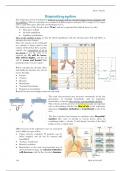
The heart consists of four chambers, the upper two chambers are called
the atria and the two lower chambers are called the ventricles. The atria
and ventricles are separated by one-way valves that allow blood flow in
the direction of atria to ventricle only. The left side and the right side of
the heart have no communication between them, this is because the right
side of the heart only transports only deoxygenated blood (heart to lungs)
and the left side only transports oxygenated blood (lungs to heart).
Action of the heart
Deoxygenated blood is collected from the whole body through the
veins and transported to the right atrium through the inferior and
superior venae cavae. As the heart beats, it pumps this blood
through the one-way valve between the two right heart chambers
(tricuspid valve) and into the right ventricle. The next beat pumps it
straight out of the right ventricle and into the pulmonary artery
where it passes to the lungs for reoxygenation.
Once oxygenated, the blood returns to the left atrium through the
pulmonary veins, then is pumped through the one-way valve (mitral
valve) into the left ventricle.
The next heartbeat pushes this blood out of the heart into the aorta,
and then back around the whole body to reoxygenate the cells and
tissues and allow them to continue their normal function.
The heartbeat itself begins on the top surface of the right atrium in a
group of specialised cells called the sinoatrial node or pacemaker. These
cells receive electrical stimulation from two sets of nerves from the brain,
one set speeds up the rate of the heartbeat and the other set slows it
down. This way the heart rate is regulated to allow both exercise and rest
as necessary. After each heartbeat, the blood is prevented from flowing
backwards again by the one-way valves within the heart.
The main component of the circulatory system is the heart, a muscular
pumping organ situated in the thorax. It is connected by blood vessels to
every tissue in the body, and carried out actions such as:
Pumps oxygenated blood from the lungs to the body tissues so that
they can work.
Collects deoxygenated blood from the body and transports it to the
lungs where the waste products it contains are excreted, by being
breathed out.
Oxygenated blood has a high concentration of oxygen in it and will show
as a bright red colour, and deoxygenated blood has a low concentration of
oxygen in it and will show and dark red/purple colour.
The heart consists of four chambers, the upper two chambers are called
the atria and the two lower chambers are called the ventricles. The atria
and ventricles are separated by one-way valves that allow blood flow in
the direction of atria to ventricle only. The left side and the right side of
the heart have no communication between them, this is because the right
side of the heart only transports only deoxygenated blood (heart to lungs)
and the left side only transports oxygenated blood (lungs to heart).
Action of the heart
Deoxygenated blood is collected from the whole body through the
veins and transported to the right atrium through the inferior and
superior venae cavae. As the heart beats, it pumps this blood
through the one-way valve between the two right heart chambers
(tricuspid valve) and into the right ventricle. The next beat pumps it
straight out of the right ventricle and into the pulmonary artery
where it passes to the lungs for reoxygenation.
Once oxygenated, the blood returns to the left atrium through the
pulmonary veins, then is pumped through the one-way valve (mitral
valve) into the left ventricle.
The next heartbeat pushes this blood out of the heart into the aorta,
and then back around the whole body to reoxygenate the cells and
tissues and allow them to continue their normal function.
The heartbeat itself begins on the top surface of the right atrium in a
group of specialised cells called the sinoatrial node or pacemaker. These
cells receive electrical stimulation from two sets of nerves from the brain,
one set speeds up the rate of the heartbeat and the other set slows it
down. This way the heart rate is regulated to allow both exercise and rest
as necessary. After each heartbeat, the blood is prevented from flowing
backwards again by the one-way valves within the heart.