100% satisfaction guarantee Immediately available after payment Both online and in PDF No strings attached 4.6 TrustPilot
logo-home
Exam (elaborations)

WGU C963 OA Test Bank

Rating
-
Sold
-
Pages
9
Grade
A+
Uploaded on
16-02-2023
Written in
2022/2023

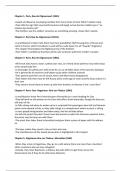
WGU C963 OA Test Bank Powers under the Articles of Confederation 1. Could exchange Ambassadors 2. Make treaties with foreign governments and Indian Tribes 3. Declare War 4. Borrow Money 5. Settle disputes among States Weaknesses of the Articles of Confederation no power to tax, President lacked power, no money to buy ships no money pay soldiers no national judiciary New Jersey Plan William Paterson Three Branches of Government The states had the power Every state had one vote one chamber legislature, unicameral Supremacy clause "Law of the Land" Virginia Plan James Madison Three Branches of government Two-chamber in a legislative Bicameral legislature: House: elected by the people Senate: appointed by the legislature Votes based on population Could tax, regulate trade, veto down state laws, create an army The Great Compromises 1. combined the two ideas from the Virginia Plan and the New Jersey plan. 2. The 3/5 slavery ruling 3. Slave owners could reclaim their slaves in states where they had fled. 4. Slaves could only be freed if they were born in the US and was over the age of 28 Articles of Confederation with a Congress 1. representation based on the population 2. the the weak national government and a strong states Federalists supporters of the Constitution Anti-Federalists people who opposed the Constitution Federalist Paper #10 Written by James Madison to convince people to support the ratification of the constitution. Argued that factions were inevitable but were best controlled by a large republic that employed a Federalist structure. Argued that competition among factions would limit their negative impacts. Federalist Paper # 51 •Written by James Madison •Defines the relationship among the three branches of government as independent. •To stay independent, no branch should have total power to choose members of the other branches •By creating a bicameral legislature, it protects the people from legislative tyranny •Explains that each branch of government should be selected in different ways What was a major difference between the Articles of Confederation and the Constitution? The Articles of Confederation did not provide for a national judiciary. Why did the framers design the government under the Articles of Confederation with a Congress? They wanted a government based on the representation of the population. implied powers Powers not specifically mentioned in the constitution Examples of implied powers Establishing a national bank, creating the IRS, establishing a military draft, raising the min wage enumerated powers The powers explicitly given to Congress in the Constitution. Examples of enumerated powers -declare war & raise army & navy -create rules on how to become citizen -regulate trade b/t states & countries -coin $ -protect patents & copyrights -create lower federal courts -est. post offices inherent powers is the power that congress and the president need in order to get the job done Examples of inherent powers Regulating immigration, acquiring territory, granting diplomatic recognition to other states concurrent powers Powers held jointly by the national and state governments. examples of concurrent power Impose Taxes, Borrow Money, Establish Lower Courts expressed powers powers directly stated in the constitution examples of expressed powers make treaties, coin money, declare war, grant copyrights and patents reserved powers powers that the Constitution does not give to the national government that are kept by the states examples of reserved powers - police power - promote safety, morals and health - Criminal justice, use of public land and water, marriage/divorce - education, roads, welfare How does a bill become a law? If a bill has passed in both the U.S. House of Representatives and the U.S. Senate and has been approved by the President, or if a presidential veto has been overridden, the bill becomes a law and is enforced by the government. standing committee a permanent committee that meets regularly. select committee a small legislative committee appointed for a special purpose. joint committee legislative committee composed of members of both houses conference committee special joint committee created to reconcile differences in bills passed by the House and Senate Rule Committee A standing committee of the House of Representatives that provides special rules under which specific bills can be debated, amended, and considered by the house. appropriations committees Decide how to spend money allocated to each spending category by Budget Resolution; 12 subcommittees for major areas of budget (ex. defense, energy, agriculture); major source of earmarking Budget Committee House & Senate standing committees that begins budget process in Congress by setting overall budget size and amounts that will be spent on different topics (ex. defense, education) electrol college A group of people named by each state legislature to select the president and vice president. 1. candidate who wins the popular vote in the state gets two electoral votes r of each congressional district also receives an electoral vote Executive orders Is a Domestic Policy, a way of getting around Congress when the legislature is not acting in a given area. What is the purpose of executive agreements? Is National Security of foreign Policy and War. And To establish agreements with foreign countries without congressional approval The Senate citizens for 9 years and 30 years old when sworn in. They can serve 6 years. There are 2 senators for each state. Senators represent their entire states The House of Representatives citizen for 7 and must be at least 25 years old. They can serve 2 years . There are 435 representatives. allocated among the states, roughly proportional to state populations and members of the House represent individual districts stare decisis let the decision stand The Supremacy Clause Constitution is the supreme law of the land Full Faith and Credit Clause Constitution's requirement that each state accept the public acts, records, and judicial proceedings of every other state Privileges and Immensities Clause prevents a state from treating citizens of other states in a discriminatory manner. Federal Election Campaign Act 1974 legislation designed to regulate campaign contributions and limit campaign expenditures. district method for distribution of electoral votes allocates one electoral vote to the popular vote of the congressional district and two electoral votes to the winner of a state's popular vote. winner take-all method popular vote winner gets all of a state's Electors private interests interest groups that seek to protect or advance the material interests of its members public interest group attempt to promote public, or collective, goods. Political Action Committee (PAC) A committee set up by a corporation, labor union, or interest group that raises and spends campaign money from voluntary donations Super PAC (Political Action Committee) political-action committee that is allowed to raise and spend unlimited amounts of money from corporations, unions, individuals and associations. How many federal appellate courts exist in the United States? 13 How are elections for the U.S. Senate conducted One-third of the Senate seats are up for election every two years. Which election cycle event allows local party members to select their delegates for a presidential election A caucus closed primary A primary in which only registered members of a particular political party can vote What is a caucus? A meeting held by members of a political party to elect representatives from each precinct to the party's assembly. What is a primary election? a preliminary election to appoint delegates to a party conference or to select the candidates for a principal, especially presidential, election. straight-ticket voting voting exclusively for the candidates of one party. example. I am a republican so I will only vote for a republican physical characteristics voting voting based on how someone looks retrospective voting voting for a candidate because you like his or her past actions in office prospective voting voting based on the imagined future performance of a candidate Pocket-book voting voting for the political candidate or party that benefits the voter the most financially. strategic voting a person may vote for a second- or third-choice candidate, either because his or her preferred candidate cannot win or because he or she hopes to prevent another candidate from winning. Free Exercise Clause freedom of religion How do presidents use mandates after election? They use their public support to implement campaign promises. How voter turnout is measured? using the total population, voting-age population (VAP), would give us a small number of voters voting-eligible population (VEP), would give us a smaller number of voters total number of registered voters. Give us the smallest number of voter Civil Rights -Government must provide -Right are prescribed for government power -I cannot give them to myself -Government is the only legal way to get my civil rights Example search warrant. I cannot give a search warrant to myself Civil Liberties -Freedom of religion, who I marry, freedom of speech ect... -Proscription -my freedoms my chose -these are born with me rational basis test discrimination as long as it has reason. such as a blind person wanting a driver licence. Intermediate Scrutiny discrimination against gender Strict Scrutiny discriminated against because their fundamental constitutional right is infringed upon, such as the freedom of speech or religion. Or based a person's race or national origin de jure segregation segregation by law de facto segregation Segregation resulting from economic or social conditions or personal cho

Show more Read less
Institution
Module

Content preview

WGU C963 OA Test Bank
Powers under the Articles of Confederation

1. Could exchange Ambassadors
2. Make treaties with foreign governments and Indian Tribes
3. Declare War
4. Borrow Money
5. Settle disputes among States

Weaknesses of the Articles of Confederation

no power to tax,
President lacked power,
no money to buy ships
no money pay soldiers
no national judiciary

New Jersey Plan

William Paterson
Three Branches of Government
The states had the power
Every state had one vote
one chamber legislature, unicameral
Supremacy clause "Law of the Land"

Virginia Plan

James Madison
Three Branches of government
Two-chamber in a legislative
Bicameral legislature:
House: elected by the people
Senate: appointed by the legislature
Votes based on population
Could tax, regulate trade, veto down state laws, create an army

The Great Compromises

1. combined the two ideas from the Virginia Plan and the New Jersey plan.
2. The 3/5 slavery ruling
3. Slave owners could reclaim their slaves in states where they had fled.
4. Slaves could only be freed if they were born in the US and was over the age of 28

Articles of Confederation with a Congress

, 1. representation based on the population
2. the the weak national government and a strong states

Federalists

supporters of the Constitution

Anti-Federalists

people who opposed the Constitution

Federalist Paper #10

Written by James Madison to convince people to support the ratification of the constitution. Argued
that factions were inevitable but were best controlled by a large republic that employed a Federalist
structure. Argued that competition among factions would limit their negative impacts.

Federalist Paper # 51

•Written by James Madison
•Defines the relationship among the three branches of government as independent.
•To stay independent, no branch should have total power to choose members of the other branches
•By creating a bicameral legislature, it protects the people from legislative tyranny
•Explains that each branch of government should be selected in different ways

What was a major difference between the Articles of Confederation and the Constitution?

The Articles of Confederation did not provide for a national judiciary.

Why did the framers design the government under the Articles of Confederation with a Congress?

They wanted a government based on the representation of the population.

implied powers

Powers not specifically mentioned in the constitution

Examples of implied powers

Establishing a national bank, creating the IRS, establishing a military draft, raising the min wage

enumerated powers

The powers explicitly given to Congress in the Constitution.

Examples of enumerated powers

-declare war & raise army & navy
-create rules on how to become citizen
-regulate trade b/t states & countries
-coin $
-protect patents & copyrights
Written for

Module

Document information

Uploaded on
February 16, 2023
Number of pages
9
Written in
2022/2023
Type
Exam (elaborations)
Contains
Questions & answers

Subjects

Get to know the seller

Seller avatar
Reputation scores are based on the amount of documents a seller has sold for a fee and the reviews they have received for those documents. There are three levels: Bronze, Silver and Gold. The better the reputation, the more your can rely on the quality of the sellers work.
CertifiedGrades Chamberlain College Of Nursing
Follow You need to be logged in order to follow users or courses
Sold
144
Member since
3 year
Number of followers
61
Documents
8740
Last sold
3 weeks ago
High Scores

Hi there! Welcome to my online tutoring store, your ultimate destination for A+ rated educational resources! My meticulously curated collection of documents is designed to support your learning journey. Each resource has been carefully revised and verified to ensure top-notch quality, empowering you to excel academically. Feel free to reach out to consult with me on any subject matter—I'm here to help you thrive!

3.9

38 reviews

5
21
4
6
3
2
2
3
1
6

Trending documents

Recently viewed by you

Why students choose Stuvia

Created by fellow students, verified by reviews

Quality you can trust: written by students who passed their exams and reviewed by others who've used these revision notes.

Didn't get what you expected? Choose another document

No problem! You can straightaway pick a different document that better suits what you're after.

Pay as you like, start learning straight away

No subscription, no commitments. Pay the way you're used to via credit card and download your PDF document instantly.

Student with book image

“Bought, downloaded, and smashed it. It really can be that simple.”

Alisha Student

Frequently asked questions