EEG board Exam prep Study Guide (Fall 2022)
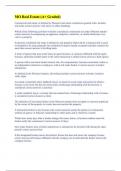
EEG board Exam prep Study Guide (Fall 2022) Mu Rhythm -c3/c4 region -7-11Hz -does not block with eye opening -easy to see with eyes open -blocks unilaterally with contralateral hand -asymmetrical and asynchronous -NORMAL Beta -14 HZ -detected during wakefulness, enhanced during drowsiness, and decreased in deeper sleep -seen on barbiturates and benzodiazepines Lambda waves -NORMAL, awake -sharp waves occurring in occipital region (o1/o2) during wakefulness -visually scanning a picture in a lit room -physiological, eyes OPEN -saccadic eye movement -4-6hz Small sharp spikes / BETS -occurs in stage 1/stage 2 -peaks at 30-60 years -temporal region -occurs sporadically and short duration -NORMAL benign variant Wicket Spikes -Single spike or 6-11 hz Mu like shape seen in drowsiness and light sleep. -mid temporal region -seen in adults over 30 -NORMAL benign variant 14&6hz positive spikes -posterior/temporal region (t5/t6) -normal benign variant -light sleep -best seen in referential montage -runs last less than 2 seconds -seen in a lot of adolescents sleep spindles -11-14hz , 1/2 second duration -central regions -asynchrony is abnormal after 2years old -stage 2 sleep Hypnagogic Hypersynchrony -2-6years old -central/frontal regions -paroxysmal bursts high voltage, 3-4.5hz -normal variant of drowsiness Dilantin toxicity ataxia (loss of control of body muscles) Laplacian montage -source reference deviation -looks at only the electrodes that are closest to the point of interest -emphasizes localized waveforms deja vu -complex partial sz -automatisms/impaired consciousness extreme spindles -found in MR (mental retardation) patients -high voltage, anterior dominant -generalized OIRDA (Occipital Intermittent Rhythmic Delta Activity) -encephalopathy eeg pattern most associated with children -high amplitude, saw toothed, and reactive to eye opening Rolandic Spikes -seen in children -cento/temporal -seen in benign rolandic epilepsy FIRDA -Frontal Intermittent Rhythmic Delta Activity -reacts to stimulation -2-3hz -rhythmic -awake adult eeg Atonic seizure (drop attack) generalized seizure characterized by sudden loss of muscle tone and strength; may cause the head to drop suddenly, objects to fall from the hands, or the legs to lose strength, with falling and potential injury Tonic seizure Muscle stiffness, rigidity photomyogenic response -normal physiological response to photic light -frontal leads -only seen with eyes closed Photoparoxysmal response -abnormal response to photic -spikes, polyspikes, or spike/waves -mostly seen in FQ 10hz HV contraindications
Written for
- Institution
- EEG board
- Module
- EEG board
Document information
- Uploaded on
- June 3, 2023
- Number of pages
- 10
- Written in
- 2022/2023
- Type
- Exam (elaborations)
- Contains
- Questions & answers
Subjects
-
eeg board exam prep study guide fall 2022 mu rh