Issues & debates essay plans
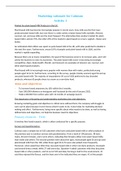
Reductionism + Holism
AO1 - describe AO1 - examples
★ Whether behaviour should be broken down ● Machine reductionism in cognitive
into smaller, simple components which can psychology: ‘units’ of human activity go thru
be studied separately, or if it should be processing system (brain), eg memory stores
studied as a whole system ● Lvls of explanation - gender
● Reductionism: breaking down behaviour into ○ Macro: social influence, media +
smaller systems, based on parsimony culture
(choosing simplest explanation to fit ○ Psychological: psychodynamic
evidence) ○ Micro: chromosomes + hormones
● Levels of explanation: diff ways to explain ● Biological reductionism: OCD- genetic +
behaviour: highest lvl is socio-cultural (macro, neural
multivariable explanation) → psychological → ● Environmental reductionism: phobias-
lowest lvl is physiological (micro, precise developed thru CC, maintained thru OC,
explanation) series of SR links
● Types of reductionism: biological (reducing to ● Holism: humanistic approach emphasises
physical lvl, brain, NTs, hormones, genes…); importance of individual → lack of unified
● environmental (reducing down to series of identity leads to mental disorder
stimulus-response links)
● Holism: looks at human behaviour as a whole
rather than parts; based on Gesdalt
psychology (perceiving things as whole) →
things make more sense when the whole
image is considered
AO3
● Reductionism is more scientific bc provides empirical evidence collected by controlled + replicable
experiments (eg observations), giving credibility to psychology as a science. Holism = based on
speculation, does not lend itself to science so testing is harder; cannot predict behaviour as no
establishment of cause + effect
● Bio reductionism is useful bc led to development of many drug therapies, eg SSRIs in OCS, so that it
is more accessible for patients, their disorder is less stigmatised, and a more humane form of
treatment is offered to patients vs bc holism combines sm factors, it is v diffictul to find effective
treatment; however, it can avoid over-pathologising patients by use of alt therapies eg CBT
● Reductionism lacks validity bc, eg, we can see how brain responds to something thru imaging
techniques, but not necessarily how we feel. Eg listening to music can activate a brain region that is
connected to fear but this does not mean we are scared when listening to music ⇒ lead to
incomplete explanations. Whereas, holism looks at bigger picture, eg in Zimbardo’s SPE the effects
of conformity to social roles + deindividuation understood by looking at how individuals interacted w/
eo
● Interactionism between reductionism + holism is better alternative → focusing on how diff lvls of
analysis interact w/ eo; tries to understand behaviour from interaction between lvls. Eg
diathesis-stress model combines biological reductionism when making diagnosis (genetic
predisposition) + holistic treatment eg CBT
, Free will + Determinism
AO1 - describe AO1 - examples
★ Whether we are free to make our own ● Hard = Skinner suggests behaviour is
decisions or whether our behaviour is shaped determined by accumulation of learned
by internal and external forces, and free will responses; biological approach
is just an illusion ● Soft = Bandura + SLT involves cognitive
● Determinism suggests behaviour is controlled mediating processes
by biological and environmental factors and ● Biological = MAOA-L gene, testosterone ⇒
∴ is predictable determine aggression
● There are two levels of determinism: hard ● Environmental = phobias are initiated +
(ONLY ext + int factors cause behaviour) or maintained by conditioning
soft (we are free to choose from repertoire of ● Psychic = psychodynamic approach, eg
predetermined behaviours, behaviour is Oedipus/Electra complexes in explaining
predictable but not inevitable) gender development
● Three types of det: biological (internal; innate ● Free will = in humanism, person is
+ determined by bio structures eg genes); responsible for own choices
environmental (external; ‘choices’ are sum ● Memory experiments demonstrate cause +
total of contingencies of reinforcement); effect: Loftus & Palmer manipulated words in
psychic (both; childhood experiences + innate question which caused diff. Responses from
drives) ppts
● Free will suggests humans have conscience
+ active role in behaviour
● Psychology places scientific emphasis on
causal explanations, ie importance of
establishing cause + effect so behaviour can
be predicted; determinism supports this, free
will does not bc conscious thoughts cannot
be broken down
AO3
● Ethical/legal implications of deterministic approaches: reduces individual responsibility in criminal
cases, eg Stephen Mobley killed Domino’s pizza manager and appealed that he was ‘born to kill’ bc
his family tree was linked w/ criminality (bio determinism); free will holds criminal accountable for
actions ∴ we should not take fully deterministic approach to behaviour
● Free will is associated w/ healthier mental state ⇒ adolescents w/ strong belief in fatalism (hard det)
are significantly at greater risk of depression than ppl w/ internal LOC (ie those who take
responsibility for actions) who were more mentally healthy; shows that the thought of free will have
+ve impact on mental health
● Purely deterministic or free will approach = inappropriate bc behaviour is not totally unpredictable,
some can be unforeseen; vast complexity of human behaviours means psychologists can never offer
100% true, complete explanations ⇒ suggested that individuals use free will to actively respond to
internal + external forces
Reductionism + Holism
AO1 - describe AO1 - examples
★ Whether behaviour should be broken down ● Machine reductionism in cognitive
into smaller, simple components which can psychology: ‘units’ of human activity go thru
be studied separately, or if it should be processing system (brain), eg memory stores
studied as a whole system ● Lvls of explanation - gender
● Reductionism: breaking down behaviour into ○ Macro: social influence, media +
smaller systems, based on parsimony culture
(choosing simplest explanation to fit ○ Psychological: psychodynamic
evidence) ○ Micro: chromosomes + hormones
● Levels of explanation: diff ways to explain ● Biological reductionism: OCD- genetic +
behaviour: highest lvl is socio-cultural (macro, neural
multivariable explanation) → psychological → ● Environmental reductionism: phobias-
lowest lvl is physiological (micro, precise developed thru CC, maintained thru OC,
explanation) series of SR links
● Types of reductionism: biological (reducing to ● Holism: humanistic approach emphasises
physical lvl, brain, NTs, hormones, genes…); importance of individual → lack of unified
● environmental (reducing down to series of identity leads to mental disorder
stimulus-response links)
● Holism: looks at human behaviour as a whole
rather than parts; based on Gesdalt
psychology (perceiving things as whole) →
things make more sense when the whole
image is considered
AO3
● Reductionism is more scientific bc provides empirical evidence collected by controlled + replicable
experiments (eg observations), giving credibility to psychology as a science. Holism = based on
speculation, does not lend itself to science so testing is harder; cannot predict behaviour as no
establishment of cause + effect
● Bio reductionism is useful bc led to development of many drug therapies, eg SSRIs in OCS, so that it
is more accessible for patients, their disorder is less stigmatised, and a more humane form of
treatment is offered to patients vs bc holism combines sm factors, it is v diffictul to find effective
treatment; however, it can avoid over-pathologising patients by use of alt therapies eg CBT
● Reductionism lacks validity bc, eg, we can see how brain responds to something thru imaging
techniques, but not necessarily how we feel. Eg listening to music can activate a brain region that is
connected to fear but this does not mean we are scared when listening to music ⇒ lead to
incomplete explanations. Whereas, holism looks at bigger picture, eg in Zimbardo’s SPE the effects
of conformity to social roles + deindividuation understood by looking at how individuals interacted w/
eo
● Interactionism between reductionism + holism is better alternative → focusing on how diff lvls of
analysis interact w/ eo; tries to understand behaviour from interaction between lvls. Eg
diathesis-stress model combines biological reductionism when making diagnosis (genetic
predisposition) + holistic treatment eg CBT
, Free will + Determinism
AO1 - describe AO1 - examples
★ Whether we are free to make our own ● Hard = Skinner suggests behaviour is
decisions or whether our behaviour is shaped determined by accumulation of learned
by internal and external forces, and free will responses; biological approach
is just an illusion ● Soft = Bandura + SLT involves cognitive
● Determinism suggests behaviour is controlled mediating processes
by biological and environmental factors and ● Biological = MAOA-L gene, testosterone ⇒
∴ is predictable determine aggression
● There are two levels of determinism: hard ● Environmental = phobias are initiated +
(ONLY ext + int factors cause behaviour) or maintained by conditioning
soft (we are free to choose from repertoire of ● Psychic = psychodynamic approach, eg
predetermined behaviours, behaviour is Oedipus/Electra complexes in explaining
predictable but not inevitable) gender development
● Three types of det: biological (internal; innate ● Free will = in humanism, person is
+ determined by bio structures eg genes); responsible for own choices
environmental (external; ‘choices’ are sum ● Memory experiments demonstrate cause +
total of contingencies of reinforcement); effect: Loftus & Palmer manipulated words in
psychic (both; childhood experiences + innate question which caused diff. Responses from
drives) ppts
● Free will suggests humans have conscience
+ active role in behaviour
● Psychology places scientific emphasis on
causal explanations, ie importance of
establishing cause + effect so behaviour can
be predicted; determinism supports this, free
will does not bc conscious thoughts cannot
be broken down
AO3
● Ethical/legal implications of deterministic approaches: reduces individual responsibility in criminal
cases, eg Stephen Mobley killed Domino’s pizza manager and appealed that he was ‘born to kill’ bc
his family tree was linked w/ criminality (bio determinism); free will holds criminal accountable for
actions ∴ we should not take fully deterministic approach to behaviour
● Free will is associated w/ healthier mental state ⇒ adolescents w/ strong belief in fatalism (hard det)
are significantly at greater risk of depression than ppl w/ internal LOC (ie those who take
responsibility for actions) who were more mentally healthy; shows that the thought of free will have
+ve impact on mental health
● Purely deterministic or free will approach = inappropriate bc behaviour is not totally unpredictable,
some can be unforeseen; vast complexity of human behaviours means psychologists can never offer
100% true, complete explanations ⇒ suggested that individuals use free will to actively respond to
internal + external forces