Non-Fatal Offences Exam Technique
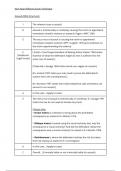
Assault (IDEA Structure):
I The relevant issue is assault.
D Assault is intentionally or recklessly causing the victim to apprehend
immediate unlawful violence as stated in Fagan v MPC 1969.
E The actus reus of assault is causing the victim to apprehend
immediate unlawful violence. DPP v Logdon 1976 puts emphasis on
the victim apprehending the violence.
E [ Smith v Chief Superintendent of Woking Police Station 1983 states
[Additional that fear of what the defendant might do next is sufficient for the
Legal Issues] actus reus of assault.]
[Tuberville v Savage 1669 states words can negate an assault.]
[R v Ireland 1997 states you only need to prove the defendant’s
actions led to the consequences.]
[R v Burstow 1997 states even silent telephone calls and letters can
amount to an assault.]
A In this case… (Apply to case).
E The mens rea of assault is intentionally or recklessly. R v Savage 1991
states that we do not need to foresee any harm.
Choose One:
> Direct intent is a decision to bring about the prohibited
consequence as stated in R v Mohan 1976.
> Oblique intent is tested using the visual certainty test, was the
consequence a visual certainty? And did the defendant realise the
consequence was a virtual certainty? As stated in R v Woollin 1998.
> Recklessness is where the defendant realises the risk but takes
that risk anyway as stated in R v Cunningham.
A In this case… (Apply to case).
C Overall… (Criminally liable or not criminally liable for assault).
, Non-Fatal Offences Exam Technique
Battery (IDEA Structure):
I The relevant issue is battery.
D Battery is intentionally or recklessly applying unlawful violence on
another as stated in R v Ireland;Burstow 1997.
E The actus reus of battery is applying unlawful violence on another.
Collins v Wilcock 1984 states that any touching may be battery.
E [R v Thomas 1985 states that touching a person's clothes can amount
[Additional to battery].
Legal Issues]
[DPP v K 1990 states that an indirect act can be the actus reus of
battery].
A In this case… (Apply to case).
E The mens rea of battery is intentionally or recklessly. R v Venna 1976
confirms that recklessness is sufficient for the mens rea of battery.
Choose One:
> Direct intent is a decision to bring about the prohibited
consequence as stated in R v Mohan 1976.
> Oblique intent is tested using the visual certainty test, was the
consequence a visual certainty? And did the defendant realise the
consequence was a virtual certainty? As stated in R v Woollin 1998.
> Recklessness is where the defendant realises the risk but takes
that risk anyway as stated in R v Cunningham.
A In this case… (Apply to case).
C Overall… (Criminally liable or not criminally liable for battery).
Assault (IDEA Structure):
I The relevant issue is assault.
D Assault is intentionally or recklessly causing the victim to apprehend
immediate unlawful violence as stated in Fagan v MPC 1969.
E The actus reus of assault is causing the victim to apprehend
immediate unlawful violence. DPP v Logdon 1976 puts emphasis on
the victim apprehending the violence.
E [ Smith v Chief Superintendent of Woking Police Station 1983 states
[Additional that fear of what the defendant might do next is sufficient for the
Legal Issues] actus reus of assault.]
[Tuberville v Savage 1669 states words can negate an assault.]
[R v Ireland 1997 states you only need to prove the defendant’s
actions led to the consequences.]
[R v Burstow 1997 states even silent telephone calls and letters can
amount to an assault.]
A In this case… (Apply to case).
E The mens rea of assault is intentionally or recklessly. R v Savage 1991
states that we do not need to foresee any harm.
Choose One:
> Direct intent is a decision to bring about the prohibited
consequence as stated in R v Mohan 1976.
> Oblique intent is tested using the visual certainty test, was the
consequence a visual certainty? And did the defendant realise the
consequence was a virtual certainty? As stated in R v Woollin 1998.
> Recklessness is where the defendant realises the risk but takes
that risk anyway as stated in R v Cunningham.
A In this case… (Apply to case).
C Overall… (Criminally liable or not criminally liable for assault).
, Non-Fatal Offences Exam Technique
Battery (IDEA Structure):
I The relevant issue is battery.
D Battery is intentionally or recklessly applying unlawful violence on
another as stated in R v Ireland;Burstow 1997.
E The actus reus of battery is applying unlawful violence on another.
Collins v Wilcock 1984 states that any touching may be battery.
E [R v Thomas 1985 states that touching a person's clothes can amount
[Additional to battery].
Legal Issues]
[DPP v K 1990 states that an indirect act can be the actus reus of
battery].
A In this case… (Apply to case).
E The mens rea of battery is intentionally or recklessly. R v Venna 1976
confirms that recklessness is sufficient for the mens rea of battery.
Choose One:
> Direct intent is a decision to bring about the prohibited
consequence as stated in R v Mohan 1976.
> Oblique intent is tested using the visual certainty test, was the
consequence a visual certainty? And did the defendant realise the
consequence was a virtual certainty? As stated in R v Woollin 1998.
> Recklessness is where the defendant realises the risk but takes
that risk anyway as stated in R v Cunningham.
A In this case… (Apply to case).
C Overall… (Criminally liable or not criminally liable for battery).