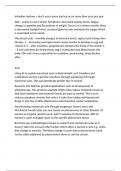
Infradian rhythms = don’t occur every day but occur more than once per year
SAD – yearly in every winter. Symptoms: decreased activity levels, fatigue,
change in appetite and fluctuations in weight. Occurs as in winter months there
is decreased daylight hours, so pineal gland secrets melatonin for longer which
is associated w low mood.
Menstrual cycle – monthly changes in hormone levels, typical cycle being every
28 days. 1 – increasing oestrogen levels causes ovaries to develop an egg and
release it. 2 – after ovulation, progesterone thickens the lining of the womb. 3
– if not used then the lining sheds, egg is reabsorbed and blood leaves the
body. FSH and LH are responsible for ovulation, peak during, sharp decline
after.
Ao3:
Using IR to explain menstrual cycle is deterministic as it trivialises and
medicalises women’s genuine emotions through explaining it through
hormonal ways. This can perpetuate gender bias in society.
Research into SAD has practical applications such as development of
phototherapy. This produces daylight which helps reduce melatonin levels so
that both melatonin and serotonin levels are back to normal. This in turn
reduces symptom severity. Not only is it safer than taking anti-depressant
drugs, it also has an 80% effectiveness rate therefore useful contribution.
Synchronising menstrual cycle through exogenous factors: stern and
McClintock found cycles can sync based on pheromones of other females. 29
women w irregular periods were, with 9 samples of pheromones. 68% of
women’s cycles changed closer to the specific pheromone donor.
But there are methodological issues w research into menstrual cycles as it
doesn’t take into account other factors which affect a woman’s cycle e.g. stress,
diet change or exercise. Therefore change in cycle due to pheromones could
not be solely explained by pheromones alone as cant be certain.
SAD – yearly in every winter. Symptoms: decreased activity levels, fatigue,
change in appetite and fluctuations in weight. Occurs as in winter months there
is decreased daylight hours, so pineal gland secrets melatonin for longer which
is associated w low mood.
Menstrual cycle – monthly changes in hormone levels, typical cycle being every
28 days. 1 – increasing oestrogen levels causes ovaries to develop an egg and
release it. 2 – after ovulation, progesterone thickens the lining of the womb. 3
– if not used then the lining sheds, egg is reabsorbed and blood leaves the
body. FSH and LH are responsible for ovulation, peak during, sharp decline
after.
Ao3:
Using IR to explain menstrual cycle is deterministic as it trivialises and
medicalises women’s genuine emotions through explaining it through
hormonal ways. This can perpetuate gender bias in society.
Research into SAD has practical applications such as development of
phototherapy. This produces daylight which helps reduce melatonin levels so
that both melatonin and serotonin levels are back to normal. This in turn
reduces symptom severity. Not only is it safer than taking anti-depressant
drugs, it also has an 80% effectiveness rate therefore useful contribution.
Synchronising menstrual cycle through exogenous factors: stern and
McClintock found cycles can sync based on pheromones of other females. 29
women w irregular periods were, with 9 samples of pheromones. 68% of
women’s cycles changed closer to the specific pheromone donor.
But there are methodological issues w research into menstrual cycles as it
doesn’t take into account other factors which affect a woman’s cycle e.g. stress,
diet change or exercise. Therefore change in cycle due to pheromones could
not be solely explained by pheromones alone as cant be certain.