WGU D265 Section 4: Critical Thinking Already Passed
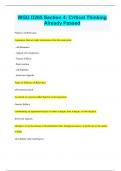
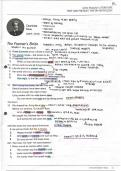
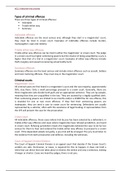
WGU D265 Section 4: Critical Thinking Already Passed Fallacies of Relevance Arguments that are really distractions from the main point - Ad Hominem - Appeal of Consquences - Genetic Fallacy - Equivocation - Ad Populum - Irrelevant Appeals Types of Fallacies of Relevance ad hominem attack An attack on a person rather than his or her argument Genetic Fallacy Condemning an argument because of where it began, how it began, or who began it. Irrelevant Appeals attempt to sway the listener with information that, though persuasive, is irrelevant to the matter at hand ad populum (aka bandwagon) This fallacy occurs when evidence boils down to "everybody's doing it, so it must be a good thing to do." appeal of consquences attempt to motivate belief with an appeal either to the good consequences of believing or the bad consequences of disbelieving Equivocation the use of ambiguous language to conceal the truth or to avoid committing oneself; prevarication Fallacies of Weak Induction A group of informal fallacies that occur because the connection between the premises and conclusion is not strong enough to support the conclusion - Hasty Generalization -Appeal to Ignorance - Post Hoc Ergo Propter Hoc Types of Fallacies of Weak Induction Appeal to Ignorance A fallacy that uses an opponent's inability to disprove a conclusion as proof of the conclusion's correctness. post hoc ergo propter hoc This fallacy is Latin for "after which therefore because of which," meaning that it is incorrect to always claim that something is a cause just because it happened earlier. One may loosely summarize this fallacy by saying that correlation does not imply causation. Hasty Generalization A fallacy in which a faulty conclusion is reached because of inadequate evidence. Fallacies of Presumption Arguments that make unwarranted assumptions about either the data or the nature of a reasonable argument - False Dilemma - Burden of Proof Types of Fallacies of Presumption false dilemma fallacy argument in which a speaker reduces available choices to only two even though other alternatives exist; also called the either-or fallacy burden of proof the obligation to present evidence to support one's claim Burden of proof shifting When one decides that someone else must prove them wrong when, in reality, they are the person with the burden of proof. Argument Mapping A way to visually analyze an argument so that the relation between the evidence and conclusions is clear conjoint support When a premise doesn't seem to support the conclusion without the help of the other premises. independent support When each premise seems like its an argument for the conclusion on its own. Hidden Assumptions unstated premises and conclusions direct and independent support mapping example 2 solely supports the conclusion on its own multiple independent support mapping example each premise is different and unrelated to each other but each support the conclusion indiect support mapping example 3 is indirect to the conclusion conjoint support mapping example both premises are related to each other and are both needed to support the conclusion. mapping hidden assumptions A hidden assumption will always offer conjoint support for its conclusion/sub-conclusion. hidden assumptions mapping example
Written for
- Institution
- WGU D265
- Module
- WGU D265
Document information
- Uploaded on
- July 27, 2023
- Number of pages
- 5
- Written in
- 2022/2023
- Type
- Exam (elaborations)
- Contains
- Questions & answers
Subjects
-
wgu d265 section 4 critical thinking already pass

Also available in package deal