HSY1512
ASSIGNMENT 4
SEMESTER 2
2023
BOTH ANSWERS PROVIDED
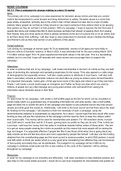
, Q1. The period of the VOC introduced colonialism and slavery to the South western tip of Africa.
Although living and working conditions for slaves were appalling there is no recorded large scale
slave rebellion during this time. With reference explain why. (40)
Introduction:
The Dutch East India Company (VOC) era in the South-western tip of Africa marked a period
of colonialism and slavery. One intriguing aspect of this historical epoch is the conspicuous
absence of large-scale slave rebellions despite the deplorable conditions endured by enslaved
individuals. This essay offers a more extensive examination of the factors contributing to this
absence, drawing insights from both the provided text and additional readings such as "The
Shaping of South African Society, 1652–1840" edited by Elphick and Giliomee, "The Struggle
for the Eastern Cape 1800–1854" by Legassick, "Frontiers: The Epic of South Africa’s Creation
and the Tragedy of the Xhosa People" by Mostert, and "The House of Phalo: A History of the
Xhosa People" by Peires.
Fragmented Slave Origins and Lack of Unified Cultural Identity:
The origins of enslaved individuals in the Cape were immensely diverse, as highlighted by
Elphick and Giliomee (1989). Enslaved Africans came from a multitude of regions, including
Madagascar, Indonesia, and various parts of Africa. This mosaic of backgrounds prevented
the development of a unified cultural identity among the enslaved population. A sense of
unity typically requires generations to evolve, but the constant influx of new slaves from
different places created divisions and prevented the emergence of a common identity
(Legassick, 2010). This lack of a cohesive cultural identity weakened the foundation for
collective action.
Language and Communication Barriers:
Language differences were not merely a matter of diverse linguistic backgrounds; they
represented significant communication barriers among enslaved individuals. Many slaves
spoke different languages, and the necessity to communicate with Dutch-speaking owners
added another layer of complexity. This linguistic diversity hindered effective communication
for planning large-scale rebellions (Elphick & Giliomee, 1989). Furthermore, the simplified
form of Dutch adopted for communication, as mentioned by Mostert (1992), created a
linguistic bridge but not a strong common language for coordination.
Geographic Dispersion and Limited Communication:
The dispersion of slaves across farms in the Cape, highlighted by Elphick and Giliomee (1989),
posed not only logistical but also communication challenges. Vast distances separated slave
communities, and the lack of efficient transportation systems made it difficult for slaves to
come together for coordinated action. Geographic isolation limited opportunities for
ASSIGNMENT 4
SEMESTER 2
2023
BOTH ANSWERS PROVIDED
, Q1. The period of the VOC introduced colonialism and slavery to the South western tip of Africa.
Although living and working conditions for slaves were appalling there is no recorded large scale
slave rebellion during this time. With reference explain why. (40)
Introduction:
The Dutch East India Company (VOC) era in the South-western tip of Africa marked a period
of colonialism and slavery. One intriguing aspect of this historical epoch is the conspicuous
absence of large-scale slave rebellions despite the deplorable conditions endured by enslaved
individuals. This essay offers a more extensive examination of the factors contributing to this
absence, drawing insights from both the provided text and additional readings such as "The
Shaping of South African Society, 1652–1840" edited by Elphick and Giliomee, "The Struggle
for the Eastern Cape 1800–1854" by Legassick, "Frontiers: The Epic of South Africa’s Creation
and the Tragedy of the Xhosa People" by Mostert, and "The House of Phalo: A History of the
Xhosa People" by Peires.
Fragmented Slave Origins and Lack of Unified Cultural Identity:
The origins of enslaved individuals in the Cape were immensely diverse, as highlighted by
Elphick and Giliomee (1989). Enslaved Africans came from a multitude of regions, including
Madagascar, Indonesia, and various parts of Africa. This mosaic of backgrounds prevented
the development of a unified cultural identity among the enslaved population. A sense of
unity typically requires generations to evolve, but the constant influx of new slaves from
different places created divisions and prevented the emergence of a common identity
(Legassick, 2010). This lack of a cohesive cultural identity weakened the foundation for
collective action.
Language and Communication Barriers:
Language differences were not merely a matter of diverse linguistic backgrounds; they
represented significant communication barriers among enslaved individuals. Many slaves
spoke different languages, and the necessity to communicate with Dutch-speaking owners
added another layer of complexity. This linguistic diversity hindered effective communication
for planning large-scale rebellions (Elphick & Giliomee, 1989). Furthermore, the simplified
form of Dutch adopted for communication, as mentioned by Mostert (1992), created a
linguistic bridge but not a strong common language for coordination.
Geographic Dispersion and Limited Communication:
The dispersion of slaves across farms in the Cape, highlighted by Elphick and Giliomee (1989),
posed not only logistical but also communication challenges. Vast distances separated slave
communities, and the lack of efficient transportation systems made it difficult for slaves to
come together for coordinated action. Geographic isolation limited opportunities for