BCBA EXAM- Task list 5- A1-A5 2023/24
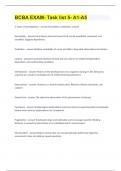
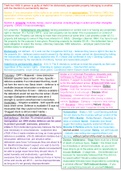
3 Types of Investigations Description, prediction, control Description Facts about observed events that can be quantified, examined, and classified. Suggests hypothesis. Prediction Relative probability of cause and effect. Repeated observation/correlation. Control Functional relations derived and can only be co-related (independent, dependent, and confounding variables) Selectionism History of the development of an organism during it's life. Behaviors acquired as a result of contingencies of reinforcement/punishment. Determinism Universe is a lawful/orderly place. Behavior follows rules/laws, not random. Empericism The objective observation of the phenomena of interest. Parsimony Simple/logical explanations must be ruled out experimentally/conceptually before more abstract explanations are considered. Pragmatism Emphasizes logic and rationality and encourages specific thinking. Behavior is caused by interactions of an individual and it's environment. Structuralism Rejects events that are not operationally defined by objective assessment. Does not address causal questions. Radical Behaviorism A thoroughgoing form of behaviorism that attempts to understand all human behavior, including private events such as thoughts and feelings, in terms of controlling variables in the history of the person (ontogeny) and the species (phylogeny). Methodological Behaviorism A philosophical position that views behavioral events that cannot be publicly observed as outside the realm of science/not behaviors. Mentalism Inner dimension exists and causes behavior. Relies on explanatory fiction (i.e., Knowledge). Experimentation Controlled comparison of interest, using one factor at a time. Replication Repetition of experiments to determine reliability/usefulness of findings. Behaviorism Philosophy of the science of behavior conceptual basis of behavior principles as it relates across many spectrum's. Experimental Analysis of Behavior (EAB) Founded by Skinner. Basic research focused on the science studying operant behavior. Applied Behavior Analysis (ABA) Development of technology to improve socially significant behaviors, clarifying functional relations. 7 Dimensions of Behavior Analysis Generality, Effective, Technological, Applied, Conceptually Systematic, Analytic, Behavioral Generality Skills/behaviors occur in environments other than where they were discretely taught. Effective Interventions are monitored to evaluate the impact on behavior. Technological Procedures are described clearly and concisely so that other may implement correctly. Applied Socially significant behaviors are selected. Conceptually Systematic Interventions consistent with principles demonstrated in the literature. Analytic Decisions are data based. Behavioral Observable and measurable behaviors are targeted. Who created the 7 dimensions of behavior analysis and when? Baer, Wolf, Risley, 1968
Written for
- Institution
- BCBA
- Module
- BCBA
Document information
- Uploaded on
- September 13, 2023
- Number of pages
- 3
- Written in
- 2023/2024
- Type
- Exam (elaborations)
- Contains
- Questions & answers
Subjects
-
bcba exam task list 5 a1 a5

Also available in package deal