CLEP - Analyzing and Interpreting Literature 2023/2024
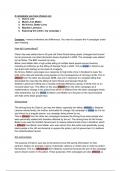
Bathos --A poetic device in which the poet intentionally used unexpected, anticlimactic language to bring humor, expose, or create a point. Enjambment --When a writer intentionally runs a line of poetry together and breaks a thought, phrase or sentence a the end of the line and carries it into the next line. Open Form --Poems whose form is not easily recognizable and may not fall into one specific traditional poetic form. Petrarchan Sonnet --A sonnet that contains an octave (eight lines) followed by a sestet (six lines). Hyperbole --An overstated, purposeful exaggeration that is not meant to be taken literally but is used to emphasize strong feelings or make an important point. Oxymoron --A figure of speech that joins two contradictory or dissimilar terms. Closed Form --Poetry that is easily recognizable or identifiable based on the poem's major structural elements such as its meter or rhyme scheme. Ballads --Poems in song form that often contain straightforward themes and tell stories. Apostrophe --A poetic device in which the speaker directly addresses a person or thing that is not there. Synecdoche --A figure of speech in which part of something is used to represent or refer to the entire thing, or vice versa. Conceit --An extended metaphor or another form of comparison between two very unlikely objects. Onomatopoeia --A literary device in which a word imitates the sound that it describes such as "pop", "boom" or "buzz". Paradox --A statement or situation that seems lead to a contradiction but nonetheless remains true. Consonance --A literary device in which the writer repeats two or more consonant sounds without repeating the vowel sounds, such as "Split splat," "wish-wash" and "pitter patter". Sestina --A closed form poem composed of six six-line stanzas that take the same six ending words from the first stanza and repeats those end words in the following five stanzas, just in a different order each time. Heroic Couplets --Rhyming pairs of poetic lines written in iambic pentameter that is generally self-contained. Drama --A literary form that can include both poetry and prose; includes a plot, characters, and setting; and generally contains a vast amount of dialogue compared to the narrative. Tone --The attitude or voice of the speaker. Epigram --A type of closed-form poetry that is short, concise, and often witty or pessimistic. Syntax --The arrangement of words in a certain pattern or structure. Shakespearean Sonnet --A sonnet structured with three quatrains (four-lined stanzas) and a couplet (two rhyming lines). Villanelle --A poetic form originating from poems on court life and love and containing five three-line stanzas (tercets) followed by a four-line stanza (quatrain). Alexandrine --A metered poetic line that contains twelve syllables. Lyrics --A form of poetry that do not tell stories but rather, focus on emotions, feelings, or perceptions, often related to nature. Sarcasm --Verbal irony that is taken too far and mocks a someone or something. Epics --A literary form that was originally an ancient oral poetic tradition telling of the great deeds of heroes and their struggles and trials but later became dictated into a narrative poem containing a regular metrical pattern and structured into couplets. Caesura --A poetic device denoting a pause within a line of poetry that may or may not be marked by punctuation (/) to cause the pause. Couplet --A poetic form containing a two line stanza. Assonance --A poetic device in which the poet repeats vowel sounds in words that don't rhyme, usually with the vowel sounds found in the middle of words instead of at the beginning. Sonnets --a type of closed-form poetry that contains fourteen lines. Pun --A figure of speech involving a play on words for the purpose of humor or serious effect
Written for
- Institution
- Analyzing and Interpreting Literature
- Module
- Analyzing and Interpreting Literature
Document information
- Uploaded on
- November 5, 2023
- Number of pages
- 9
- Written in
- 2023/2024
- Type
- Exam (elaborations)
- Contains
- Questions & answers
Subjects
-
interpreting literature
-
literature
-
analyzing and interpreting literature
-
clep analyzing and interpreting literature

Also available in package deal