Summary EMERGENCY MEDICAL TECHNICIAN (EMT) SCOPE OF PRACTICE (Complete Notes)
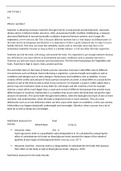
EMERGENCY MEDICAL TECHNICIAN (EMT) SCOPE OF PRACTICE "Emergency Medical Technician I" or "EMT-I" means a person who has successfully completed an EMT-I course which meets the requirements of this Chapter, has passed all required tests, and who has been certified by the EMT-I certifying authority. 100063. Scope of Practice of Emergency Medical Technician-I (EMT-I). a) During training, while at the scene of an emergency, during transport of the sick or injured, or during interfacility transfer, a supervised EMT-I student or certified EMT-I is authorized to do any of the following: 1) Evaluate the ill and injured. 2) Render basic life support, rescue and emergency medical care to patients. 3) Obtain diagnostic signs to include, but not be limited to the assessment of temperature, blood pressure, pulse and respiration rates, level of consciousness, and pupil status. 4) Perform cardiopulmonary resuscitation, including the use of mechanical adjuncts to basic cardiopulmonary resuscitation. 5) Use the following adjunctive airway breathing aids: A) oropharyngeal airway; B) nasopharyngeal airway; C) suction devices; D) basic oxygen delivery devices; and E) manual and mechanical ventilating devices designed for prehospital use. 6) Use various types of stretchers and body immobilization devices. 7) Provide initial prehospital emergency care of trauma. 8) Administer oral glucose or sugar solutions. 9) Extricate entrapped persons. 10) Perform field triage. 11) Transport patients. 12) Set up for ALS procedures, under the direction of an EMT-II or EMT-P. 13) Perform automated external defibrillation when authorized by an EMT AED service provider. 14) Assist patients with the administration of physician prescribed devices, including but not limited to, patient operated medication pumps, sublingual nitroglycerin, and self-administered emergency medications, including epinephrine devices. b) In addition to the activities authorized by subdivision (a) of this section, the medical director of the local EMS agency may also establish policies and procedures to allow a certified EMT-I or a supervised EMT- I student in the prehospital setting and/or during interfacility transport to: 1) Monitor intravenous lines delivering glucose solutions or isotonic balanced salt solutions including Ringer’s lactate for volume replacement; 2) Monitor, maintain, and adjust if necessary in order to maintain, a preset rate of flow and turn off the flow of intravenous fluid; and 3) Transfer a patient who is deemed appropriate for transfer by the transferring physician, and who has nasogastric (NG) tubes, gastrostomy tubes, heparin locks, foley catheters, tracheostomy tubes and/or indwelling vascular access lines, excluding arterial lines; 4) Monitor preexisting vascular access devices and peripheral lines delivering intravenous fluids with additional medications pre-approved by the Director of the EMS Authority (not currently allowed in Contra Costa County). c) The scope of practice of an EMT-I shall not exceed those activities authorized in this Section, Section 100064, and Section 100064.1. BLS MANAGEMENT OF PATIENTS ENCOUNTERED PRIOR TO ACTIVATION OF 9-1-1 EMT-I's who encounter a patient where the 9-1-1 system has not been activated should assess the patient to determine whether the care needed by that patient is beyond their scope of practice. If it is determined that the patient may benefit from ALS level care, the 9-1-1 system should be activated. After assuring activation of the 9-1-1 system, EMT-I personnel should assess the patient and begin any care required that is allowed in the EMT-I Scope of Practice. If the EMT-I unit has transport capabilities, the personnel should determine if the ETA of the paramedic unit is greater than the transport time to the closest appropriate receiving facility. If so, the EMT-I unit should proceed with patient transport and cancel the ALS unit. If the ETA of the paramedic unit is less than the transport time to the closest appropriate receiving facility, remain on scene and turn the patient over to the paramedic unit upon their arrival. Documentation of the patients chief complaint, history of present illness, past medical history, medications, allergies, vital signs, findings from the physical exam, and a general assessment and any treatment initiated is to be completed. A copy of the patient documentation should be given to the transport unit prior to transport, if possible. ADMINISTRATION OF ORAL GLUCOSE EMT-Is may administer an approved oral glucose agent by utilizing the following procedure: 1. Confirm altered level of consciousness in a patient with a known history of diabetes, and that the patient is conscious and able to sit in an upright position. 2. Dispense up to 30 grams of the oral glucose solution into the patient's mouth. Optimally, the patient will self-administer the solution. 3. If the patient has difficulty swallowing the solution, discontinue the procedure. The first priority is keeping an open airway. 4. Record the administration of the oral glucose solution with the time given and any changes in the patients level of consciousness.
Written for
- Institution
- Stanford University
- Module
- Nursing Care
Document information
- Uploaded on
- November 9, 2023
- Number of pages
- 6
- Written in
- 2023/2024
- Type
- SUMMARY
Subjects
-
emergency medical technician emt scope of prac