IICRC WRT Test 2023/2024 Solved 100%
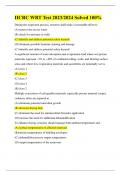
IICRC WRT Test 2023/2024 Solved 100% IICRC WRT Test 2023/2024 Solved 100% During the inspection process, restorers shall make a reasonable effort to (A) remove the excess water (B) check for moisture in walls (C) identify and address potential safety hazards (D) eliminate possible furniture staining and damage (C) identify and address potential safety hazards A significant amount of water absorption and evaporation load where wet porous materials represent ~5% to ~40% of combined ceiling, walls, and flooring surface areas and where low evaporation materials and assemblies are minimally wet is (A) class 1 (B) class 2 (C) class 3 (D) class 4 (B) class 2 Multiple extractions of salvageable materials, especially porous material (carpet, cushion), often are required to (A) eliminate potential microbial growth (B) decrease drying time (C) eliminate the need for antimicrobial (biocide) application (D) increase the need for additional dehumidification To enhance drying, restorers should manage both ambient temperature and. (A) surface temperatures of affected materials (B)outside temperatures of building envelopes (C) dehumidifier process output temperatures (D) output temperatures of the airmovers (A) surface temperature of affected materials Water damage restoration services should not begin until after the (A) damage survey has been submitted (B) restorer has entered into an adequately written contract (C) insurance adjuster authorizes the work (D) insurance policy has been reviewed and explained (B) restorer has entered into an adequately written contract Two tools that should be used properly disengage most stretched-in carpet are (A) pliers and staple remover (B) power stretcher and knee kicker (C) knee kicker and carpet awl. (D) base molding lifter and carpet awl (C) knee kicker and carpet awl When inspecting a water-damaged structure, restorers should inspect (A) with thermal imaging camera to show definite areas of water (B) only where water is visible (C) only rooms that customer or adjuster says were affected (D) all potentially affected areas (D) all potentially affected areas Buckled or damaged particle board should (A) be dried to a pre-loss condition using desiccant dehumidifiers (B) be removed and replaced with new material (C) be dried from underneath the subfloor (D) return to its original size after it dries to pre-loss moisture content (B) be removed and replaced with new material Upon entering a building, professional moisture detection equipment should be used to evaluate and document (A) inside psychometric readings only (B) manometer readings for the purpose of drying (C) thermographic readings and picture from a thermal imaging camera (D) applicable psychrometric conditions and moisture content or level readings (D) applicable psychrometric conditions and moisture content or level readings When wet, a structural material that loses most of its structural integrity, but regains its strength when dry is
Written for
- Institution
- IICRC WRT
- Module
- IICRC WRT
Document information
- Uploaded on
- November 20, 2023
- Number of pages
- 23
- Written in
- 2023/2024
- Type
- Exam (elaborations)
- Contains
- Questions & answers
Subjects
-
iicrc wrt test
-
iicrc wrt test solved 100
-
during the inspection process restorers shall mak
-
a significant amount of water absorption and evapo
-
multiple extractions of salvageable materials esp

Also available in package deal