2023-2024, Block 1 GW4003MV. Advanced Research Methods
WEEK 1
Causal inference
Drawing the lines between causes and
effects
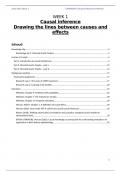
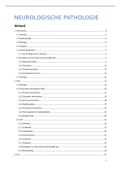
Inhoud
Knowledge clip..................................................................................................................................................2
Knowledge clip 1: Directed Acyclic Graphs...............................................................................................2
Lecture 1 (5 sept)..............................................................................................................................................4
Part 2. Introduction to causal interference...................................................................................................4
Part 3. Directed Acyclic Graphs – part I.......................................................................................................10
Part 4. Directed Acyclic Graphs – part II......................................................................................................14
Workgroup meeting........................................................................................................................................17
Homework assignment...............................................................................................................................17
Research case 1: The costs of COPD treatment.......................................................................................17
Research case 2: Learning to be healthy.................................................................................................20
Literature........................................................................................................................................................24
Wheelan: Chapter 6: Problems with probability.....................................................................................26
Wheelan: Chapter 7: The importance of data.........................................................................................28
Wheelan: Chapter 13: Program evaluation.............................................................................................29
Hernan, Robins: Chapter 1: A definition of causal effect.........................................................................30
Hernan (2016). Does water kill? A call for less casual causal inferences.................................................32
Rohrer (2018). Thinking clearly about correlations and causation: Graphical causal models for
observational data..................................................................................................................................33
EXTRA LITERATURE: Hernan (2002). Causal knowledge as prerequisite for confounding evaluation: An
application to birth defects epidemiology..............................................................................................35
1
,2023-2024, Block 1 GW4003MV. Advanced Research Methods
Knowledge clip
Knowledge clip 1:Directed Acyclic Graphs
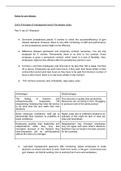
Directed Acyclic Graphs (DAGs) are graphical
representations of the causal structure underlying a research question. In order to answer your RQ and to
examine the influence of the exposure on the outcome (e.g. the influence of going to the gym on their
health) in an unbiased manner you need to account for other variables in your study. So you need to know
the causal structure underlying the RQ before you conduct a study, so that you can remove the disruptive
influence of other variables on the relationship between exposure and outcome.
Paths are directly related to your RQ. They always start
with the exposure and end with the outcome. The
arrows in a path can go in different directions.
So in this DAG, the causal structure that underlies the
RQ is described by 4 paths. And although we are only
interested in the influence of X on Y, having the data on
the association that flows through all these paths is
important for answering this RQ in an unbiased manner.
In a backdoor path, arrows can go in different
directions. In a causal path, the arrows always go
in the direction of X to Y.
2
,2023-2024, Block 1 GW4003MV. Advanced Research Methods
Regardless of whether paths are causal or
backdoor paths, according to DAG terminology
paths are always open unless they collide
somewhere on a path. If they are collide (the
variable is then called a collider), those paths
are closed.
Open paths give an association between X and Y.
The association between X and Y consists of the
combination of all OPEN paths between them, so
not the closed paths.
To examine the influence of only X on Y, we need to
remove all association that are not directly relevant
and only disruptive by blocking those open paths.
Backdoor paths (variable L) always need to be
closed in this case. Whether a causal path, through
an intermediate variable (variable V), needs to be
closed depends on the RQ.
It could happen that you open an already
closed path, e.g. by including a collider in
your analysis. Opening this backdoor path
will disrupt the association of X on Y, so it
will introduce bias. To obtain an unbiased
estimate, you need to avoid this by closing
the backdoor path again (e.g. by removing
the collider from your analysis) (e.g. or
when you have a more extensive DAG with
more variables on that particular backdoor
path, by including another variable in your
analysis based on which you close
that backdoor path again).
3
, 2023-2024, Block 1 GW4003MV. Advanced Research Methods
Lecture 1 (5 sept)
This is the most important slide for the whole course and for the exam.
Part 2. Introduction to causal interference
Slide 20. An example:
‘Improves the quality of your skin’ implies a causal
effect A leads to B, with:
A = use of True Match Minerals powder. B =
improved skin quality / better skin.
So use of True Match Minerals powder leads to a
better skin.
Slide 21
Is the scientific evidence convincing?
- The research had a small sample size: only 41 women.
o Is this always a problem?
No, it depends on the context of the study, research question, aim and the consequences.
E.g. if one of the possible outcomes is death, you don’t want a big sample size.
- They don’t give any information on ‘quality of the skin’; what implies an improved quality, how did
they measure it, etc.
- The study is performed or financed by a commercial company.
o Is this always a problem?
4
WEEK 1
Causal inference
Drawing the lines between causes and
effects
Inhoud
Knowledge clip..................................................................................................................................................2
Knowledge clip 1: Directed Acyclic Graphs...............................................................................................2
Lecture 1 (5 sept)..............................................................................................................................................4
Part 2. Introduction to causal interference...................................................................................................4
Part 3. Directed Acyclic Graphs – part I.......................................................................................................10
Part 4. Directed Acyclic Graphs – part II......................................................................................................14
Workgroup meeting........................................................................................................................................17
Homework assignment...............................................................................................................................17
Research case 1: The costs of COPD treatment.......................................................................................17
Research case 2: Learning to be healthy.................................................................................................20
Literature........................................................................................................................................................24
Wheelan: Chapter 6: Problems with probability.....................................................................................26
Wheelan: Chapter 7: The importance of data.........................................................................................28
Wheelan: Chapter 13: Program evaluation.............................................................................................29
Hernan, Robins: Chapter 1: A definition of causal effect.........................................................................30
Hernan (2016). Does water kill? A call for less casual causal inferences.................................................32
Rohrer (2018). Thinking clearly about correlations and causation: Graphical causal models for
observational data..................................................................................................................................33
EXTRA LITERATURE: Hernan (2002). Causal knowledge as prerequisite for confounding evaluation: An
application to birth defects epidemiology..............................................................................................35
1
,2023-2024, Block 1 GW4003MV. Advanced Research Methods
Knowledge clip
Knowledge clip 1:Directed Acyclic Graphs
Directed Acyclic Graphs (DAGs) are graphical
representations of the causal structure underlying a research question. In order to answer your RQ and to
examine the influence of the exposure on the outcome (e.g. the influence of going to the gym on their
health) in an unbiased manner you need to account for other variables in your study. So you need to know
the causal structure underlying the RQ before you conduct a study, so that you can remove the disruptive
influence of other variables on the relationship between exposure and outcome.
Paths are directly related to your RQ. They always start
with the exposure and end with the outcome. The
arrows in a path can go in different directions.
So in this DAG, the causal structure that underlies the
RQ is described by 4 paths. And although we are only
interested in the influence of X on Y, having the data on
the association that flows through all these paths is
important for answering this RQ in an unbiased manner.
In a backdoor path, arrows can go in different
directions. In a causal path, the arrows always go
in the direction of X to Y.
2
,2023-2024, Block 1 GW4003MV. Advanced Research Methods
Regardless of whether paths are causal or
backdoor paths, according to DAG terminology
paths are always open unless they collide
somewhere on a path. If they are collide (the
variable is then called a collider), those paths
are closed.
Open paths give an association between X and Y.
The association between X and Y consists of the
combination of all OPEN paths between them, so
not the closed paths.
To examine the influence of only X on Y, we need to
remove all association that are not directly relevant
and only disruptive by blocking those open paths.
Backdoor paths (variable L) always need to be
closed in this case. Whether a causal path, through
an intermediate variable (variable V), needs to be
closed depends on the RQ.
It could happen that you open an already
closed path, e.g. by including a collider in
your analysis. Opening this backdoor path
will disrupt the association of X on Y, so it
will introduce bias. To obtain an unbiased
estimate, you need to avoid this by closing
the backdoor path again (e.g. by removing
the collider from your analysis) (e.g. or
when you have a more extensive DAG with
more variables on that particular backdoor
path, by including another variable in your
analysis based on which you close
that backdoor path again).
3
, 2023-2024, Block 1 GW4003MV. Advanced Research Methods
Lecture 1 (5 sept)
This is the most important slide for the whole course and for the exam.
Part 2. Introduction to causal interference
Slide 20. An example:
‘Improves the quality of your skin’ implies a causal
effect A leads to B, with:
A = use of True Match Minerals powder. B =
improved skin quality / better skin.
So use of True Match Minerals powder leads to a
better skin.
Slide 21
Is the scientific evidence convincing?
- The research had a small sample size: only 41 women.
o Is this always a problem?
No, it depends on the context of the study, research question, aim and the consequences.
E.g. if one of the possible outcomes is death, you don’t want a big sample size.
- They don’t give any information on ‘quality of the skin’; what implies an improved quality, how did
they measure it, etc.
- The study is performed or financed by a commercial company.
o Is this always a problem?
4