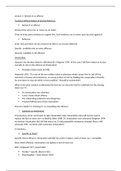
Lecture 3- Denials of an ofence
Technical diferennanon of denials/defences
Denial of an ofence
Denial of the actus reus or mens rea (or both)
D has to bring some evidence to support this. Such evidence can in some cases be used against D
Defences
Actus reus and mens rea are present but there is an excuse (defence)
Specifc- available onl on some ofences
General- available on all ofences
Intoxicanon
General rule: drunken intent is snll intent (R v Kingston 1994- In this case D did form intent so he was
not able to rel on the defence of intoxicanon)
Principle of prior fault (no MR)
Majewski 1976- “if a man of his own volinon takes a substance which causes him to cast of the
restraints of reason and conscience, no wrong is done to him b holding him answerable criminall
for an injur he ma do while in that condinonn (should be answerable).
When is the prior conduct so blameworth that we can use prior fault to subsntute for the missing
mens rea? If:
D’s intoxicanon was voluntar
It was a basic intent ofence
The intoxicanng substance was dangerous
D lacked MR because of the intoxicanon
Then D is liable (T1- drinking T2- is commitng the ofence)
1. voluntar or involuntar
If involuntar , D has not chosen to take intoxicanon risks. Intoxicanon rules will not be used to
replace the lack of mens rea= no liabilit (Allen 1988- D’s intoxicanon was voluntar ) (kingston 1994-
involuntar intoxicanon but snll had mens rea, D had paedophilic tendencies alread ) (Ross v HM
advocate 1991- no intent and involuntar intoxicanon)
If voluntar …
2. Specifc or basic?
Specifc intent ofences: Intoxicanon will NOT be used to replace a lack of mens rea = no liabilit .
Basic intent ofences: Intoxicanon can replace a lack of mens rea
DPP v Majewski 1977; Heard 2007
Murder = specifc (Beard 1920)
Manslaughter = basic (Beard 1920)
Technical diferennanon of denials/defences
Denial of an ofence
Denial of the actus reus or mens rea (or both)
D has to bring some evidence to support this. Such evidence can in some cases be used against D
Defences
Actus reus and mens rea are present but there is an excuse (defence)
Specifc- available onl on some ofences
General- available on all ofences
Intoxicanon
General rule: drunken intent is snll intent (R v Kingston 1994- In this case D did form intent so he was
not able to rel on the defence of intoxicanon)
Principle of prior fault (no MR)
Majewski 1976- “if a man of his own volinon takes a substance which causes him to cast of the
restraints of reason and conscience, no wrong is done to him b holding him answerable criminall
for an injur he ma do while in that condinonn (should be answerable).
When is the prior conduct so blameworth that we can use prior fault to subsntute for the missing
mens rea? If:
D’s intoxicanon was voluntar
It was a basic intent ofence
The intoxicanng substance was dangerous
D lacked MR because of the intoxicanon
Then D is liable (T1- drinking T2- is commitng the ofence)
1. voluntar or involuntar
If involuntar , D has not chosen to take intoxicanon risks. Intoxicanon rules will not be used to
replace the lack of mens rea= no liabilit (Allen 1988- D’s intoxicanon was voluntar ) (kingston 1994-
involuntar intoxicanon but snll had mens rea, D had paedophilic tendencies alread ) (Ross v HM
advocate 1991- no intent and involuntar intoxicanon)
If voluntar …
2. Specifc or basic?
Specifc intent ofences: Intoxicanon will NOT be used to replace a lack of mens rea = no liabilit .
Basic intent ofences: Intoxicanon can replace a lack of mens rea
DPP v Majewski 1977; Heard 2007
Murder = specifc (Beard 1920)
Manslaughter = basic (Beard 1920)