Nursing 155 Final Hondros Questions With Complete Solutions
Checking accuracy and reliability CORRECT ANSWER realizing that something doesn't seem quite right and taking action to determine if it is accurate or not, sounds suspicious and looking further into it
Nursing Process CORRECT ANSWER step by step approach directed at planning and providing pt care.
Data collection(assessment), Planning, Implementation, Evaluation
Nursing process D CORRECT ANSWER Data collection- gather and review info about the pt, assessment
Nursing process P CORRECT ANSWER Planning- development of a nursing dx, goals, and interventions for a pt plan of care.
Nursing process I CORRECT ANSWER implementation of planned interventions
actually carrying out the orders
Nursing process E CORRECT ANSWER Evaluation- comparing actual outcomes with expected outcomes
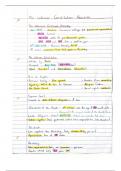
Tanner's Model of Clinical Judgement CORRECT ANSWER A model based on how a nurse thinks, it explains the 4 steps in the critical thinking process that nurses use to solve any problem:
Noticing
Interpereting
Responding Reflecting
Step 1 Noticing CORRECT ANSWER -Identifying signs and symptoms
-gathering complete and accurate data
-assessing systematically and comprehensivly
-predicting and (managing) potential complications
-identifying assumptions
Identifying signs and symptoms CORRECT ANSWER Indicates when a situation is normal, abnormal, or has changed, something is different than expected
Gathering complete and accurate data CORRECT ANSWER Data collected from all available sources is used as the basis for identifying issues, problems, concerns. Must verify that data is complete and accurate
Assessing systematically and comprehensively CORRECT ANSWER A method of
assessing information or data so nothing is omitted or forgotten. Focused, head to toe, body systems
Predicting (and managing) potential complications CORRECT ANSWER Look at the big picture to prepare for potential future complications for an individual pt, you are predicting complications which means you are identifying possible problems. What will put our pt at risk
ex.recognize that all pt have risk for atelectasis after surgery
Identifying assumptions CORRECT ANSWER Recognize information taken for granted, hastily arriving at a conclusion without supporting evidence, a misconception. EVIDENCE ex. all thin people are healthy
Step 2- Interpreting CORRECT ANSWER -clustering related information
-recognizing inconsistencies
-checking accuracy and reliability
-Distinguishing relevant from irrelevant
-determining the importance of information
-comparing and contrasting
-(predicting) and managing potential complications
-judging how much ambiguity is acceptable
-using legal, ethical and professional HERE WE- PLANNING, PRIORITIZE, DESICIONS WHAT ARE YOU GOING DO WITH THE DATA YOU RECIEVE, MAKE SENCE OF THE DATA*
Clustering related information CORRECT ANSWER Grouping together information with a common theme. A method of organizing data so that you put .things together in order to understand the situation, what is alike
ex. headache-clustering orther related sx-sleepy, hit head, dizziness
Recognizing inconsistencies CORRECT ANSWER does the objective data match the subjective data
ex. pt says they aren't in pain but face is telling you diff. they are grimacing, clinching fists, tearful, holding their side
Distinguishing relevant from irrelevant CORRECT ANSWER decidingco what information is pertinent or connects to the matter at hand, sort out what info relates
to the current problem
Checking accuracy and reliability CORRECT ANSWER realizing that something doesn't seem quite right and taking action to determine if it is accurate or not, sounds suspicious and looking further into it
Nursing Process CORRECT ANSWER step by step approach directed at planning and providing pt care.
Data collection(assessment), Planning, Implementation, Evaluation
Nursing process D CORRECT ANSWER Data collection- gather and review info about the pt, assessment
Nursing process P CORRECT ANSWER Planning- development of a nursing dx, goals, and interventions for a pt plan of care.
Nursing process I CORRECT ANSWER implementation of planned interventions
actually carrying out the orders
Nursing process E CORRECT ANSWER Evaluation- comparing actual outcomes with expected outcomes
Tanner's Model of Clinical Judgement CORRECT ANSWER A model based on how a nurse thinks, it explains the 4 steps in the critical thinking process that nurses use to solve any problem:
Noticing
Interpereting
Responding Reflecting
Step 1 Noticing CORRECT ANSWER -Identifying signs and symptoms
-gathering complete and accurate data
-assessing systematically and comprehensivly
-predicting and (managing) potential complications
-identifying assumptions
Identifying signs and symptoms CORRECT ANSWER Indicates when a situation is normal, abnormal, or has changed, something is different than expected
Gathering complete and accurate data CORRECT ANSWER Data collected from all available sources is used as the basis for identifying issues, problems, concerns. Must verify that data is complete and accurate
Assessing systematically and comprehensively CORRECT ANSWER A method of
assessing information or data so nothing is omitted or forgotten. Focused, head to toe, body systems
Predicting (and managing) potential complications CORRECT ANSWER Look at the big picture to prepare for potential future complications for an individual pt, you are predicting complications which means you are identifying possible problems. What will put our pt at risk
ex.recognize that all pt have risk for atelectasis after surgery
Identifying assumptions CORRECT ANSWER Recognize information taken for granted, hastily arriving at a conclusion without supporting evidence, a misconception. EVIDENCE ex. all thin people are healthy
Step 2- Interpreting CORRECT ANSWER -clustering related information
-recognizing inconsistencies
-checking accuracy and reliability
-Distinguishing relevant from irrelevant
-determining the importance of information
-comparing and contrasting
-(predicting) and managing potential complications
-judging how much ambiguity is acceptable
-using legal, ethical and professional HERE WE- PLANNING, PRIORITIZE, DESICIONS WHAT ARE YOU GOING DO WITH THE DATA YOU RECIEVE, MAKE SENCE OF THE DATA*
Clustering related information CORRECT ANSWER Grouping together information with a common theme. A method of organizing data so that you put .things together in order to understand the situation, what is alike
ex. headache-clustering orther related sx-sleepy, hit head, dizziness
Recognizing inconsistencies CORRECT ANSWER does the objective data match the subjective data
ex. pt says they aren't in pain but face is telling you diff. they are grimacing, clinching fists, tearful, holding their side
Distinguishing relevant from irrelevant CORRECT ANSWER decidingco what information is pertinent or connects to the matter at hand, sort out what info relates
to the current problem