Class and social inequality
Theoretical explanations of class inequality
FUNCTIONALISM
- Few functionalists appear to have attempted to identify specific classes
- Tend to see social stratification as open so plenty of room for social mobility for those who
chose to better themselves (e.g. through education)
- Suggests that those who are poor deserve poverty because they failed to improve
themselves
Davis-Moore theory
- Assumed that the highest paid jobs are also most important
- Inequality is functional for society because it ensures that the most important positions are
filled by the ablest
- People are attracted to and compete for highly rewarded jobs-without rewards, why would
people make the effort and take on responsibility
- Highest earners earn more money because they deserve to
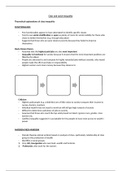
Inequality of pay
Educated people
and status ensures
Social positions are in short supply
that talented
vary in their value because of the
people will take
to social life difficulty of
on most important
acquiring skills
social role
Criticism
- Highest paid people (e.g. celebrities) are of little value to society-compare their income to
nurses, doctors, teachers
- Inherited wealth-may not need to work but will still get high rewards of society
- Difficult to determine usefulness of jobs to society
- Assumes that those who reach the top solely based on talent- ignores race, gender, class
barriers etc.
- Justifies inequality-suggests it is acceptable for few people to have most access to wealth /
power
MARXISM/NEO-MARXISM
- Marxist theories almost entirely based on analysis of class, particularly relationship of class
group to the production of wealth
- Identifies 2 social groups:
1. Very rich, bourgeoisie who own land, wealth and factories
2. Proletariat, who work for the owners
Theoretical explanations of class inequality
FUNCTIONALISM
- Few functionalists appear to have attempted to identify specific classes
- Tend to see social stratification as open so plenty of room for social mobility for those who
chose to better themselves (e.g. through education)
- Suggests that those who are poor deserve poverty because they failed to improve
themselves
Davis-Moore theory
- Assumed that the highest paid jobs are also most important
- Inequality is functional for society because it ensures that the most important positions are
filled by the ablest
- People are attracted to and compete for highly rewarded jobs-without rewards, why would
people make the effort and take on responsibility
- Highest earners earn more money because they deserve to
Inequality of pay
Educated people
and status ensures
Social positions are in short supply
that talented
vary in their value because of the
people will take
to social life difficulty of
on most important
acquiring skills
social role
Criticism
- Highest paid people (e.g. celebrities) are of little value to society-compare their income to
nurses, doctors, teachers
- Inherited wealth-may not need to work but will still get high rewards of society
- Difficult to determine usefulness of jobs to society
- Assumes that those who reach the top solely based on talent- ignores race, gender, class
barriers etc.
- Justifies inequality-suggests it is acceptable for few people to have most access to wealth /
power
MARXISM/NEO-MARXISM
- Marxist theories almost entirely based on analysis of class, particularly relationship of class
group to the production of wealth
- Identifies 2 social groups:
1. Very rich, bourgeoisie who own land, wealth and factories
2. Proletariat, who work for the owners