Summary LPC EXAM STUDY GUIDE: CIVIL LITIGATION NOTES 2024 (DISTINCTION)
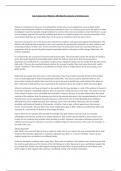
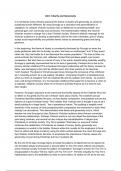
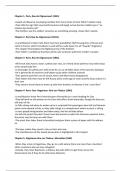
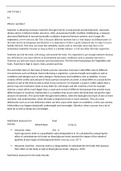
LPC EXAM STUDY GUIDE: CIVIL LITIGATION NOTES 2024 (DISTINCTION) Drafting- Particulars of Claim/ Defence/Witness Statement (20 marks) Check the dates of the contract and everything Check the definitions Inclusive/ exclusive of VAT (generally inclusive) Figures and loss amounts duty of care 16PD7.4 states: “where a claim is based upon an oral agreement, the particulars of claim should set out the contractual words used and state by whom, to whom, when and where they were spoken” IN THE HIGH COURT OF JUSTICE Claim Number: 2019 HC 1234 QUEEN’S BENCH DIVISION B E T W E E N RITCHISONS INVESTMENTS LIMITED Claimant - and - BONO WELLER & CO LLP Defendant _______________________________ PARTICULARS OF CLAIM _______________________________ 1. Para 1 always Background - At all material times the Claimant was a company engaged in the development and management of a hypermarket. - The Defendant was a firm of solicitors practising as an LLP. [On [date] the Claimant instructed and retained Mr Smith, a solicitor, who was an employee or partner of the Defendant firm.] 2. In August 2017, the Claimant identified a site in Kent (the 'Land') where it wished to develop a hypermarket. The Land was subject to a restrictive covenant to the effect that the owner could not construct any building on the Land which was greater in height to the buildings which existed on the neighbouring property (the 'Restrictive Covenant'). 3. In order to be commercially viable, it was necessary for the hypermarket to have provision for car parking. The Claimant employed architects whose plans (the 'Plans') for Commented [N1]: LLP or limited, make sure that is clear Commented [N2]: Make sure singular or plural claimants and defendant LPC EXAM STUDY GUIDE: CIVIL LITIGATION NOTES 2024 (DISTINCTION) the hypermarket were for a two storey building, the second storey of which was to be a car park. The height of the hypermarket in accordance with the Plans was below the top level of the chimneys on the buildings which existed on the neighbouring property but above the ridge-line of those buildings. 4. On 5 October 2017, the Claimant (through its Operations Director, Francis Vollbehr) sent a letter of instruction to Mr John Weller (‘Mr Weller’), a solicitor who was a partner in the Defendant, to act on the potential purchase of the Land and, in this connection, to advise whether the Plans would be in breach of the Restrictive Covenant. Mr Weller duly accepted the Claimant’s instructions on behalf of the Defendant by a letter dated 6 October 2017 (the ‘Retainer’). A copy of the Retainer is attached to these Particulars of Claim. 5. The Defendant was instructed on the basis that, at all material times, Mr Weller held himself out to be an experienced, skilled and competent solicitor specializing in commercial property. 6. It was an express term of the Retainer at clause 5 that Mr Weller (on behalf of the Defendant) would provide advice to the Claimant relating to the purchase and development of the Land and the Restrictive Covenant, and would advise it of any circumstances and risks of which the Defendant was aware or considered to be reasonably foreseeable that could affect the outcome of the matter. 7. It was an implied term of the Retainer that Mr Weller (on behalf of the Defendant) would, at all material times, exercise the reasonable care and skill to be expected of a reasonably competent solicitor specialising in commercial property. 8. Further or alternatively, Mr Weller (on behalf of the Defendant) owed the Claimant a like duty of care in tort. 9. By way of a letter dated 16 October 2017, Mr Weller (on behalf of the Defendant) advised the Claimant that it would not be in breach of the Restrictive Covenant if it kept the building of the hypermarket below the height of the chimneys on the neighbouring property. 10. In reliance on Mr Weller’s advice referred to in paragraph 9 above, the Claimant duly completed the purchase of the Land on 30 November 2017 for £20,000,000. Further, the Claimant borrowed funds from its parent company in order to enable it to purchase the Land. The funds were advanced on the day of completion. On or about 14 December 2017, the Claimant commenced development work in accordance with the Plans. 11. On or about 4 January 2018, the beneficiary of the Restrictive Covenant (the 'Beneficiary') threatened the Claimant with legal proceedings on the grounds that development work in accordance with the Plans would be in breach of the Restrictive Covenant; the height of the proposed hypermarket was above the ridge-line of the buildings which existed on the neighbouring property. The Claimant accordingly sought further advice from Mr Weller who confirmed his original advice as given on 16 October 2017. 12. On 11 January 2018, the Claimant met with the Beneficiary. The Beneficiary referred the Claimant to a Court of Appeal decision of 5 January 2016 which, the Beneficiary told the Commented [N3]: If necessary, attached a copy of any contract, agreement or retainer mentioned in the question. Commented [N4]: This paragraph has been inserted to allege that the standard of care owed was a higher duty than that of a normal solicitor because Bono Weller & Co LLP held John Weller out as a specialist in commercial property. Commented [N5]: breach of contractual duty: - which express term - which implied term Commented [N6]: If the contract is for the sale of goods, the correct implied terms will be that the goods should be of satisfactory quality and possibly fit for the purpose made known to the other side. If the contract is for the provision of services, the correct implied term will be that the provision of goods and service should have been conducted with reasonable skill and care. Commented [N7]: This paragraph states the duty in tort owed by the Defendant. It would also be correct to refer to ‘a like duty at common law’. Note that it starts with the words: ‘Further or alternatively’ indicating that there is a separate, independent duty in tort Commented [N8]: The terminology ‘On or about’ used here and in the next paragraph is used where the exact date is not clear to a Claimant. The aim of the Claimant is to prevent the Defendant from denying the paragraph by the Defendant stating in its Defence that the date referred to was incorrect by a day or two. Claimant, had decided, in similar circumstances, that ‘height’ meant ‘ridge-line’ and that the Claimant would therefore be in breach of the Restrictive Covenant if it continued its development of the hypermarket in accordance with the Plans. The development had already begun and the Claimant therefore agreed with the Beneficiary to alter the Plans so as to build to one storey rather than two, thereby keeping the hypermarket below the ridge-line of the buildings on the neighbouring property. 13. In breach of the express term of the Retainer referred to in paragraph 6 above, and in breach of the implied term of the Retainer referred to in paragraph 7 above, and in breach of the duty of care in tort referred to in paragraph 8 above:- PARTICULARS OF BREACH (a) Mr Weller failed to keep up-to-date on the law; (b) Mr Weller advised the Claimant it would not be in breach of the Restrictive Covenant if the hypermarket was developed in accordance with the Plans and below the height of the chimneys on the neighbouring property; (c) Mr Weller failed to advise the Claimant that the meaning of the word ’height’ was ambiguous and could mean ridge-line or chimney height; and/or (d) Mr Weller failed to advise the Claimant that there was real scope for dispute as to the construction of the Restrictive Covenant and instead provided definitive advice. 14. As a result of the breaches, the Claimant was not advised that it could potentially be in breach of the Restrictive Covenant if it built a two-storey hypermarket on the Land in accordance with the Plans. Had Mr Weller so advised, the Claimant would not have purchased the Land. Further the Claimant would not have had to borrow monies from its parent company to fund the purchase. The Claimant has suffered a loss amounting to the costs of funding the said loan from the date of the advance at a rate of 2.5% above the Bank of England Base Rate. The loss suffered at the date of issue of this claim resulting from the costs of financing the said loan amounts to £1,200,000 and continues to accrue at a rate of £1,643 per day. 15. As a result of the agreement reached with the Beneficiary (as referred to in paragraph 12 above), the Claimant was unable to include a car park on the second storey of the hypermarket and was forced to purchase additional land for car parking (the ‘Additional Land’). The Additional Land was purchased at a cost of £5,000,000. The Claimant also incurred necessary legal costs and expenses in purchasing the Additional Land. 16. As a result of the matters set out above, the Claimant is the owner of the Land and the Additional Land. The Claimant gives credit for the value of the Land and the Additional Land, together with the increases in the values as at the date of these Particulars of Claim. 17. As a result of the breaches referred to in paragraph 13 above, the Claimant has suffered loss and damage. Commented [N9]: The wording ‘As a result of the breaches’ sets out the causal link between the breach and the loss which the Claimant has suffered. Note again how this paragraph refers back to the paragraph number in which the breach was referred to. PARTICULARS OF LOSS AND DAMAGE Price paid for the Land £20,000,000 Price paid for the Additional Land £ 5,000,000 Cost of funding to date £ 1,200,000 Building costs £ 300,000 Legal costs and expenses £ 25,000 LESS: Actual value of the Land at the date of purchase (£18,000,000) Actual value of the Additional Land at the date of purchase (£ 1,500,000) Increase in values of the Land and the Additional Land since the date of purchase (£ 2,500,000) ____________ TOTAL £ 4,525,000 18. The Claimant claims interest on such damages as are awarded to it pursuant to section 35A Senior Courts Act 1981, at such rate and for such period as the court thinks fit. AND THE CLAIMANT CLAIMS: (i) damages under paragraph 17 above; and (ii) interest under paragraph 18 above. PRICE PRIOR Statement of Truth The Claimant believes that the facts stated in these Particulars of Claim are true. I am duly authorised by the Claimant to sign this statement. Signed Francis Vollbehr Francis Vollbehr Operations Director of the Claimant Served this 11th day of October 2019 by Price Prior, 68-70 Red Lion Street, London WC1A 4NY, solicitors for the Claimant Ref: PP/200359.1 Part 36 offer – 16 marks Commented [N10]: Check if individual or company- if individual just I believe and no need of second line. HCL’s claim against Haling Coombes continues. Witness statements and expert reports have been exchanged. You were told that you had received a letter from Dell Wood LLP acting on behalf of Haling Coombes. In that letter, Dell Wood LLP made a Part 36 offer, on behalf of Haling Coombes, which offered to pay HCL £250,000 inclusive of interest in full and final settlement of HCL’s claim. Students were told that they should assume for the purposes of the assessment that Haling Coombes’ Part 36 offer is valid and complies with the procedural requirements of CPR 36. Part a) – 2 marks Students were then told to explain to Lucas what the purpose of a Part 36 offer was. Given the number of marks available, students should have realised that only a brief answer was required. This should have stated that a Part 36 offer is an attempt to force a compromise or settlement as it may carry serious costs consequences if the other party rejects it. It is without prejudice save as to costs and will not be referred to the court until the issue of costs is being decided. The offer will remain open for acceptance for at least 21 days which is the minimum period for the relevant period. Part b) – 14 marks Students were then asked to explain to Lucas, with reasons and specific reference to the Civil Procedure Rules, the costs consequences of the offer in each of the following circumstances. i) HCL wins at trial and is awarded £400,000 inclusive of interest; ii) HCL wins at trial and is awarded £100,000 inclusive of interest; and iii) HCL loses at trial. Students were told that they did NOT need to set out the form or content of the offer as part of their answer but SHOULD explain the costs consequences fully, without dealing with procedure as part of their answer to any part of the question. Students who did well in this question looked closely at the wording of the question and answered it as stated. It is always worthwhile stepping back for a moment and working out who has made an offer, for how much and which party they are. In this case, Haling Coombes (the defendant) has made a defendant’s offer of £250,000. Scenario i) – where HCL wins at trial and is awarded £400,000 inclusive of interest. In this scenario, the judgment is more advantageous than the defendant’s offer and so the claimant was right to reject the offer which will have no effect. The claimant will not be penalised. Costs would apply in the normal way under CPR 44.2 where, subject to the court’s discretion, it is likely that the defendant (Haling Coombes) would pay the claimant’s (HCL’s) costs. Witness evidence / hearsay / professional conduct (10 marks) Hearsay is an oral or written statement made out of court which is being adduced in court to prove the truth of the matter stated. S1 CEA 1995- admissible s2- notice 3- Cross examination 4- Weight 5- Attack credibility Notice of intention to rely on hearsay evidence If a party intends to rely on hearsay evidence at trial, s.2 CEA 1995 states it must give notice to the other side that it intends to do so. CPR 33.2 states how this notice should be given. The form the notice takes depends on how the evidence will be given to the court. The case continues and the parties are shortly due to exchange witness statements of fact and experts’ reports. Your client Jonathan Leyth is the key witness of fact for BB, the Defendant. You had also hoped to obtain witness evidence from Alison Barnes, ABL’s former marketing director (as referred to in Document 2 of the Case Study attached to the SGS 12 Description). Unfortunately Alison is no longer available to provide evidence as she is now living in Australia. Instead you include the following statement in Jonathan’s witness statement: “Alison telephoned me shortly after the contract between the two parties was signed. She explained ‘ABL’s core market would prefer a low alcohol beer rather than a de-alcoholised beer. On this basis Ultime Licht should be no more than 1.2% ABV’.” What is the evidential status of Alison Barnes’ comments in Jonathan’s witness statement? What advice should you give to Jonathan about the procedural issues this raises? ANSWER: Alison’s statement is hearsay in Jonathan’s witness statement as her words were made out of court and are being adduced to prove the truth of the matters stated, namely, that Ultime Licht should be no more than 1.2% ABV. This is a crucial issue in the claim. Therefore notice of the hearsay in Jonathan’s statement needs to be given to ABL. This will be deemed once the witness statements are exchanged (s2 Civil Evidence Act 1995 or CPR 33.2(1)). Alison’s comments are admissible (s1 Civil Evidence Act 1995), however the hearsay might have reduced weight. Adverse points may be made by ABL in relation to Alison’s evidence being adduced in this way, as she is not present to be cross-examined. The court will consider the reason why she is not present which, in view of the distance and cost of travel from Australia, might be considered reasonable. ABL might consider calling evidence to attack Alison’s credibility (under s5 Civil Evidence Act 1995). Students were told that Sergio is the key witness of fact for the Claimant. When they were interviewing Sergio in order to prepare his witness statement ready for exchange, he made the following statement: “At the meeting with Paolo Sorrenti on 1 June 2018, although not mentioned in my attendance note, there was also another person present, Clara Ennis. Clara is the Chief Hair Colourist and Technician at one of Colour Me’s national clients. Clara actually expressed her own concerns at the meeting about using completely chemical free dyes and echoed Paolo’s comments about the variation of results when using entirely natural products.” The students were told that they then include this statement in Sergio’s witness statement for exchange with the Defendant in this claim. The students were then asked: a) In Sergio’s witness statement, what is the evidential status of Clara Ennis’s comments? What advice should you give to Sergio about the procedural issues this raises?; and b) Sergio objects to including the statement mentioned above in his witness statement. He insists that you remove it from the final version that he will sign and exchange with the Defendant. What issues will you need to address with Sergio in relation to his request and what advice will you give him? Students were asked to provide full reasons for their answers, including detailed references to the CPR, other legislative references and/or regulatory references as appropriate. For part (a) of this question the students needed to identify that the statement of the absent speaker (Clara) repeated in our client’s witness statement, was hearsay. Therefore notice needed to be given to the other side under s 2 Civil Evidence Act 1995 (“CEA”) and CPR 33.2(1). Under s4 CEA the hearsay statement might have reduced weight. Further, under s3 CEA, the Defendant might make an application to have Clara attend court so she could be cross-examined. For part (b) of this question the students were required to spot that if the client gave an untrue account of the pre-contract meeting, his evidence would be misleading and therefore he would be in contempt of court under CPR 32.14 should he sign the statement of truth. If they allowed this to happen the solicitor would also fall foul of O(5.1) and O(5.2) which provide that a solicitor must not mislead or be complicit in another misleading the court. IB(5.9) is also relevant which indicates that you will not achieve this outcome if you call a witness whose evidence you know is untrue. In accordance with IB(5.5) Price Prior would need to refuse to continue acting if Sergio insists on removing the statement from his witness statement. Drafting Witness Statement Thank you, EMAIL ME @ For help with Assignments/Essay/Projects/Test Banks/practice Exams and any other classwork. Injunction Freezing (11 marks) Students were asked to advise the most appropriate interim application that HCL could make to the court to ensure that there were funds available in the jurisdiction to satisfy any judgment; and whether the application was likely to be successful (by reference to both the factors the court would consider when reaching its decision and how they would apply to these particular case facts). Students were asked to give full reasons for their answers, providing references to relevant CPR provision(s) and case law and indicating how they would apply to the particular case facts. Students should have realised that they should apply in these circumstances for a freezing injunction under CPR 25.1(1)(f). This is an equitable and discretionary remedy. The leading case is Mareva Compania Naviera SA v International Bulkcarriers SA.Under this case one has to demonstrate four discretionary factors: 1. A substantive cause of action justiciable in England and Wales. Applying this to the facts of the case, here there is a breach of contract case claiming a debt. 2. A good arguable case. Applying this to the facts of the case, the facts stated that Lucas had said that there was no valid reason for the non-payment. Students could have inferred from this that there was likely to be a good arguable case and therefore this part of the test had been met. 3. Evidence that the respondent had assets within the jurisdiction. Applying this to the facts of the case, the facts stated that there was evidence that there was approximately £600,000 within SCL’s London bank account. So this part of the test had been met. 4. A real risk that SCL may remove from the jurisdiction, dispose or dissipate or hide its assets in any way that would hinder enforcement of any judgment which HCL might obtain. Applying this to the facts of the case, there was evidence that SCL was transferring assets at well below market price to another company within SCL’s group. There was also evidence that SCL’s operations director was defending director’s disqualification proceedings. Whilst this evidence is in many ways circumstantial, it is likely that this part of the test had been met. Conclusion. Students should then have concluded (as envisaged by the question) that the freezing injunction was likely to be granted (though there is no guarantee given the equitable and discretionary nature of the remedy). What is the undertaking in damages which is often given before an injunction is granted? Answer = (d). The undertaking in damages is the applicant’s undertaking to pay damages to the respondent if the injunction is wrongly granted.
Written for
- Institution
- LPC CIVIL LITIGATION
- Module
- LPC CIVIL LITIGATION
Document information
- Uploaded on
- May 23, 2024
- Number of pages
- 24
- Written in
- 2023/2024
- Type
- SUMMARY
Subjects
-
lpc exam study guide
-
civil litigation
-
lpc exam study guide civil litigation
-
lpc exam study guide civil litigation notes 2024